


 Trump Announces New U.S. Oil Refinery in Texas with Indian Energy Giant Reliance
  U.S. Senate Greenlights AI Chatbots for Official Staff Use
  Mexico's Electoral Reform Bill Fails in Congress as Coalition Fractures
  After the Iran war, Persian Gulf nations face tough decisions on the US – a former diplomat explains
  Japan's BOJ Independence Under Fire as PM Takaichi's Rate Stance Draws Political Heat
  IEA Releases Record 400 Million Barrels of Oil Amid U.S.-Iran War
  Shots Fired at U.S. Consulate in Toronto in Suspected National Security Incident
  Taiwan's MQ-9B SkyGuardian Drone Order Stays on Schedule Despite Middle East Conflict
  Trump Hints at Possible U.S. Takeover of Cuba Amid Deepening Humanitarian Crisis
  Boeing Secures $289 Million Smart Bomb Contract With Israel
  U.S. Patriot Missiles Redeployed From South Korea Amid Middle East Conflict
  Pentagon Taps Wall Street Talent to Manage $200 Billion Defense Investment Fund
  Iran-U.S. Oil Tensions Escalate as Revolutionary Guards Threaten Strait of Hormuz Blockade
  Russian Drone Strikes Hit Kharkiv and Dnipro, Injuring Over 20 Civilians
  Trump Administration Spent $5.6 Billion in Munitions in Opening Days of Iran Strikes
  Ukraine Strikes Russian Missile Component Factory in Bryansk Using British Weapons
  U.S. and Russia Hold Diplomatic Talks in Florida Amid Ongoing Tensions


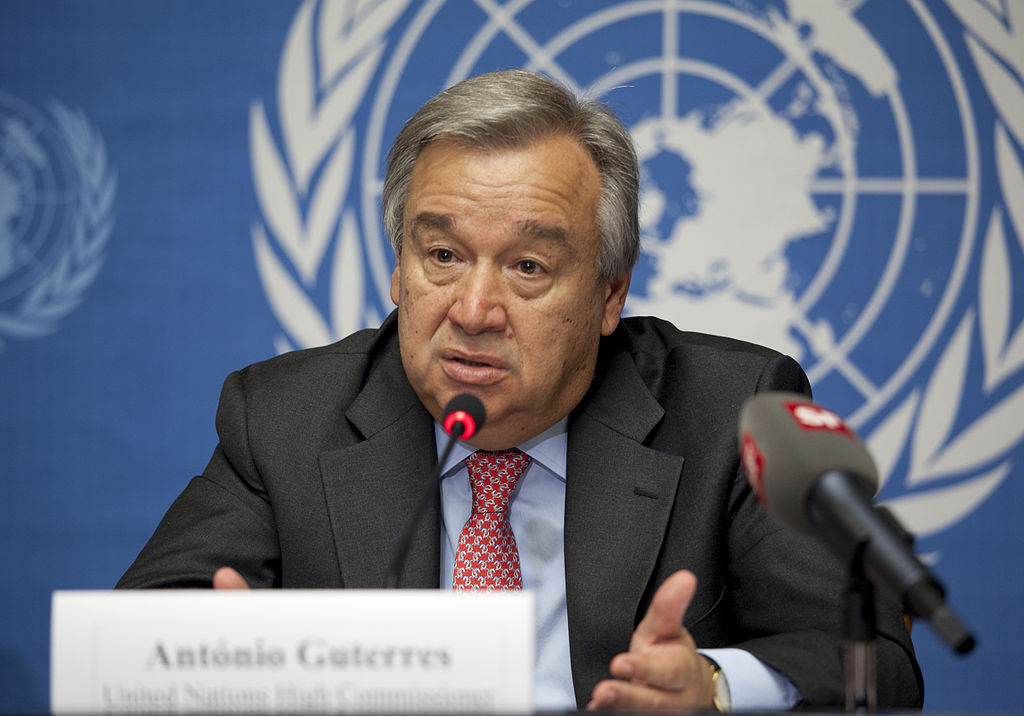
The United Nations has raised serious concerns over growing instability in Venezuela following the United States’ capture of President Nicolas Maduro, an operation that has sparked sharp debate at the U.N. Security Council and renewed questions about international law, sovereignty, and regional security.
U.N. Secretary-General Antonio Guterres warned that the incident could worsen Venezuela’s political and social crisis and set a troubling precedent for relations between states. Speaking through U.N. political affairs chief Rosemary DiCarlo, Guterres said he was deeply concerned about the potential impact on the region and urged all Venezuelan actors to pursue an inclusive and democratic dialogue. He emphasized the United Nations’ readiness to support peaceful efforts that allow Venezuelans to determine their own future.
The emergency meeting of the 15-member Security Council took place just hours before Maduro was scheduled to appear in a federal court in Manhattan on charges including narco-terrorism conspiracy, allegations he has consistently denied. The United States defended its actions, with U.S. Ambassador Mike Waltz describing the capture as a “surgical law enforcement operation” targeting two indicted fugitives, referring to Maduro and his wife, Cilia Flores. Waltz stressed that Washington has no intention of occupying Venezuela and framed the operation as necessary to protect U.S. national security and prevent adversaries from exploiting the Western Hemisphere.
Venezuela’s U.N. Ambassador Samuel Moncada strongly condemned the operation, calling it an illegitimate armed attack with no legal basis. He insisted that Venezuelan institutions remain fully functional, constitutional order is intact, and the government maintains control over its territory.
Concerns over international law dominated the discussion. Guterres noted that the operation appeared to conflict with the U.N. Charter’s prohibition on the use of force against another state’s sovereignty. The United States cited Article 51 of the Charter, which allows self-defense in response to an armed attack. Russia, China, and Colombia denounced the U.S. action as illegal, while other council members urged respect for the U.N. Charter without directly criticizing Washington.
Despite calls from Venezuela, Russia, and China to release Maduro, the Security Council is unlikely to take action due to the U.S. veto power, underscoring the deep divisions surrounding the crisis and its implications for global governance.













