


 Ukraine Strikes Russian Missile Component Factory in Bryansk Using British Weapons
  IEA Releases Record 400 Million Barrels of Oil Amid U.S.-Iran War
  Trump Administration Launches Trade Investigations Against 16 Countries Over Industrial Overcapacity
  Bipartisan Housing Bill Advances in Senate, Aims to Tackle U.S. Affordability Crisis
  Taiwan's MQ-9B SkyGuardian Drone Order Stays on Schedule Despite Middle East Conflict
  Trump Administration Spent $5.6 Billion in Munitions in Opening Days of Iran Strikes
  U.S. Patriot Missiles Redeployed From South Korea Amid Middle East Conflict
  Trump Announces New U.S. Oil Refinery in Texas with Indian Energy Giant Reliance
  Shots Fired at U.S. Consulate in Toronto in Suspected National Security Incident
  Mexico's Electoral Reform Bill Fails in Congress as Coalition Fractures
  FBI Warns of Possible Iranian Drone Attacks on California Amid U.S.-Iran War
  Trump-Putin Call Addresses Iran War, Ukraine Peace, and Global Oil Crisis
  Japan's BOJ Independence Under Fire as PM Takaichi's Rate Stance Draws Political Heat
  After the Iran war, Persian Gulf nations face tough decisions on the US – a former diplomat explains
  Iran-U.S. Oil Tensions Escalate as Revolutionary Guards Threaten Strait of Hormuz Blockade
  Venezuela Names Paula Henao as New Oil Minister Amid U.S.-Led Industry Overhaul
  Iran's Government Remains Stable Despite U.S. and Israeli Strikes, Intelligence Shows


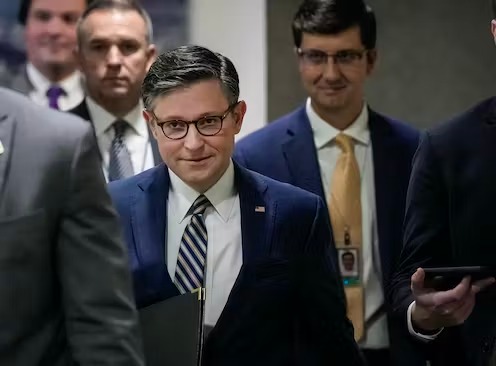
U.S. President Donald Trump’s decision to authorize military strikes on Iran has ignited a heated debate in Congress over presidential war powers and constitutional authority. Republican lawmakers argue that the attack was fully within Trump’s authority as commander in chief, while Democrats insist the administration has failed to prove an imminent threat to U.S. interests and are pushing for a war powers vote.
Senior national security officials, including Secretary of State Marco Rubio, Defense Secretary Pete Hegseth, CIA Director John Ratcliffe, and Joint Chiefs Chairman General Dan Caine, briefed congressional leaders following coordinated Israeli and U.S. airstrikes on Iranian targets. The strikes came after Israel signaled it would move forward with military action against Iran, with or without U.S. involvement. Rubio stated that U.S. intelligence anticipated Iranian retaliation against American forces, creating what Republicans describe as an “imminent threat.”
House Speaker Mike Johnson defended the president’s actions, calling the operation limited in scope and necessary for national defense. He suggested the military campaign would conclude quickly. Republicans maintain that the evolving security situation justified swift executive action to protect American troops and regional stability.
Democrats, however, argue that the U.S. Constitution grants Congress the sole authority to declare war. They question whether Trump can pursue what he described as a potentially weeks-long military campaign without congressional approval. Senator Mark Warner criticized the administration for offering shifting justifications, ranging from dismantling Iran’s nuclear program to targeting its missile capabilities and naval forces. He emphasized that proof of a direct and immediate threat to American interests remains insufficient.
As of Monday evening, six U.S. service members had reportedly been killed in the escalating conflict. Lawmakers are expected to vote later this week on war powers resolutions that could restrict further military action without formal authorization. With Republicans holding narrow majorities in both chambers, the outcome remains uncertain as tensions over U.S. involvement in Iran continue to intensify.













