


 Trump Administration Launches Trade Investigations Against 16 Countries Over Industrial Overcapacity
  Shots Fired at U.S. Consulate in Toronto in Suspected National Security Incident
  U.S. Patriot Missiles Redeployed From South Korea Amid Middle East Conflict
  U.S.-Israel War on Iran Sends Crude Oil Prices Surging Amid Strait of Hormuz Tensions
  After the Iran war, Persian Gulf nations face tough decisions on the US – a former diplomat explains
  Russian Drone Strikes Hit Kharkiv and Dnipro, Injuring Over 20 Civilians
  Trump Administration Spent $5.6 Billion in Munitions in Opening Days of Iran Strikes
  Taiwan's MQ-9B SkyGuardian Drone Order Stays on Schedule Despite Middle East Conflict
  Venezuela Names Paula Henao as New Oil Minister Amid U.S.-Led Industry Overhaul
  U.S. Calls for Reassessment of International Aid to Taliban-Ruled Afghanistan
  Trump Doubts Iran Mining Reports as Strait of Hormuz Tensions Escalate
  Trump-Putin Call Addresses Iran War, Ukraine Peace, and Global Oil Crisis
  Iran's Government Remains Stable Despite U.S. and Israeli Strikes, Intelligence Shows
  Japan's BOJ Independence Under Fire as PM Takaichi's Rate Stance Draws Political Heat
  Pentagon Taps Wall Street Talent to Manage $200 Billion Defense Investment Fund
  Israel-Iran War: Herzog Urges Patience as U.S. and Israeli Strikes Intensify
  Trump Announces New U.S. Oil Refinery in Texas with Indian Energy Giant Reliance


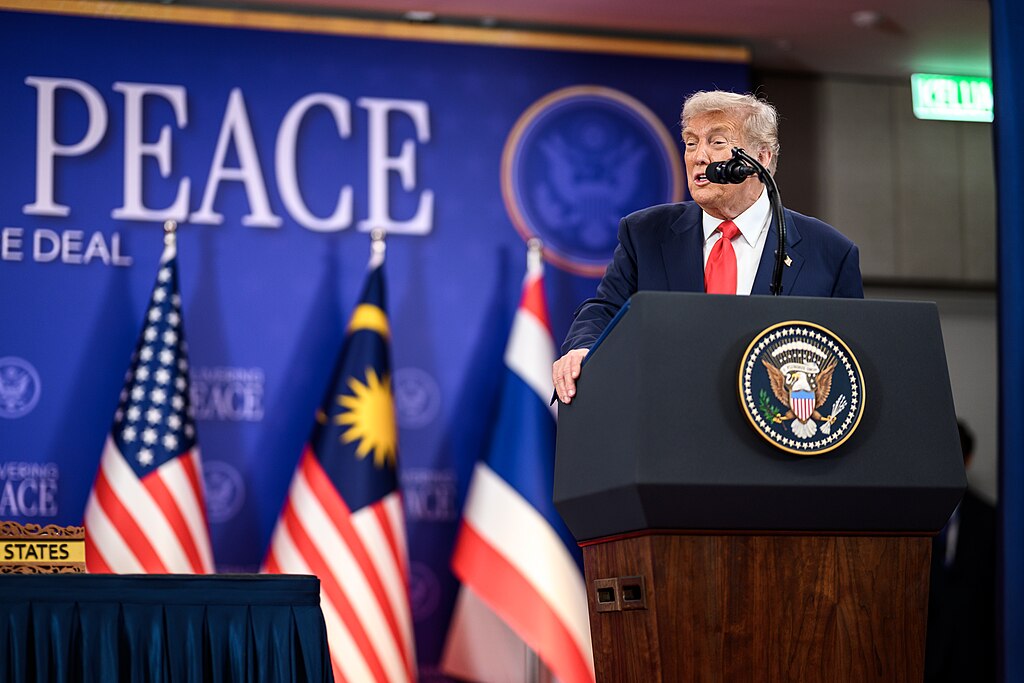
U.S. President Donald Trump has issued a sharp warning to Iraq over the possible return of Nouri al-Maliki as prime minister, signaling that the United States would withdraw its support if the former leader is reinstated. In a post shared on Truth Social, Trump said he was hearing reports that Iraq could make what he described as a “very bad choice” by selecting Maliki, arguing that the country suffered severe consequences during Maliki’s previous time in office.
Trump claimed that when Maliki last served as Iraq’s prime minister, the nation descended into poverty, instability, and widespread chaos. He blamed what he called Maliki’s “insane policies and ideologies” for weakening Iraq and warned that history could repeat itself if Maliki returns to power. Trump emphasized that if Maliki is chosen again, the United States of America would no longer help Iraq, adding that without U.S. assistance, the country would have “zero” chance of success.
The comments mark one of the strongest public statements yet from Trump as part of a broader Republican effort to curb the influence of Iran-linked groups in Iraq. Iraq has long balanced its relationships with Washington and Tehran, but the issue has become increasingly sensitive as Iran-backed armed factions continue to wield significant political and military power inside the country.
Trump’s warning comes just days after an alliance of Shi’ite political blocs, which holds a majority in Iraq’s parliament, reportedly selected Maliki as their candidate for prime minister. Reuters said it was unable to immediately reach Maliki for comment following Trump’s remarks.
According to Reuters, Washington has also stepped up pressure on Iraqi political leaders, including threats of U.S. sanctions against the Iraqi state if Iran-backed armed groups are included in the next government. These warnings are part of a broader U.S. strategy aimed at limiting Tehran’s influence in Baghdad.
Nouri al-Maliki is a senior figure in the Shi’ite Islamist Dawa Party and served as Iraq’s prime minister from 2006 to 2014. His tenure was marked by intense sectarian violence, political struggles with Sunni and Kurdish rivals, and deteriorating relations with the United States. Maliki stepped down after Islamic State captured large parts of Iraq in 2014, but he has remained a powerful political figure, leading the State of Law coalition and maintaining close ties with Iran-backed factions.













