


 Venezuela Names Paula Henao as New Oil Minister Amid U.S.-Led Industry Overhaul
  Iran Mines Strait of Hormuz: Crude Oil Prices Surge Amid Middle East Tensions
  Taiwan's MQ-9B SkyGuardian Drone Order Stays on Schedule Despite Middle East Conflict
  Trump Administration Launches Trade Investigations Against 16 Countries Over Industrial Overcapacity
  Iran-Israel War Sparks Global Oil Crisis as Tankers Burn in Gulf Waters
  U.S. Senate Greenlights AI Chatbots for Official Staff Use
  Trump Administration Spent $5.6 Billion in Munitions in Opening Days of Iran Strikes
  Shots Fired at U.S. Consulate in Toronto in Suspected National Security Incident
  U.S.-Israel War on Iran Sends Crude Oil Prices Surging Amid Strait of Hormuz Tensions
  After the Iran war, Persian Gulf nations face tough decisions on the US – a former diplomat explains
  Anthropic Sues Pentagon Over AI Blacklist, Citing Free Speech Violations
  Iran-U.S. Oil Tensions Escalate as Revolutionary Guards Threaten Strait of Hormuz Blockade
  Ukraine Strikes Russian Missile Component Factory in Bryansk Using British Weapons
  U.S. Patriot Missiles Redeployed From South Korea Amid Middle East Conflict
  Trump Doubts Iran Mining Reports as Strait of Hormuz Tensions Escalate
  Israel-Iran War: Herzog Urges Patience as U.S. and Israeli Strikes Intensify
  Bipartisan Housing Bill Advances in Senate, Aims to Tackle U.S. Affordability Crisis


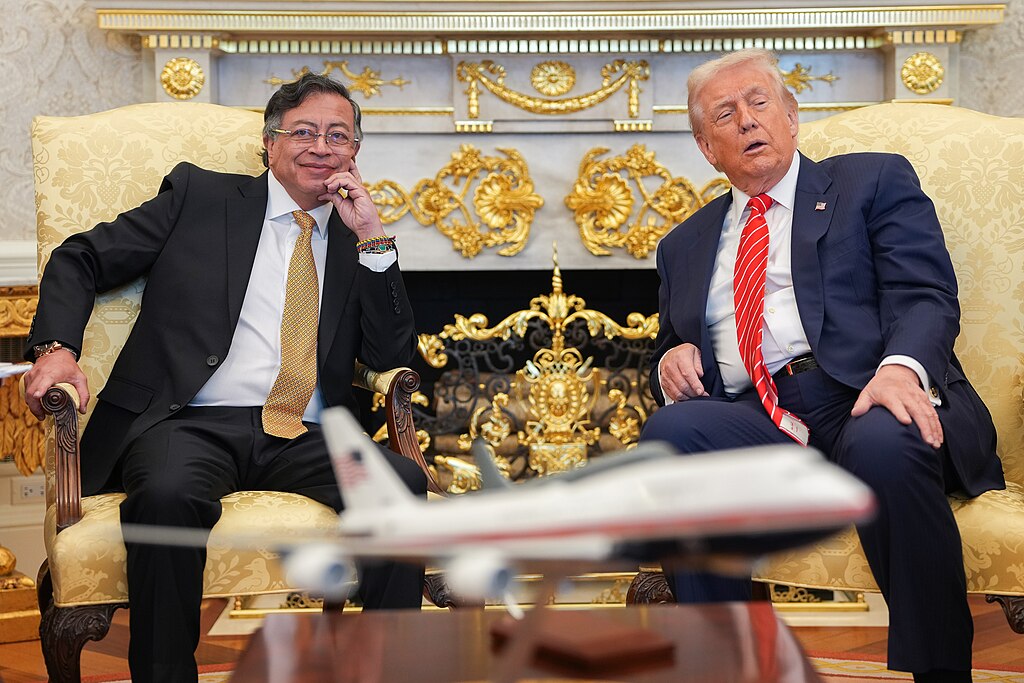
U.S. President Donald Trump said on Tuesday that he is working on potential sanctions and other cooperative measures with Colombian President Gustavo Petro following a meeting between the two leaders at the White House. The discussions took place earlier in the day in the Oval Office and focused on bilateral relations, regional security, and shared policy priorities between the United States and Colombia.
Speaking to reporters after the meeting, President Trump described the talks as “very good,” signaling a positive tone and a willingness on both sides to continue diplomatic engagement. While Trump did not provide specific details on the nature of the sanctions being discussed, his remarks suggest that the United States and Colombia are coordinating closely on issues that could have regional and international implications.
The meeting between Trump and Petro comes at a time when U.S.–Colombia relations are navigating complex challenges, including security cooperation, drug trafficking, migration, and political stability in Latin America. Colombia has long been a key U.S. ally in the region, and high-level meetings such as this underscore the strategic importance of the partnership.
President Gustavo Petro, who has pursued a distinct policy agenda since taking office, has emphasized dialogue and reform, both domestically and in Colombia’s foreign relations. His visit to Washington and meeting with President Trump highlight ongoing efforts to maintain open communication between the two governments, even amid differing political perspectives.
Sanctions discussions often involve sensitive diplomatic considerations, and Trump’s comments indicate that any measures under review are part of a broader set of policy tools being evaluated jointly with Colombia. Analysts note that such coordination could relate to regional security concerns or broader geopolitical strategies.
Overall, the Oval Office meeting reflects continued engagement between the United States and Colombia at the highest level. With President Trump characterizing the talks as productive, the discussions may pave the way for further cooperation on sanctions, economic issues, and regional stability, reinforcing the longstanding relationship between the two nations.













