


 Europe can’t achieve space sovereignty alone. Here’s why
  Hyundai Delays In-House ADAS, Turns to Nvidia
  Banking scandal rocks Brazil’s politics and the country’s presidential election in October
  China’s robots can run faster than Usain Bolt – now they are being prepared for war
  What is Zionism? The different meanings of a contested term
  Gold Surges Past $4400 on Crude Oil Rally; Bullish Trend Dominates
  AI is supercharging money scams – here’s what you can do to protect yourself
  Cyber attacks? Bioterrorism? To ‘Pace the Frontier’ of AI effectively, we must improve our anticipatory thinking
  Big AI wants to slow down AI research. Is it a safety pause or a strategic retreat?
  Databricks to Invest $350 Million in Singapore AI Expansion
  ‘Buy now, pay later’ doesn’t feel like debt. For young people, that can be a big problem
  Physicists zoom into the birth of cosmic rainstorms with new CERN study


 Add as a preferred source on Google
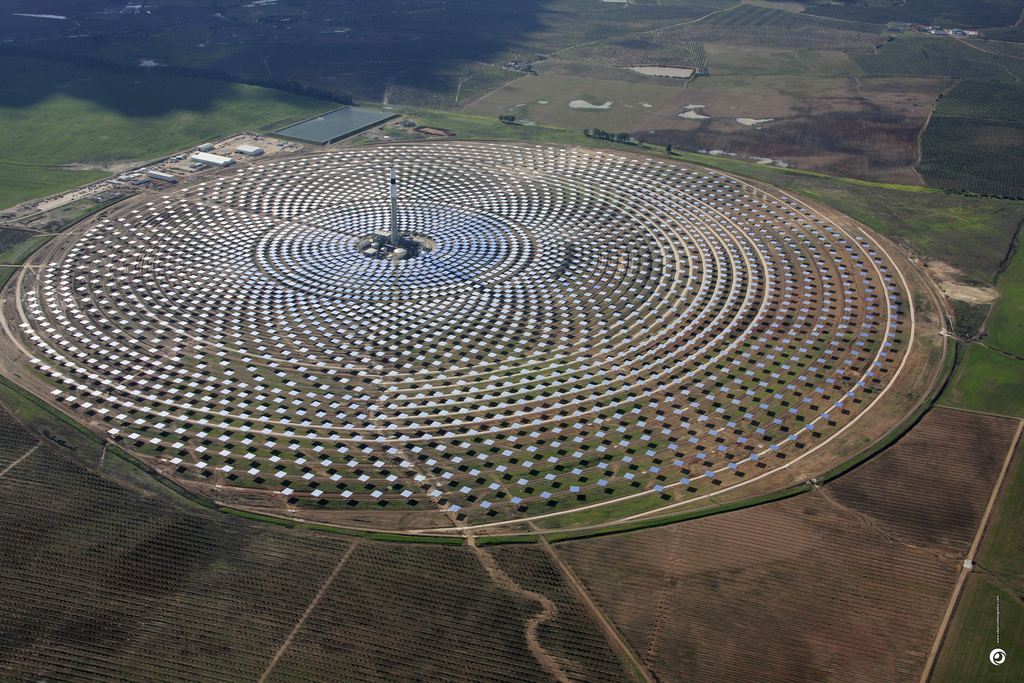

Recently Sandfire Resources, a gold and copper producer based in Western Australia, announced its new solar power plant will soon start powering its DeGrussa mine. By replacing diesel power, the 10-megawatt power station, with 34,000 panels and lithium storage batteries, is expected to reduce the mine’s carbon emissions by 15%.
This is an exciting development because it realises an important potential that has long been recognised but not exploited. Two of Australia’s greatest resources – solar energy and minerals – are, as luck would have it, both highly concentrated in the same parts of Australia.
In this case, solar energy is being used to power the mine, but there is also great potential for solar energy to be used to convert the minerals to chemicals and metals.
In metal production, most greenhouse gases are generated when carbon (often coal) is used to produce metal from the rocky ore. Some of this carbon is used in the actual chemical reactions, but a large proportion is just providing energy for the process.
Replacing the carbon energy source with renewable or other lower-emission energy has the potential to dramatically lower the greenhouse gases associated with metal production.
For example, in iron production, more than 400kg of coke and coal is use to make every tonne of iron. Using renewable energy as a heat source could reduce this carbon input by up to 30%.
The next revolution
Currently, Australia’s use of solar energy is largely limited to homes, for hot water and solar-powered electricity. But solar energy has great potential for regional Australia too.
Mines are often isolated. There is typically limited natural gas and electricity supply, and in remote areas energy supply is limited to liquid fossil fuels. This is exactly the potential being exploited by Sandfire Resources at its mine facility 900km north of Perth.
Recent studies by CSIRO have identified the potential to use solar in high-temperature processing of ores such as bauxite, copper and iron ore. This process would use concentrated solar thermal (CST) energy as a heat supply. This heat can also be converted to electricity, known as concentrated solar power (CSP).
This is different to the solar photovoltaic technology used in Sandfire’s solar power plant (and rooftop solar panels), which converts sunlight directly to electricity.
Solar thermal energy works best at temperatures between 800℃ and 1,600℃ – which can be achieved with existing technology that concentrates the sun’s heat. This is currently too hot for converting the heat to electricity, which generally operates below 600℃.
But processing minerals can make use of these high temperatures, because the heat is used directly for chemical conversion, rather than first being converted to electricity.
It is this rationale that is driving research, at the University of Adelaide, into producing alumina using concentrated solar energy and, at Swinburne University, into producing iron from ore.
We have tested a range of temperatures and mineral mixes, and have produced iron products similar to commercial-grade iron products. We envisage a solar iron-making plant operating in Western Australia and value-adding to our iron reserves before being shipped overseas.
We expect this could reduce energy and emissions by 20-30% compared to current iron-making processes, by replacing carbon-based fossil fuels with solar energy, although carbon would still be used in the chemical processes.
Whether this is cost-effective will depend on the manufacturer, as the saving in energy and carbon will need to compensate for the high capital cost associated with high solar fluxes.
Concentrated solar energy is still relatively expensive. The Australian Solar Institute estimated in 2012 that the cost of electricity from concentrated solar was approximately double the current cost for conventional energy, reflecting largely the high capital cost of solar systems.
This gap can reasonably be expected to close with increases in the scale of operations (lowering manufacturing costs) and in regulatory pressure on conventional power sources.
It may be a way off, but the small step by Sandfire Resources could be the start of a revolution in the Australian minerals industry.
 Geoffrey Brooks and his co-workers have received funding from ARENA for work into solar thermal processing and Cartwheel Resources for evaluating the potential of solar thermal processing of iron ores.
Geoffrey Brooks, Pro-Vice Chancellor (Future Manufacturing), Swinburne University of Technology
This article was originally published on The Conversation. Read the original article.







