


 SpaceX Reports $8 Billion Profit as IPO Plans and Starlink Growth Fuel Valuation Buzz
  Oracle Plans $45–$50 Billion Funding Push in 2026 to Expand Cloud and AI Infrastructure
  Palantir Stock Jumps After Strong Q4 Earnings Beat and Upbeat 2026 Revenue Forecast
  AMD Shares Slide Despite Earnings Beat as Cautious Revenue Outlook Weighs on Stock
  SoftBank Shares Slide After Arm Earnings Miss Fuels Tech Stock Sell-Off
  Nvidia Nears $20 Billion OpenAI Investment as AI Funding Race Intensifies
  Jensen Huang Urges Taiwan Suppliers to Boost AI Chip Production Amid Surging Demand
  SpaceX Updates Starlink Privacy Policy to Allow AI Training as xAI Merger Talks and IPO Loom
  Nvidia CEO Jensen Huang Says AI Investment Boom Is Just Beginning as NVDA Shares Surge


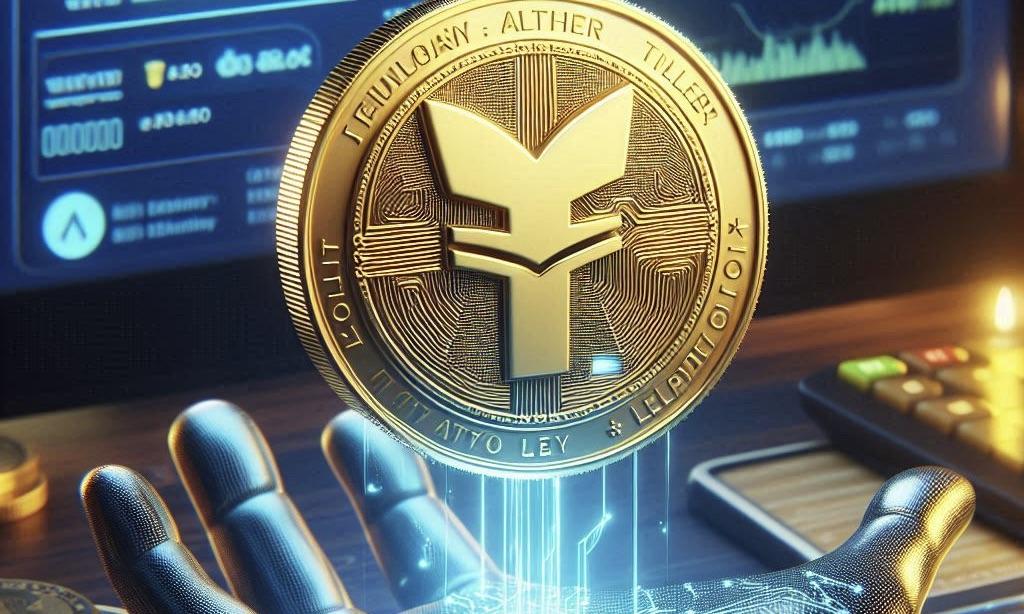
Tether has launched Alloy, a new gold-backed stablecoin pegged to the U.S. dollar, marking the first phase in its real-world asset tokenization platform.
Tether Introduces Alloy, a Gold-Backed Stablecoin on New Platform, Enhancing Digital Asset Security and Functionality
In a recent report by Cointelegraph, Tether is introducing a stablecoin supported by gold and linked to the U.S. dollar. The issuer declared it the first tethered asset. The new coin, Alloy (aUSDT), is mintable on the new Alloy by Tether platform.
The company has stated that Alloy will be overcollateralized by Tether Gold (XAUt), a token that is pegged to the U.S. currency and provides ownership of physical gold. The new token is a synthetic dollar, as it is intended to replicate the value and functionality of the U.S. dollar without being explicitly backed by it. This is its definition.
Tethered assets are "digital assets that aim to track the reference price of another asset through different stabilization mechanisms," as Alloy explained in an X post. Additionally, it stated:
“Alloy by Tether provides long-term holders the opportunity to maintain exposure to gold, while in parallel obtaining a dollar-referenced Tethered Asset for payments and day-to-day economy.”
The organization also stated that the platform could create other tethered assets, such as yield-bearing products, in the same thread.
A smart contract and price oracles can be used to mint the synthetic dollar by depositing XUSDT. Consequently, users can maintain their gold-backed Tether assets while conducting transactions with USD.
Moon Gold and Moon Gold El Salvador, subsidiaries of Tether, developed AUSDT. Paolo Ardoino, CEO of Tether, announced that Alloy by Tether will be integrated into a real-world asset tokenization platform launched later this year.
Tether's Alloy Joins a Competitive Synthetic Currency Market, Praised for High Liquidity and Strategic Control
Tether's aUSDT is not the first synthetic currency. Galoy introduced Stablesats, a synthetic dollar based on Bitcoin, on the Lightning Network in August 2022.
Nevertheless, the synthetic dollar gained popularity as a popular asset form when Ethena Labs, a startup, introduced its Ether-backed, dollar-pegged USDe in February. The launch was met with some skepticism. In June, an algorithmically balanced synthetic dollar was introduced as a variation on the concept. There was asymmetry.
One analyst has compared aUSDT favorably to USDe and other stablecoins, citing Tether's high liquidity and "smarter decision-making and less principal-agent risk" due to its centralized control.
Tether has provided USDT holders with a bonus at a 2:1 ratio and has allocated 10 million aUSDT to improve the transaction on the new asset.
Photo: Microsoft Bing













