


 Weight-Loss Drug Ads Take Over the Super Bowl as Pharma Embraces Direct-to-Consumer Marketing
  Global PC Makers Eye Chinese Memory Chip Suppliers Amid Ongoing Supply Crunch
  Sam Altman Reaffirms OpenAI’s Long-Term Commitment to NVIDIA Amid Chip Report
  Amazon Stock Rebounds After Earnings as $200B Capex Plan Sparks AI Spending Debate
  Toyota’s Surprise CEO Change Signals Strategic Shift Amid Global Auto Turmoil
  Google Cloud and Liberty Global Forge Strategic AI Partnership to Transform European Telecom Services
  SpaceX Prioritizes Moon Mission Before Mars as Starship Development Accelerates
  Nasdaq Proposes Fast-Track Rule to Accelerate Index Inclusion for Major New Listings
  AMD Shares Slide Despite Earnings Beat as Cautious Revenue Outlook Weighs on Stock
  TSMC Eyes 3nm Chip Production in Japan with $17 Billion Kumamoto Investment
  Hims & Hers Halts Compounded Semaglutide Pill After FDA Warning
  Instagram Outage Disrupts Thousands of U.S. Users
  Palantir Stock Jumps After Strong Q4 Earnings Beat and Upbeat 2026 Revenue Forecast
  Nintendo Shares Slide After Earnings Miss Raises Switch 2 Margin Concerns
  Jensen Huang Urges Taiwan Suppliers to Boost AI Chip Production Amid Surging Demand


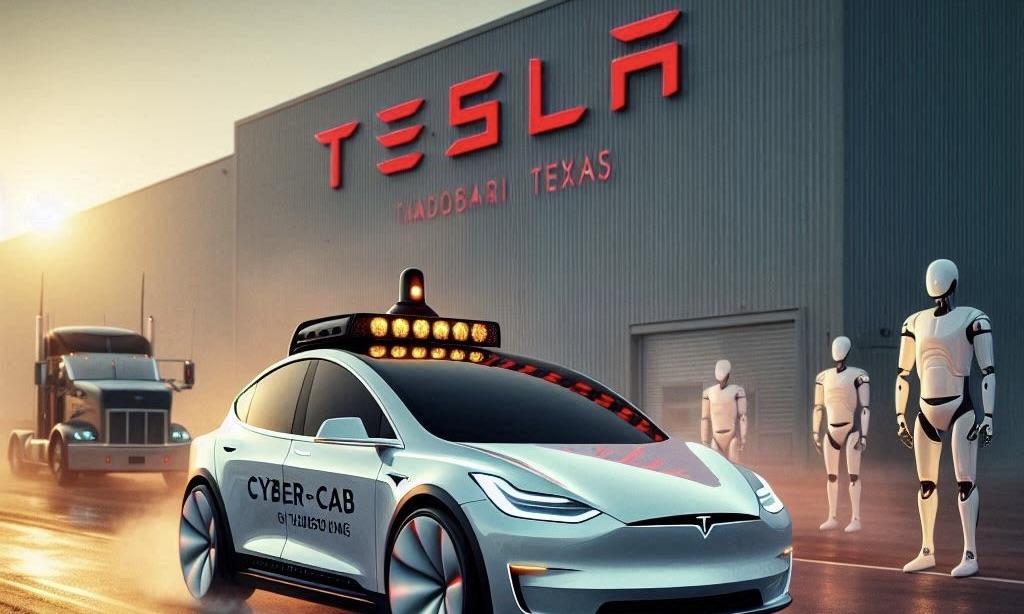
Tesla's Cybercab robotaxi has been spotted on private roads at Gigafactory Texas, marking a significant step in the company's autonomous vehicle testing. This test comes as Tesla pushes toward its goal of launching an unsupervised self-driving system by 2026. The relaxed Texas regulations make it an ideal testing ground.
Tesla Unveils Cybercab at Warner Bros. Studio Lot to Showcase Self-Driving Robotaxi Fleet
Tesla has been spotted testing its Cybercab robotaxi on the roads at Gigafactory Texas. This is notable given the limited locations where the company can test the steering-wheel-less vehicle, per Electrek.
When Tesla first unveiled the Cybercab last month, it chose to do so at the Warner Bros. studio lot, a decision made for strategic reasons. Tesla aimed to demonstrate what a self-driving robotaxi fleet could look like in an urban environment. While the studio lot mimics a small city, it consists entirely of private roads, which was crucial since Tesla has yet to seek permits for self-driving vehicle tests. Instead, the company relies on its "supervised Full Self-Driving" system, classified as a level 2 driver assist system where the driver always remains responsible for the vehicle.
This setup allows Tesla to test its system in its existing vehicles, but the Cybercab presents a different challenge, as it lacks a steering wheel and pedals altogether.
Tesla Tests Cybercab on Gigafactory Texas Roads as Company Moves Toward Unsupervised Self-Driving
Tesla has now been spotted testing the Cybercab on private roads at Gigafactory Texas in Austin. While some of the streets on the Gigafactory campus are private, Texas has more relaxed autonomous driving regulations than California, where Tesla initially unveiled the vehicle. In Texas, permits are not required for autonomous cars, making it an ideal location for testing Tesla's Cybercab.
Tesla has long avoided testing its self-driving technology in California due to the state's stringent data reporting rules for autonomous vehicles. During Tesla’s last earnings call, CEO Elon Musk and head of self-driving, Ashok Elluswamy, shared that the company aims for its Supervised FSD system to reach over 600,000 miles between disengagement by Q2 2025. At that point, Tesla plans to roll out its unsupervised self-driving system, which will precede the debut of Cybercab in the 2026 market.
While this is Tesla's ambitious goal, current data suggests the company is achieving approximately 190 miles between critical disengagements.













