


 Rise of the Zombie Bugs takes readers on a jaw-dropping tour of the parasite world
  Oracle Shares Fall as New Mexico AI Data Center Faces Power Delays
  CNN, MS NOW and Politico Sue Trump Over White House Media Ban
  Apple Extends Qualcomm Patent Licensing Deal
  GesiaPlatform Launches Carbon-Neutral Lifestyle App ‘Net Zero Heroes’
  RBI Uses $10 Billion Currency Swaps to Drain Excess Rupee Liquidity
  US 10-Year Treasury Yield at 6% Emerges as New Market Risk Threshold
  H&M Q3 Profit Beats Estimates as Margins Improve
  South Korea, US Discuss Warship Building Cooperation
  Extreme heat, flooding, wildfires – Colorado’s formerly incarcerated people on the hazards they faced behind bars
  Gold Drops Over 1% as Dollar, Treasury Yields Surge on Fed Rate Hike Bets
  Anthropic’s Claude Discovers CRISPR-Like Enzyme System
  Lake beds are rich environmental records — studying them reveals much about a place’s history
  Soybean Futures Slip as Traders Await Trump-Xi Trade Signals
  Microsoft Stock Upgraded as Stifel Sees Stronger Azure Growth
  Mercedes-Benz Eyes €800 Million Labor Cost Cuts in Germany


 Add as a preferred source on Google
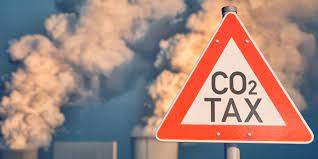
The European Union’s move to strengthen its carbon border adjustment mechanism (CBAM) through an amendment of the CBAM is expected to hurt South Korea's exports, as more local exporters face the EU's carbon taxes.
The International Institute of Trade, a research arm of the Korea International Trade Association (KITA), released a report entitled "Evaluation and Implications of the EU's CBAM Amendment," stating that the CBAM amendment passed by the EU Parliament in December is aimed at boosting regulatory levels.
According to research conducted by the International Institute of Trade, the five draft categories under CBAM regulations accounted for $3 billion in annual exports to the EU from 2019 to 2021, accounting for 5.4 percent of Korea's total exports to the EU.
CBAM application categories were enlarged as a result of the modification. CBAM was initially applied to five categories: steel, electricity, fertilizer, aluminum, and cement; however, during the parliamentary amendment process, four additional categories were added: organic chemicals, plastics, hydrogen, and ammonia, bringing the total regulatory categories to nine.
However, if the amendment's scope is enlarged to nine products, it will account for $5.51 billion, or 15.3 percent of total EU exports during the same period, nearly triple what it is now.
Furthermore, the initial draft only listed direct emissions, which are emitted during the manufacturing process. However, the amendment also covers indirect emissions, which include greenhouse gases released during the production of commodities using energy.
S. Korea emits 472.4 grams of carbon dioxide per kilowatt-hour (kWh) of energy produced in 2020, which is two to four times more than advanced markets such as the EU, which emits 215.7 grams, and Canada, which emits 123.5 grams.
The amendment also aims to move the complete implementation of CBAM from 2026 to 2025, one year earlier.







