


 Trump Administration Launches Trade Investigations Against 16 Countries Over Industrial Overcapacity
  Asian Stock Markets Rise as Oil Prices Pull Back; U.S. CPI in Focus
  Nations will release an extra 400 million barrels of oil to the market. All we need to do now is not panic at the pump
  China's Trade Surplus Surges Past Forecasts in Early 2026
  UK Housing Market Slows Amid Geopolitical Tensions and Mortgage Rate Fears
  U.S. Solar Market Contracts in 2025 as Trump Rolls Back Renewable Energy Incentives
  Asian Currencies Face Pressure as U.S.-Iran Conflict Weighs on Markets
  Bank of Japan Expected to Hold Rates at 0.75% Before June Hike Amid Middle East War Uncertainty
  Gold Prices Slip as U.S.-Israel-Iran War Fuels Dollar and Oil Demand
  Iran-U.S. Oil Tensions Escalate as Revolutionary Guards Threaten Strait of Hormuz Blockade
  U.S.-Israel War on Iran Sends Crude Oil Prices Surging Amid Strait of Hormuz Tensions
  Asia FX Steady as Iran War Signals and U.S. Inflation Data Weigh on Sentiment
  Dollar Strengthens Amid Oil Price Surge and Inflation Fears
  IEA Releases Record 400 Million Barrels of Oil Amid U.S.-Iran War
  Iran-Israel War Sparks Global Oil Crisis as Tankers Burn in Gulf Waters
  RBA Set for Back-to-Back Rate Hikes, Westpac Forecasts
  Venezuela Names Paula Henao as New Oil Minister Amid U.S.-Led Industry Overhaul


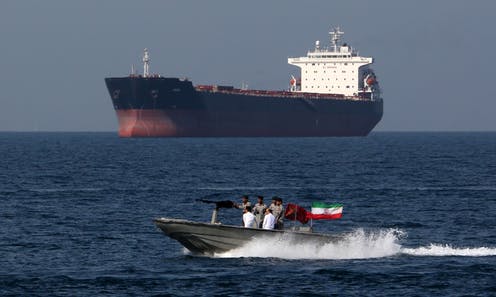
Global oil and liquefied natural gas (LNG) shipments through the Strait of Hormuz have been disrupted after the United States and Israel launched attacks on Iran, prompting Tehran to declare the strategic waterway closed. Several tanker owners, oil majors, and commodity trading houses have suspended crude oil, refined fuel, and LNG cargo movements, raising concerns about global energy supply and shipping security.
A senior executive at a major trading firm confirmed that vessels would remain anchored for several days as tensions escalate. Satellite tracking data shows oil tankers clustering near major regional hubs such as Fujairah in the United Arab Emirates instead of transiting through the Strait of Hormuz. According to an official from the European Union naval mission Aspides, multiple ships received VHF radio warnings from Iran’s Revolutionary Guards stating that no vessels are permitted to pass.
However, the British Navy said Iran’s directive is not legally binding under international law and advised ships to proceed with caution. Despite the warnings, maritime traffic has not completely halted, though disruptions are intensifying rapidly, according to shipbroker Poten & Partners. INTERTANKO, the global tanker association, reported that the U.S. Navy has warned that it cannot guarantee safe navigation across the Gulf, Gulf of Oman, North Arabian Sea, and the Strait of Hormuz.
The Strait of Hormuz is one of the world’s most critical energy chokepoints, handling roughly 20% of global oil supply, including exports from Saudi Arabia, the UAE, Iraq, Kuwait, and Iran, as well as significant LNG shipments from Qatar. Data from consultancy Kpler indicates that at least 14 LNG carriers have slowed, turned back, or stopped near the Strait, threatening Qatari gas exports.
Major shipping companies are adjusting operations. Germany’s Hapag-Lloyd has suspended vessel transit through the Strait, while Denmark’s Maersk is coordinating with security partners but continues cargo acceptance in the Middle East. France’s CMA CGM has instructed ships in or heading toward the Gulf to seek shelter, signaling heightened risks for global energy markets and international trade.













