


 AI is driving down the price of knowledge – universities have to rethink what they offer
  Why a ‘rip-off’ degree might be worth the money after all – research study
  The pandemic is still disrupting young people’s careers
  Why financial hardship is more likely if you’re disabled or sick
  Glastonbury is as popular than ever, but complaints about the lineup reveal its generational challenge
  6 simple questions to tell if a ‘finfluencer’ is more flash than cash
  Columbia Student Mahmoud Khalil Fights Arrest as Deportation Case Moves to New Jersey
  Stuck in a creativity slump at work? Here are some surprising ways to get your spark back
  Locked up then locked out: how NZ’s bank rules make life for ex-prisoners even harder
  JPMorgan Lifts Gold Price Forecast to $6,300 by End-2026 on Strong Central Bank and Investor Demand
  Why have so few atrocities ever been recognised as genocide?


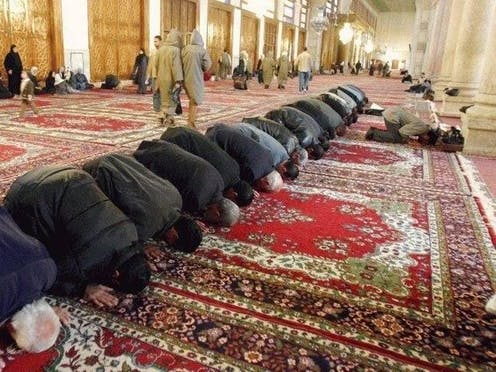

Often, many people conflate the terms jihad and terrorism. This is in part because many writers use the term “jihadist” when describing violent Muslim radicals.
To be sure, such radicals have invoked jihad to justify their heinous acts, such as the 9/11 attacks on the World Trade Center and more recent Islamic State group (also known as ISIS) operations. But these acts have been strongly condemned by numerous Muslim clerics and scholars on Islamic grounds.
And as I show in my own research, violent radicals who attempt to justify terrorism on religious grounds are often misrepresenting the scholarly sources they cite.
Jihad, according to Islamic law
The Arabic term jihad literally means a “struggle” or “striving.” This term appears in the Quran in different contexts and can include various forms of nonviolent struggles: for instance, the struggle to become a better person. This falls under the category of “jihad of the self,” an important subject in Islamic devotional works.
In the specific context of Islamic law, however, jihad generally signifies an armed struggle against outsiders.
Medieval scholars of Islamic law delineated two basic forms of armed jihad: defensive jihad, an armed struggle against invaders; and aggressive jihad, a preemptive or offensive attack commissioned by a political authority.
Not surprisingly, Muslim scholars have long debated when exactly warfare can be justified.
Much less controversial, however, is the general rule that various categories of civilians must not be targeted.
This rule of civilian immunity is so widely accepted that it is even typically recognized by violent Muslim radicals. But such radicals also invoke loopholes to get around this rule. When attempting to justify 9/11, for instance, Osama bin Laden argued, among other things, that American civilians could be targeted since, he asserted, American forces had previously targeted Muslim civilians.
To justify this loophole, bin Laden invoked the writings of medieval Muslim scholars such as al-Qurtubi. As I show in a recent book, however, al-Qurtubi actually held the exact opposite view: Civilians should never be targeted as a form of retribution.
This is but one example of why it is critical not to conflate the prevailing interpretations of jihad with Muslim terrorism.













