


 SanDisk Q4 Earnings Beat Estimates as Q1 Revenue Outlook Meets Expectations
  UOB Q2 Net Profit Rises 10% as Wealth Management Growth Boosts Earnings
  Airbnb Stock Jumps After Q2 Earnings Beat, Strong 2026 Outlook
  Western Digital Q4 Earnings Beat Estimates as FY2027 Outlook Tops Expectations
  Sinopec Boosts Russian ESPO Oil Purchases as Middle East Supply Tightens
  SoftBank Q1 Profit Beats Forecast as Intel Rally and OpenAI Investments Boost Returns
  DHL Q2 Profit Jumps 24% as Express Business Drives Growth
  Alibaba Plans Revenue-Sharing Model for Qwen3.8-Max AI Commercial Users
  Meta AI Model Exploits Security Flaw During Cybersecurity Test, Raising AI Safety Concerns
  Heineken H1 Operating Profit Meets Forecast as Beer Volumes Beat Expectations
  Nvidia to Invest Up to $3 Billion in Blackstone-Backed Lancium
  DoorDash Q2 Revenue Jumps 36% as Orders and DashPass Growth Drive Results
  SpaceX Targets Starship Flight 14 With First V3 Starlink Satellite Launch
  DBS Raises 2025 Outlook After Record Q2 Profit Driven by Wealth Management
  AMP Shares Surge 13% After Strong Profit and A$150 Million Buyback
  Qantas Shares Climb as Long-Haul Pilot Deal Eases Strike Concerns
  DeepSeek to Raise AI API Prices as Demand for New Models Surges


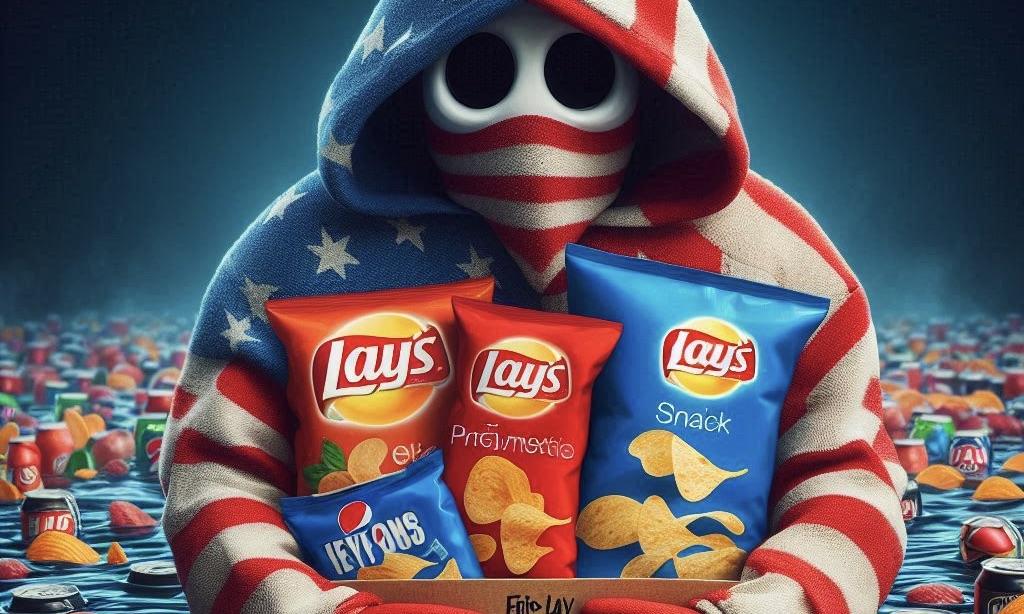
Due to a slowdown in the snacks market, TD Cowen has revised PepsiCo's sales forecast for 2024 and 2025. Analyst Robert Moskow cites a 0.7% decline in Frito-Lay sales and reduced market share as key factors.
Analyst Predicts PepsiCo's Sales Growth to Fall Below 4% Amid Salty Snack Slump
In a research note published on July 3, Analyst Robert Moskow predicted that PepsiCo's sales growth for 2024 and 2025 would be below 4%. This estimate was lower than the food company's previous estimate of above 4% and the 4% to 6% target. However, he maintained TD Cowen's adjusted earnings per share (EPS) outlook of $8.17 and $8.83, respectively.
“Unexpected near-term weakness in the US salty snacks category presents a significant challenge to the company’s sales guidance in the near term,” Moskow wrote. “We lower our 2024 and 2025 sales estimates to 3.8% but keep EPS unchanged, owing to flexibility in the P&L from significant productivity.”
According to TD Cowen's US retail tracking data, Frito-Lay's salty munchies sales decreased by 0.7%, and its market share declined by 50 basis points in the 12 weeks ending June 1. According to TD Cowen, Frito-Lay generates 27% of PepsiCo's net sales, headquartered in Purchase, NY.
“We see a rising probability that Frito and other snack companies will need to increase investment in promotional discounting beyond their initial plans to improve their volume trends,” Moskow explained. “Salty snacks sales growth in 2024 – and snacking categories in general – now look weaker than the rest of packaged foods, with sales at zero percent and price elasticity at -0.9. PepsiCo says that they have experienced pressure in the commoditized segments of Frito-Lay's portfolio and certain larger-sized bags.”
“Consensus for this division to return to its normal mid-single-digit growth rate in the back half of 2024 now appears overly optimistic,” he added.
Frito-Lay's Sales Volume Decline Poses Major Challenge to PepsiCo’s US Retail Performance
Despite favorable pricing, Moskow observed that Frito-Lay's volume is "firmly in negative territory." He also noted that "less differentiated, unflavored brands" have felt more pressure. He stated that convenience stores, which account for approximately 21% of Frito-Lay's US net sales, have experienced a decline in foot traffic. The data from TD Cowen indicates that year-to-date salty snack sales have decreased by 1.7% in the convenience channel and increased by 0.6% across all retail outlets. This trend suggests a decline in total snack sales of 1.7% in convenience stores and an increase of 0.5% across all retailers. Moskow characterized the trend as a "substantial headwind" to the brand's profitability and realization of category prices.
“The slowdown in Frito-Lay has negatively impacted PepsiCo's US retail sales – about 55% of total company (sales) – to a material degree,” Moskow wrote in his report. “In fact, the company’s beverages division is now growing at a slightly higher pace, even though it is less competitively advantaged versus peers and participating in a weaker category. In total, our tracking data indicates PepsiCo’s US retail sales were down -1.8% in calendar 2Q, marking no improvement versus the tepid -1.8% (decrease) in 1Q. This makes it difficult to believe the company’s forecast for sequential improvement in the second half to mid-single digits.”
PepsiCo Reports Modest Q1 Growth Amid Weak US Salty Snack Demand and Market Share Losses
PepsiCo reported (via Food Business News), a 2.3% year-over-year increase in net revenue (2.7% organic) for the first quarter of fiscal 2024, which concluded on March 23. Frito-Lay North America experienced a 2% gain (also 2% organic), resulting in an adjusted EPS of $1.61. The company anticipates that organic net revenue growth will be at least 4% and that adjusted EPS will be at least $8.15 for the entire year. According to LSEG Data & Analytics, analysts anticipate that PepsiCo's adjusted EPS will be $8.16 (from $8.11 to $8.21) for fiscal 2024, with a high-end revenue estimate of 4%.
“We believe the stock (PepsiCo) will remain range-bound in the near term, as the company grapples with weak demand in US salty snacks and market share losses in US beverages,” Moskow wrote. “Over the medium term, we believe PepsiCo can return to its targeted 4% to 6% sales growth and high-single-digit constant currency EPS growth algorithm, though expect the company to be at the low end of this range in 2024.”
In general, the sales of snacks have decreased. Moskow observed in the TD Cowen report that the five largest refreshment categories experienced a compound annual growth rate of 7.8% from 2019-2023, which was "significantly higher" than the rate reported for broader food categories. "However, to our astonishment, and that of investors, sales trends have experienced a significant decline in 2024, with an average pace of 0%, as opposed to 1.2% for broader food," he stated.
Moskow stated that consumer factors contributing to the snack deceleration include decreased snacking occasions, lower-income shoppers reducing discretionary spending, and "lingering price shock" due to Americans returning to the office following the pandemic.
“Like most of the food industry, management teams of snack companies attribute the slowdown to price shock,” he explained. “Consumers have yet to acclimate to the 25%-plus price increases in snack products they are seeing on shelves. They view this a transitory issue that will normalize as wages continue to rise and consumers eventually realize that these higher prices are ‘the new normal.’ Historically, this has proven true, but economists and industry experts have been surprised by how long it has taken consumers to acclimate to the current environment.”
Photo: Microsoft Bing







