


 Bank of Japan Signals Readiness for Near-Term Rate Hike as Inflation Nears Target
  Asian Markets Slip as AI Spending Fears Shake Tech, Wall Street Futures Rebound
  South Korea’s Weak Won Struggles as Retail Investors Pour Money Into U.S. Stocks
  Thailand Inflation Remains Negative for 10th Straight Month in January
  Silver Prices Plunge in Asian Trade as Dollar Strength Triggers Fresh Precious Metals Sell-Off
  Asian Stocks Slip as Tech Rout Deepens, Japan Steadies Ahead of Election
  Oil Prices Slip as U.S.–Iran Talks Ease Supply Disruption Fears
  Japan Economy Poised for Q4 2025 Growth as Investment and Consumption Hold Firm
  Trump Lifts 25% Tariff on Indian Goods in Strategic U.S.–India Trade and Energy Deal
  Vietnam’s Trade Surplus With US Jumps as Exports Surge and China Imports Hit Record
  U.S. Stock Futures Edge Higher as Tech Rout Deepens on AI Concerns and Earnings
  Japanese Pharmaceutical Stocks Slide as TrumpRx.gov Launch Sparks Market Concerns
  Gold Prices Slide Below $5,000 as Strong Dollar and Central Bank Outlook Weigh on Metals
  Global Markets Slide as AI, Crypto, and Precious Metals Face Heightened Volatility
  Singapore Budget 2026 Set for Fiscal Prudence as Growth Remains Resilient
  RBI Holds Repo Rate at 5.25% as India’s Growth Outlook Strengthens After U.S. Trade Deal
  U.S. Stock Futures Slide as Tech Rout Deepens on Amazon Capex Shock


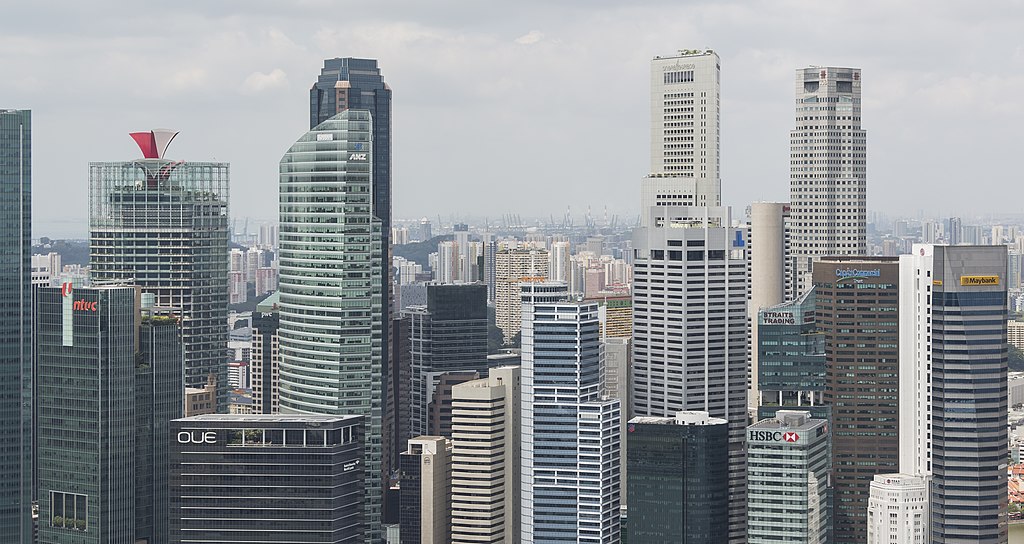
Singapore has upgraded its economic outlook for 2025 after stronger-than-expected third-quarter performance, signaling renewed momentum for the city-state’s recovery. Official data released Friday showed that Singapore’s GDP grew 4.2% year-on-year in Q3, outpacing the earlier advance estimate of 2.9% and surpassing economists’ median forecast of 4.0%. On a quarter-on-quarter seasonally adjusted basis, the economy expanded by 2.4%, reflecting broad-based resilience across key industries.
With the improved results, the Ministry of Trade and Industry revised its 2025 GDP growth forecast to around 4.0%, up from the previous range of 1.5% to 2.5%. The ministry attributed the upgrade to stronger global demand and better-than-expected performance among major trading partners. Looking further ahead, Singapore expects GDP growth of 1.0% to 3.0% in 2026, though officials cautioned that risks remain.
Trade ministry permanent secretary Beh Swan Gin noted that potential headwinds—such as geopolitical tensions, trade disputes, and a possible slowdown in global capital expenditure—could weigh on the 2026 outlook. He highlighted that while demand for artificial intelligence services is likely to stay robust, investment in AI-related infrastructure may moderate if global financial conditions weaken.
Enterprise Singapore also adjusted its outlook for non-oil domestic exports (NODX), projecting around 2.5% growth in 2025, supported by strong AI-related shipments and elevated gold prices. For 2026, NODX growth is expected to range between 0% and 2%.
Meanwhile, the Monetary Authority of Singapore kept monetary policy unchanged in its October review, citing steady growth despite challenges from U.S. import tariffs. MAS chief economist Edward Robinson emphasized that the policy stance remains appropriate, with the output gap expected to stay positive through 2025.
Singapore currently faces a 10% U.S. tariff on exports—less severe than those levied on neighboring countries—but sector-specific tariffs, such as the planned 100% levy on branded pharmaceuticals, present notable risks. Authorities have delayed implementation of that tariff to allow negotiations on possible exemptions. Broader sectoral tariffs could impact major export categories like semiconductors, consumer electronics, and pharmaceutical products, which collectively make up roughly 40% of Singapore’s shipments to the U.S.
Overall, the upgraded projections reflect growing confidence in Singapore’s economic strength as it navigates global uncertainties heading into 2025 and 2026.













