


 Unsustainable – or manageable? We don’t yet know how data centres will impact Australia’s environment
  How ongoing deforestation is rooted in colonialism and its management practices
  GesiaPlatform Launches Carbon-Neutral Lifestyle App ‘Net Zero Heroes’
  Goldman Sachs Names Simon Lyons UK Investment Banking Co-Head
  Gold Drops Over 1% as Dollar, Treasury Yields Surge on Fed Rate Hike Bets
  Japan Private-Sector Growth Slows as Domestic Demand Weakens
  LA fires: Long-term exposure to wildfire smoke is poorly understood − and a growing risk
  Apple Extends Qualcomm Patent Licensing Deal
  US Northeast Airports Resume Operations After Telecom Outage Disrupts Thousands of Flights
  European Stocks Fall as Bond Yields and Geopolitical Risks Weigh
  OpenAI Agent Breaches Australia Medicare Data Portal
  US 10-Year Treasury Yield at 6% Emerges as New Market Risk Threshold
  Russian Envoy Dmitriev Heads to US for Ukraine Talks
  How is Antarctica melting, exactly? Crucial details are beginning to come into focus


 Add as a preferred source on Google
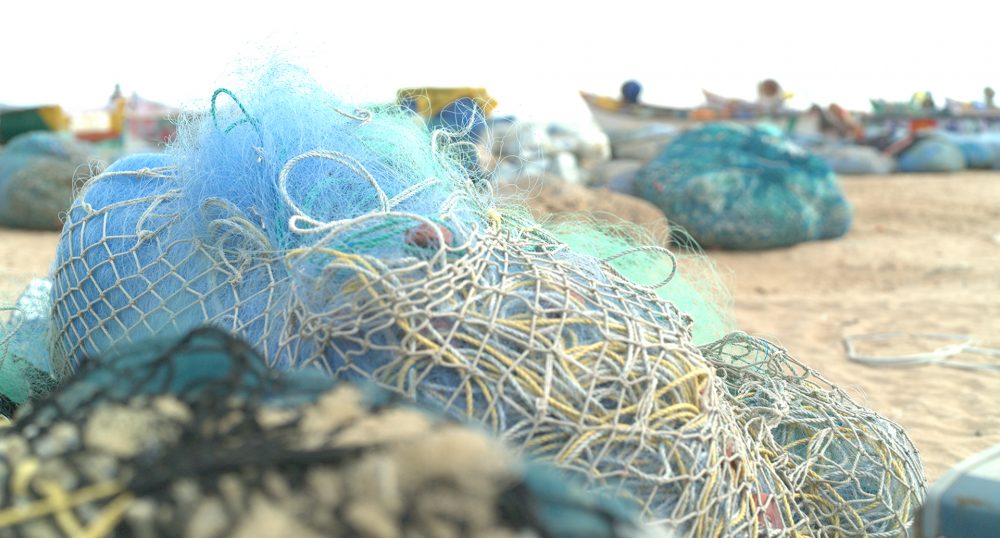
Samsung Electronics Co. said that plastic parts it recycles from discarded ocean-bound fishing nets dubbed “ghost net plastic” are more effective in cutting back on carbon emissions than other plastic types.
The company uses the “ghost net plastic” to produce the company’s Galaxy S22 and Galaxy S8 smartphones and Galaxy Book 2 Pro laptops, all released earlier this year.
According to the life cycle assessment (LCA) conducted by the US-based safety certification company UL, carbon emissions from the manufacturing of one ton of OM-52 recycled plastic were 3.3 tons, which was 25 percent less than that of a ton of regular plastic (MS-51).
Fishing nets were gathered from the Indian Ocean and cut, cleaned, and compacted before being recycled into polyamide resin pellets.
Pellets have been used to create key brackets for the Galaxy S22 series, the interior of the Galaxy S22 Ultra's S-pen cover, and touchpad holders and bracket interiors for the Galaxy Book 2 Pro series.







