


 PDG Explores $1 Billion Sale of China Data Center Assets
  Samsung to Invest $1.5 Billion in Vietnam Semiconductor Testing Plant by 2027
  Samsung Union Dispute Escalates Over Semiconductor Bonus Vote
  Blue Origin New Glenn Rocket Explodes During Launch Pad Test, Delaying Space Ambitions
  SpaceX Delays Starship V3 Launch Ahead of Potential Record IPO
  Dell Raises 2027 Revenue Forecast as AI Server Demand Drives Record Quarterly Results
  Macquarie Names Five Taiwan AI Stocks Set to Benefit From Data Center Growth in 2026
  Mega IPOs Like SpaceX and OpenAI Could Reshape S&P 500 and Nasdaq 100 Portfolios in 2026
  Meta AI Push Could Add $26 Billion in Revenue by 2027, Wolfe Research Says
  Snowflake Stock Soars 30% After Q1 Earnings Beat and Major AWS AI Partnership
  Morgan Stanley Names Top AI Security and Data Center Stocks for 2026
  Salesforce Q1 FY2027 Earnings Beat Expectations Despite Soft Q2 Revenue Outlook
  SpaceX IPO Hype Raises Questions as Many Major Stock Debuts Underperform Market
  Samsung Workers Approve Wage Deal, Avoiding Major Strike and Boosting Chip Supply Confidence
  Lam Research Expands AI-Powered Semiconductor Tools and Arizona Operations
  SK Hynix Joins $1 Trillion Club as AI Chip Demand Fuels Stock Surge


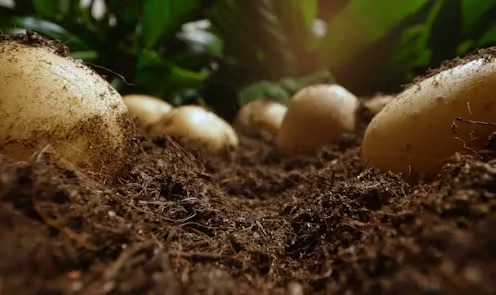


Potatoes are the premier vegetable crop in Canada, with $1.5 billion nationwide in potato receipts in 2021. The agricultural significance of potatoes is particularly prominent in provinces like New Brunswick, the home of McCain Foods Limited, the world’s largest potato processor.
Insights from the 2022 Canadian Potato Acreage Report, produced by the United Potato Growers of Canada, reveal significant changes in how and where potatoes are grown in Canada.
In the eastern provinces, the report found there’s been a reduction in seeded acreage. It attributes this phenomenon primarily to higher fuel and fertilizer costs; as a result, potato growers have been looking for nutrient-management practices that optimize crop quality and yields.

Potatoes are an important crop in Canada. (Shutterstock)
Nutrients and yields
Nutrient-management planning holds paramount importance among potato growers. Nutrient deficiencies can limit crop yields, and meeting production targets requires environmental management.
The use of fertilizers and other soil amendments needs to be balanced with mitigating environmental impacts. As the Canadian potato landscape continues to evolve, the delicate equilibrium between production ambitions and environmental protection remains at the forefront of industry considerations.
Providing nutrition
In potato production, the application of nutrients is conventionally achieved mainly through soil treatments with possible foliar feeding of certain nutrients, which involves the application of fertilizer directly onto the plants’ leaves.
Prevailing industry practices often involve the concentrated application of fertilizers during the planting or hilling phases, particularly in Atlantic Canada. While this approach may be suitable for certain nutrients, it presents challenges for nutrients required at later stages of potato growth.
As a result, the adoption of in-season fertilizer applications has become attractive to potato growers, serving to ensure a sustained availability of vital nutrients for efficient plant uptake. The practice of tissue chemical testing is a valuable tool for assessing plant nutritional status during the growing season.
By analyzing the chemical composition of plant tissues during the growing season, potato growers may learn how to apply fertilizers at the right rate, time and place.
The process of tissue sampling for chemical analysis is characterized by cautious selection of specific plant tissues. The petiole of the fourth leaf — the stalk that attaches it to the plant stem — from the top is identified as ideal. For accurate assessment, approximately 40 to 50 petioles gathered from across the sample area are required for one report of chemical results.
Tissue analysis challenges
A challenge when conducting tissue analysis lies in the precise selection of the appropriate petiole for sampling. Choosing the wrong petiole can lead to misleading outcomes, obscuring the true nutritional state of the plant.
In addition, the accuracy of tissue testing outcomes is significantly contingent upon the interval between sample collection and subsequent analysis. The potential degradation of samples over time can render results less representative of the true nutritional status at the moment of sampling.
There is also an intense labour requirement involved in gathering petiole samples — this kind of testing requires trained personnel. Therefore, adopting other rapid and efficient techniques for routine analysis to identify nutritional status is needed.
Spectroscopy assessments
Technological advances in optical sensors and their wavelength ranges has led to wide-ranging applications of spectroscopy to evaluate the nutritional composition of plants using machine learning techniques.
Spectroscopy instruments have been widely researched to assess nutrients in plants based on leaf chemical content such as in fingered citron. Another use is to assess nutrients in degraded vegetation using near infrared spectra.

Research is ongoing to assess the possibility of deploying spectral instruments for the assessment of nutrients in fingered citron trees. (Shutterstock)
However, it is impractical to deploy spectral instruments over a petiole due to their thin shape. That means research is required to find the correlation between the petiole chemical content and leaf spectra.
Real-time measurements
Our research project uses a portable spectrophotometer to rapidly determine petiole nutrient values in a potato field.
The sensed leaf spectral data are analyzed by a machine-learning algorithm — trained on historical data — to estimate petiole nutrients with near real-time results. This process is facilitated by cloud computation and the Internet of Things.
This new approach promises to be a valuable tool for farmers, enabling them to efficiently apply the necessary fertilizers in a timely manner, which will eventually balance between production ambitions and environmental protection.







