


 Mexico's Electoral Reform Bill Fails in Congress as Coalition Fractures
  Taiwan's MQ-9B SkyGuardian Drone Order Stays on Schedule Despite Middle East Conflict
  U.S.-Israel War on Iran Sends Crude Oil Prices Surging Amid Strait of Hormuz Tensions
  Venezuela Names Paula Henao as New Oil Minister Amid U.S.-Led Industry Overhaul
  Israel-Iran War: Herzog Urges Patience as U.S. and Israeli Strikes Intensify
  Pentagon Taps Wall Street Talent to Manage $200 Billion Defense Investment Fund
  U.S. Senate Greenlights AI Chatbots for Official Staff Use
  Trump Announces New U.S. Oil Refinery in Texas with Indian Energy Giant Reliance
  U.S. and Russia Hold Diplomatic Talks in Florida Amid Ongoing Tensions
  Iran-Israel War Sparks Global Oil Crisis as Tankers Burn in Gulf Waters
  U.S. Calls for Reassessment of International Aid to Taliban-Ruled Afghanistan
  Boeing Secures $289 Million Smart Bomb Contract With Israel
  Trump Doubts Iran Mining Reports as Strait of Hormuz Tensions Escalate
  Ukraine Strikes Russian Missile Component Factory in Bryansk Using British Weapons
  Trump Administration Spent $5.6 Billion in Munitions in Opening Days of Iran Strikes
  Trump Hints at Possible U.S. Takeover of Cuba Amid Deepening Humanitarian Crisis
  After the Iran war, Persian Gulf nations face tough decisions on the US – a former diplomat explains


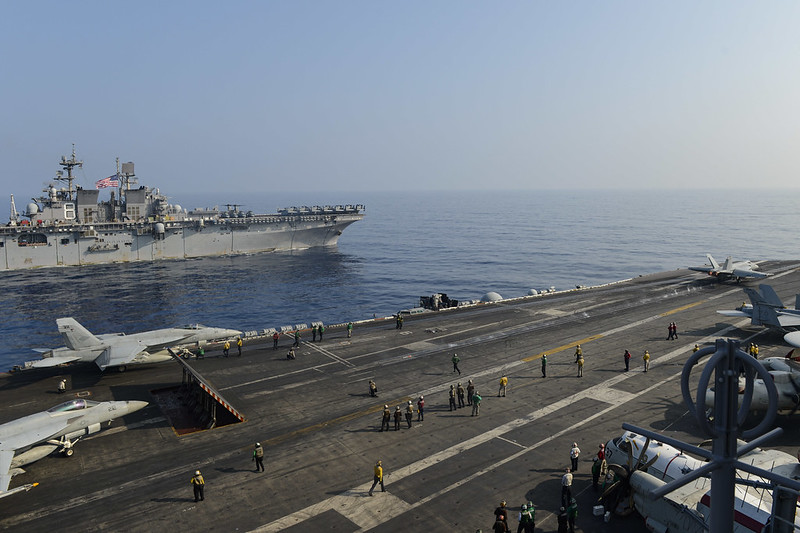
The navies of the Philippines, the United States, and Japan carried out joint military exercises in the South China Sea this week, reinforcing defense cooperation and regional maritime security. The Armed Forces of the Philippines confirmed on Friday that the coordinated drills were aimed at strengthening interoperability and enhancing Maritime Domain Awareness among allied forces operating in the strategically vital waterway.
The South China Sea remains a focal point of geopolitical tension due to its rich natural resources and critical global shipping routes. China continues to claim most of the area despite a landmark 2016 arbitral tribunal ruling that invalidated Beijing’s sweeping historical claims. Since 2023, the Philippines has intensified collaboration with key allies to assert its sovereign rights and maritime entitlements under international law.
According to the Philippine military, the joint activity demonstrates the sustained commitment of partner nations to reinforce maritime security and maintain a rules-based international order in the Indo-Pacific region. The exercises featured a range of coordinated naval and air operations designed to improve tactical coordination and communication among participating forces.
The Philippines deployed its BRP Antonio Luna frigate, along with fighter jets and helicopters. Japan contributed a P-3 Orion maritime patrol aircraft, while the United States sent the guided-missile destroyer USS Dewey and a P-8 Poseidon surveillance aircraft. Training activities included replenishment-at-sea maneuvers, joint air patrols, fly-bys, and communications check exercises, all aimed at boosting operational readiness.
Earlier this month, on February 15 and 16, the Philippines also conducted similar maritime drills with Australia and the United States, further highlighting Manila’s growing network of defense partnerships. These joint naval exercises underscore the Philippines’ strategy of deepening military alliances to safeguard stability, freedom of navigation, and security in the contested South China Sea.













