


 FBI Warns of Possible Iranian Drone Attacks on California Amid U.S.-Iran War
  Russian Drone Strikes Hit Kharkiv and Dnipro, Injuring Over 20 Civilians
  Trump Announces New U.S. Oil Refinery in Texas with Indian Energy Giant Reliance
  Iran-Israel War Sparks Global Oil Crisis as Tankers Burn in Gulf Waters
  After the Iran war, Persian Gulf nations face tough decisions on the US – a former diplomat explains
  Trump-Putin Call Addresses Iran War, Ukraine Peace, and Global Oil Crisis
  U.S. Patriot Missiles Redeployed From South Korea Amid Middle East Conflict
  Trump Hints at Possible U.S. Takeover of Cuba Amid Deepening Humanitarian Crisis
  U.S. and Russia Hold Diplomatic Talks in Florida Amid Ongoing Tensions
  Iran-U.S. Oil Tensions Escalate as Revolutionary Guards Threaten Strait of Hormuz Blockade
  U.S.-Israel War on Iran Sends Crude Oil Prices Surging Amid Strait of Hormuz Tensions
  Taiwan's MQ-9B SkyGuardian Drone Order Stays on Schedule Despite Middle East Conflict
  Boeing Secures $289 Million Smart Bomb Contract With Israel
  Trump Administration Spent $5.6 Billion in Munitions in Opening Days of Iran Strikes
  U.S. Senate Greenlights AI Chatbots for Official Staff Use
  U.S. Calls for Reassessment of International Aid to Taliban-Ruled Afghanistan
  Shots Fired at U.S. Consulate in Toronto in Suspected National Security Incident


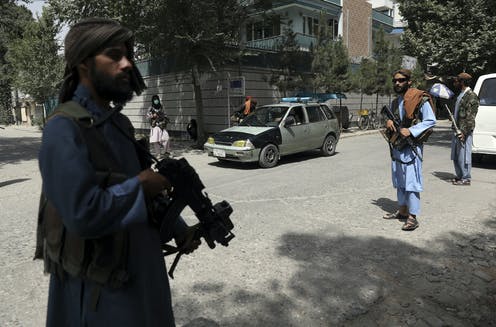
Afghanistan’s Taliban government said it is ready to negotiate with Pakistan after a sharp escalation in cross-border violence that both sides have described as an “open war.” The crisis intensified when Pakistan launched airstrikes targeting Kabul, Kandahar, and other Afghan cities, accusing the Taliban of harboring militants responsible for attacks inside Pakistan.
Taliban spokesperson Zabihullah Mujahid confirmed that Pakistani airstrikes struck parts of Kabul, Kandahar, Paktia, Paktika, Khost, and Laghman. Thick smoke and large fires were reported in the Afghan capital, with witnesses describing loud explosions and emergency sirens. A Kabul resident said an ammunition depot was hit, causing secondary blasts as stored ordnance ignited. Taliban officials reported civilian casualties but did not provide detailed figures.
Pakistan stated that its military carried out air-to-ground missile strikes on Taliban military positions in response to Afghan drone attacks along the shared border. Islamabad claimed the strikes killed 274 Taliban officials and militants, while Afghanistan said it killed 55 Pakistani soldiers. Reuters could not independently verify those numbers. Pakistan confirmed 12 of its soldiers died, and Afghanistan acknowledged the loss of 13 Taliban fighters.
The conflict stems from long-standing tensions over Pakistan’s allegation that Afghanistan shelters Tehreek-e-Taliban Pakistan (TTP) militants. Kabul denies providing safe haven, insisting that Pakistan is shifting blame for its internal security challenges. The United Nations has previously noted links between the Afghan Taliban and the TTP.
UN Secretary-General Antonio Guterres expressed deep concern and called for an immediate ceasefire and diplomatic resolution. The United States voiced support for Pakistan’s right to defend itself, while the European Union urged de-escalation and dialogue.
With Pakistan’s superior military strength and Afghanistan’s experienced guerrilla forces, fears are rising of prolonged instability along the 2,600-kilometer border. Qatar and other regional actors are reportedly working to mediate and prevent further escalation in the Afghanistan-Pakistan conflict.













