


 China Warns US Arms Sales to Taiwan Could Disrupt Trump’s Planned Visit
  Bangladesh Election 2026: A Turning Point After Years of Political Suppression
  Bosnian Serb Presidential Rerun Confirms Victory for Dodik Ally Amid Allegations of Irregularities
  Trump’s Inflation Claims Clash With Voters’ Cost-of-Living Reality
  Israel Approves West Bank Measures Expanding Settler Land Access
  U.S. Lawmakers to Review Unredacted Jeffrey Epstein DOJ Files Starting Monday
  New York Legalizes Medical Aid in Dying for Terminally Ill Patients
  Federal Judge Restores Funding for Gateway Rail Tunnel Project
  Nicaragua Ends Visa-Free Entry for Cubans, Disrupting Key Migration Route to the U.S.
  Trump Says “Very Good Talks” Underway on Russia-Ukraine War as Peace Efforts Continue
  US Pushes Ukraine-Russia Peace Talks Before Summer Amid Escalating Attacks
  Ohio Man Indicted for Alleged Threat Against Vice President JD Vance, Faces Additional Federal Charges
  Antonio José Seguro Poised for Landslide Win in Portugal Presidential Runoff
  Japan’s Prime Minister Sanae Takaichi Secures Historic Election Win, Shaking Markets and Regional Politics
  Trump Backs Nexstar–Tegna Merger Amid Shifting U.S. Media Landscape
  Trump Administration Appeals Court Order to Release Hudson Tunnel Project Funding


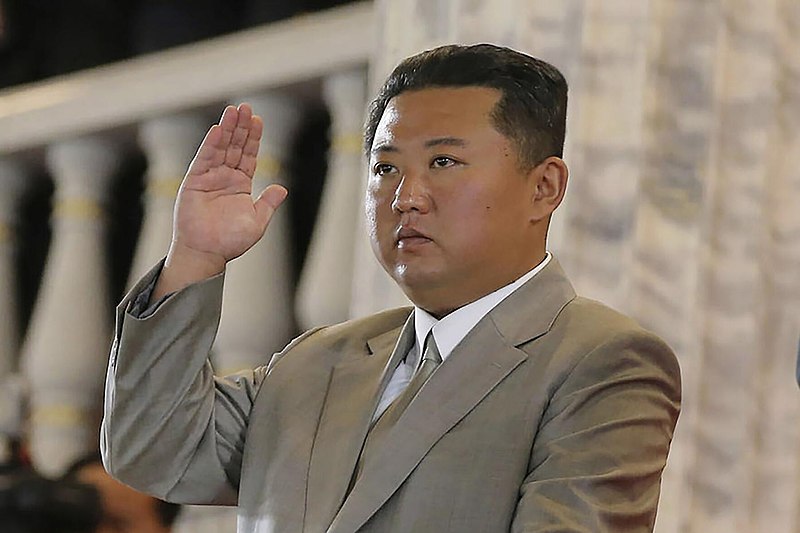
Following reports that North Korea’s nuclear facility has restarted operations, it is a sign that the isolated nation plans to move forward with its nuclear program. This week, state media reported that North Korean leader Kim Jong-un celebrated as the nation carried out a successful launch of its first hypersonic missile.
State media outlet KCNA reported that Kim celebrated the nation’s successful launch of its first hypersonic missile, marking North Korea’s entry into the group of global military powers. The missile was launched off the country’s east coast into the sea, according to people familiar with the matter in the South Korean military. The successful launch also comes as North Korea previously tested missiles over the past several weeks, effectively violating UN Security Council regulations on testing and firing such weapons.
Hypersonic missiles fly towards targets at low altitudes at five times the speed of sound at around 6,200 kilometers per hour. So far, only the US, China, and Russia have had such capabilities until now. The launch has since placed both the US and South Korea on alert, especially as North Korea has confirmed that the launch was a test of “navigational control and stability.”
Despite the success of the first hypersonic missile, experts are still questioning whether Pyongyang will be able to advance its nuclear program.
“It is unlikely that North Korea has reliably developed all the technologies its propaganda claim,” said Leif-Eric Easley, associate professor of international studies at Seoul’s Ewha Women’s University. “However, if Pyongyang managed to fit a nuclear warhead even on a rudimentary hypersonic, it would be a dangerous weapon because it wouldn’t have to be extremely accurate to threaten the nearby metropolis of Seoul.”
Previously, Kyodo News reports that Tokyo has named North Korea, China, and Russia as threats to cyberspace as the Japanese government drafted a cybersecurity strategy for the next three years, naming the three countries as threats for the first time. The plan is expected to receive an endorsement from the Cabinet.
The strategy stated that the three nations are suspected of being involved in “hostile” cyber activities, according to the outlet.













