


 Nvidia Reportedly Eyes $13 Billion Hugging Face Acquisition
  Pinterest Stock Falls as CFO Julia Brau Donnelly Resigns
  Amazon Shares Fall as FTC Plans Ad Pricing Lawsuit
  Google Changes EU Spam Policy Amid Antitrust Scrutiny
  HP Stock Drops 9% Despite Q3 Earnings Beat and Raised 2026 Outlook
  Meta Agrees to $18 Billion Settlement, Tightens Teen Social Media Rules
  PayPal Shares Sink as $50 Billion Takeover Bid Collapses
  Aon Nears $17 Billion Deal to Buy USI Insurance From KKR
  Countries Tighten Social Media Bans for Children
  Amazon Secures 200 MW Wind Power Deals in Sweden
  U.S. Probes Apex Logistics Over Nvidia AI Chip Shipments to China
  Mercer International Stock Surges 45% on C$20 Million Canada Funding
  Honda, Nissan Eye Shared Vehicle Software Platform by 2029
  Nvidia Options Price in $280 Billion Earnings Swing
  SpaceX Mobile Network Could Cost Up to $130 Billion, Bernstein Says
  Nvidia Pauses AI Cloud Financing Deals Amid Antitrust Concerns
  Shein Hong Kong IPO to Raise $1.7 Billion at $26.5 Billion Valuation


 Add as a preferred source on Google
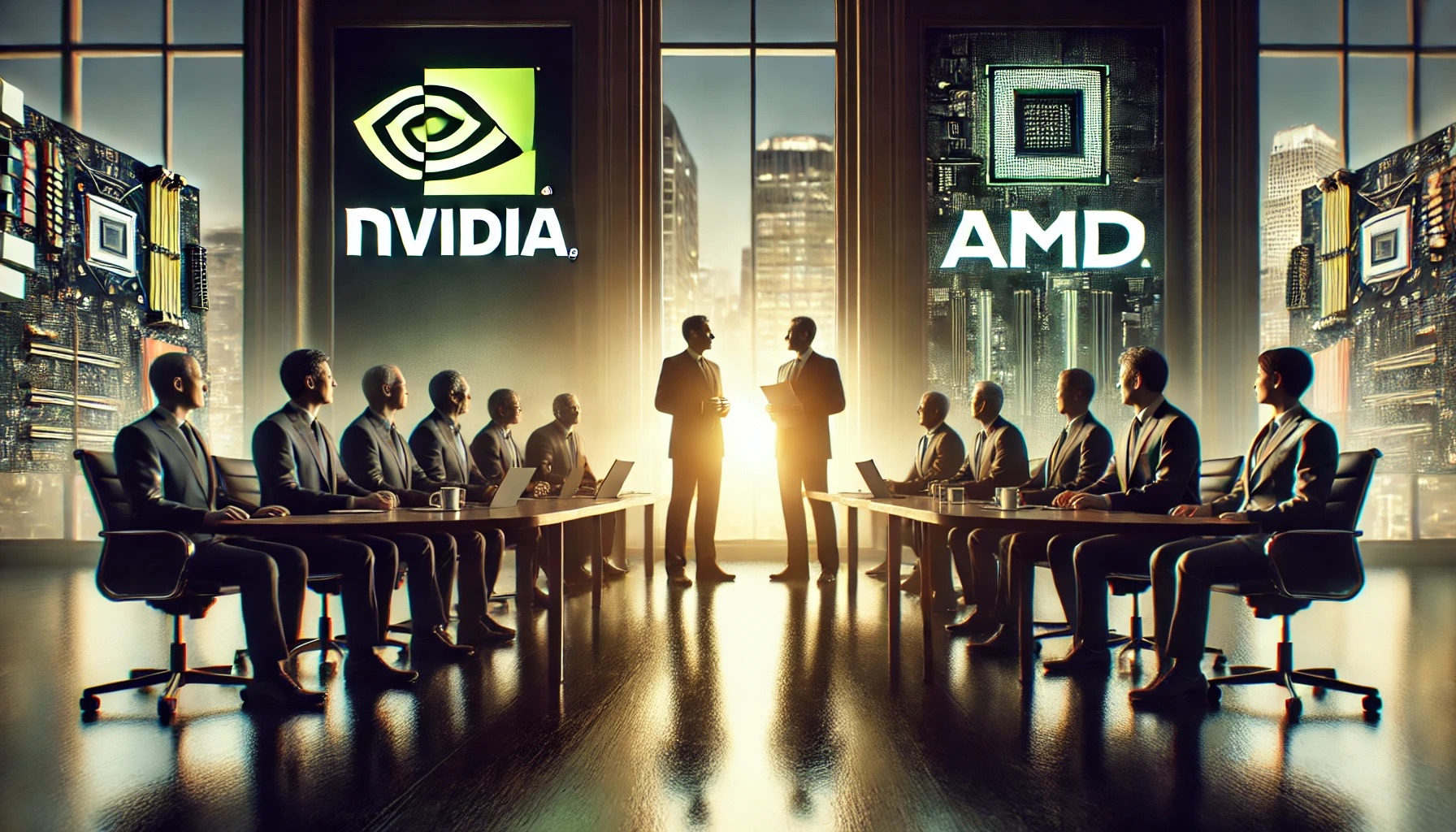
A former AMD employee reveals that NVIDIA's CEO Jensen Huang considered selling NVIDIA to AMD, a pivotal moment that could have altered the competitive landscape.
Insights from AMD's Former Employee
Hemant Mohapatra, a former employee of AMD, claims that Intel had already dominated the industry by the time AMD introduced a "true" twin core processor in the 2000s. Intel persisted with its plan and marketing genius to capture customer interest by being the first to sell, while AMD attempted to catch up by releasing a four core processor.
In addition to aiming to join the GPU industry, WCCFTECH shares that AMD was shifting from dual-core to quad-core processors about the same time. After paying $5.4 billion to acquire graphics card manufacturer ATI in 2006, AMD rebranded the ATI devices as part of their Radeon graphics lineup.
AMD's Strategic Decisions and Outcomes
The engineering team at AMD was not happy with the acquisition of ATI, the ex-employee claims. The "internal joke" he mentioned was "AMD+ATI=DAMIT," and looking back, he thinks AMD should have gone with NVIDIA instead.
Although NVIDIA's CUDA software catered to a small subset of the market and the majority of developers preferred OpenGL, AMD "tried" to compete anyway.
During this time, AMD also attempted to purchase NVIDIA, as Mohapatra pointed out, praising NVIDIA founder and CEO Jensen Huang for his "very long term" thinking.
Hector Ruiz, an electrical engineer, succeeded Jerry Sanders as CEO of AMD in 2002 and remained in that role until 2008.
According to Huang, he "refused to sell unless he was made the joint-company’s CEO to align with this strategy" of "HW and SW lock-in" through the CUDA architecture and NVIDIA's processors.
AMD "blinked" in response to this request, and the engineer claims that "our future trajectories splintered forever" because of it.
Strategic Vision of Jensen Huang
Under his tenure at AMD, NVIDIA was never seen as being in the "same league" as ARM or Intel. Because of Huang's tendency to keep "going harder" despite obstacles, the engineer thinks, NVIDIA is in its current state.
When Mohapatra joined AMD with a stock price of $40, the company had just achieved its first major victory with the release of a 64-bit CPU that outperformed Intel in terms of design. But he said that AMD erred in pursuing a pure play twin core processor design.
When AMD introduced a "true" dual core processor, it was too late, says Mohapatra, because Intel had already dominated the market.







