


 FDA Pilot Program Eases Rules for Nicotine Pouch Makers
  NASA Resumes Cygnus XL Cargo Docking with Space Station After Software Fix
  Cogent Biosciences Soars 120% on Breakthrough Phase 3 Results for Bezuclastinib in GIST Treatment
  SpaceX Delays Starship V3 Launch Ahead of Potential Record IPO
  SpaceX Pivots Toward Moon City as Musk Reframes Long-Term Space Vision
  Trump Administration Releases New UFO Files and Apollo Mission Records
  Eli Lilly’s Inluriyo Gains FDA Approval for Advanced Breast Cancer Treatment
  Blue Origin New Glenn Rocket Explodes During Launch Pad Test, Delaying Space Ambitions
  China vs. NASA: The New Moon Race and What's at Stake by 2030
  SpaceX’s Starship Completes 11th Test Flight, Paving Way for Moon and Mars Missions
  Blue Origin’s New Glenn Achieves Breakthrough Success With First NASA Mission
  SpaceX Prioritizes Moon Mission Before Mars as Starship Development Accelerates
  Trump Signs Executive Order to Boost AI Research in Childhood Cancer


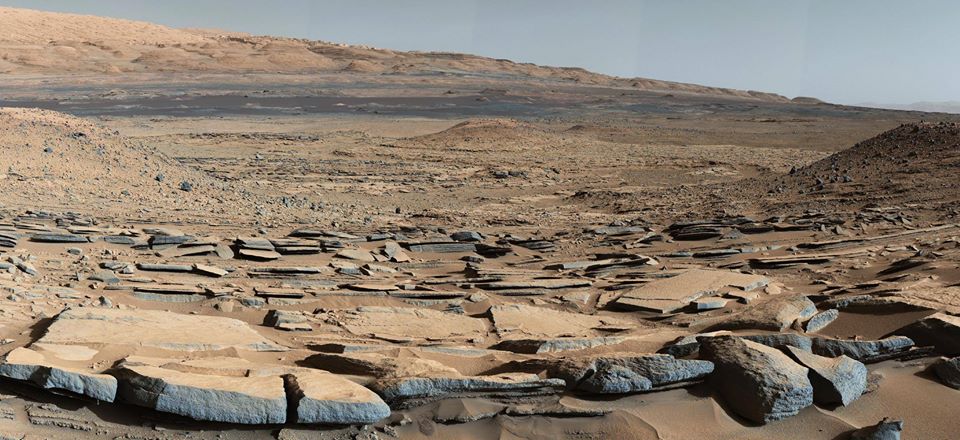
NASA unveiled on Friday, December 27, its 2020 Mars Rover, which is set to blast off for the Red Planet by July next year. The vehicle is the main component of next year’s mission which is also part of the agency's larger and long-term Mars Exploration Program.
The rover was made inside a large, sterile room at the Jet Propulsion Laboratory in Pasadena, according to Science Alert. It was presented to the media on Friday after it successfully passed its first test just last week.
According to NASA’s Mars 2020 Mission website, it will carry out multiple missions while on the Red Planet. First, it will look for “signs of habitable conditions on Mars in the ancient past.” After finding a suitable site, it will search for microbial life in the past by digging into the Martian soil.
“It's designed to seek the signs of life, so we're carrying a number of different instruments that will help us understand the geological and chemical context on the surface of Mars,” Matt Wallace, the deputy mission leader, told the media.
NASA believes that there’s a high probability that Mars once had life in the distant past when conditions on the planet were similar to earth. “What we're looking for is ancient microbial life - we're talking about billions of years ago on Mars when the planet was much more Earth-like,” Wallace added. “And so it was much more conducive to the types of simple single-cell life that evolved here on Earth at that time.”
The Mars rover does its job by drilling and collecting samples of rocks and soil. These samples will be sealed inside tubes, which will be behind on Mars’ surface where a future mission could pick them up and transport them to earth for further studies by scientists.
“We'd like to see the next mission launched in 2026, which will get to Mars and pick up the samples, put them into a rocket and propel that sample into orbit around Mars,” Wallace said. “The sample would then rendezvous with an orbiter and the orbiter would bring the sample back to the Earth.”
Aside from taking samples, the rover will also perform tests and observations that will be useful for future human missions to Mars. For example, it will test a method of producing oxygen out of the thin Martian atmosphere. It will also observe conditions that might affect future astronauts living on the planet such as weather patterns, dust, as well as locations of vital resources like subsurface water.
The vehicle is about the same size as a car but it has six wheels just like Curiosity, its predecessor. To scan its surroundings better, it is programmed to move only 180 meters per Martian day. Once it lands on the planet, it will become the fifth US rover to have landed there.







