


 Neuren Pharmaceuticals Surges on U.S. Patent Win for Rare Disorder Drug
  NASA Faces Major Workforce Reduction as 20% of Employees Prepare to Leave
  Neuralink Plans High-Volume Brain Implant Production and Fully Automated Surgery by 2026
  CDC Vaccine Review Sparks Controversy Over Thimerosal Study Citation
  SpaceX’s Starship Completes 11th Test Flight, Paving Way for Moon and Mars Missions
  Trump and Merck KGaA Partner to Slash IVF Drug Costs and Expand Fertility Coverage
  Blue Origin’s New Glenn Achieves Breakthrough Success With First NASA Mission
  NASA Astronauts Wilmore and Williams Recover After Boeing Starliner Delay
  Eli Lilly’s Inluriyo Gains FDA Approval for Advanced Breast Cancer Treatment
  SpaceX Prioritizes Moon Mission Before Mars as Starship Development Accelerates
  Cogent Biosciences Soars 120% on Breakthrough Phase 3 Results for Bezuclastinib in GIST Treatment
  Is space worth the cost? Accounting experts say its value can’t be found in spreadsheets
  FDA Lifts REMS Requirement for CAR-T Cell Cancer Therapies
  SpaceX Starship Test Flight Reaches New Heights but Ends in Setback


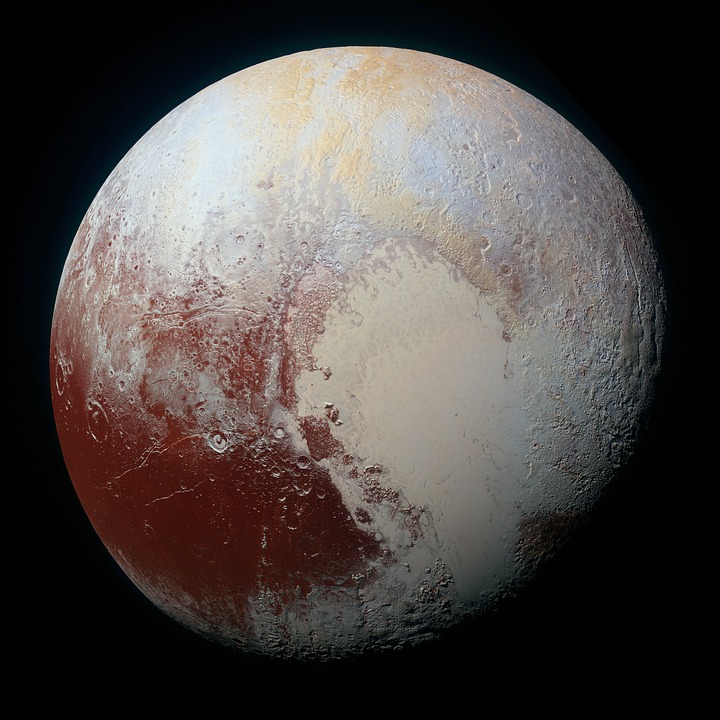
The farthest planet in our Solar System, Pluto, was found to have mountains that are snow-capped which has confused scientists for a while. The mystery behind the snow-covered mountains on Pluto has recently been solved thanks to the efforts of experts, including those from NASA.
The international group of scientists developed climate simulations of Pluto to solve the mystery behind the mountains covered in what appeared to be snow. They discovered high levels of methane in the high altitudes of those mountains. Because the mountains reach past the dwarf planet’s thin atmosphere, the methane sticks to the peaks, crystallizing and freezing as a result. The study that was published in the journal Nature Communications found that gaseous methane could not be formed in lower altitudes.
According to NASA’s Tanguy Bertrand of the agency’s Ames Research Center, who is also the study’s lead author, “It is particularly remarkable to see that two very similar landscapes on Earth and Pluto can be created by two very dissimilar processes. Though theoretically, objects like Neptune’s moon Triton could have a similar process, nowhere else in our solar system has ice-capped mountains like this besides Earth.”
The process that happens on Pluto is somewhat the opposite of the processes found on Earth and how our own mountains get snow-capped. In our case on Earth, air moves up to the mountains, collecting water vapor which eventually freezes at the top.
Meanwhile, the Hubble Space Telescope of NASA and the European Space Agency captured what seemed to be a ghost-like phenomenon in the cosmos. The Hubble snapped an image of the phenomenon in question, showing a faint, purple nebula that is now known as IC 63. The nebula also looks similar to a cloaked, translucent entity yet full of stars, and thus is nicknamed the “ghost nebula.”
According to NASA, the nebula is found 550 light-years away from Earth, in the Cassiopeia constellation. One of the stars that are found within the nebula is known as Gamma Cassiopeiae, described as a blue-white subgiant variable star surrounded by a disk made up of gas.
Gamma Cassiopeiae also happens to be 19 times bigger and 65,000 times brighter than the Sun.













