


 FDA Lifts REMS Requirement for CAR-T Cell Cancer Therapies
  NASA Cuts Boeing Starliner Missions as SpaceX Pulls Ahead
  Trump Administration to Launch Autism Initiatives Targeting Acetaminophen Use and New Treatment Options
  Eli Lilly’s Inluriyo Gains FDA Approval for Advanced Breast Cancer Treatment
  Blue Origin’s New Glenn Achieves Breakthrough Success With First NASA Mission
  Is space worth the cost? Accounting experts say its value can’t be found in spreadsheets
  Trump and Merck KGaA Partner to Slash IVF Drug Costs and Expand Fertility Coverage
  Neuralink Plans High-Volume Brain Implant Production and Fully Automated Surgery by 2026
  NASA Astronauts Wilmore and Williams Recover After Boeing Starliner Delay
  Trump Signs Executive Order to Boost AI Research in Childhood Cancer
  CDC Vaccine Review Sparks Controversy Over Thimerosal Study Citation
  SpaceX Starship Explodes in Texas During Test, Citing Nitrogen Tank Failure
  SpaceX’s Starship Completes 11th Test Flight, Paving Way for Moon and Mars Missions


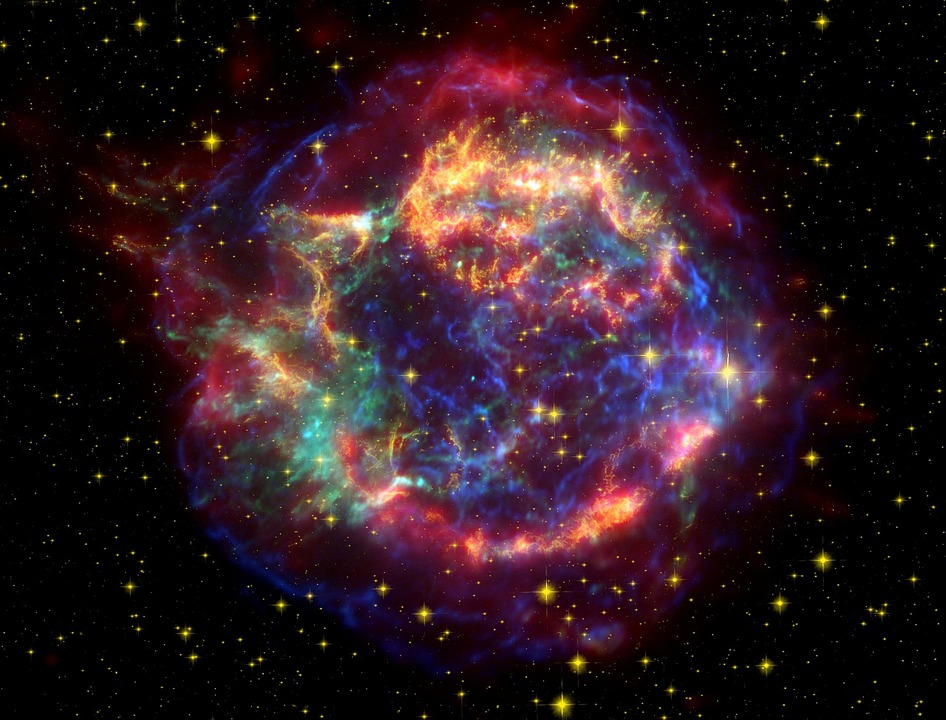
Over the years, NASA has documented so many celestial objects in detailed photographs. The agency recently released a few archive images of supernovas and nebulas to the public taken over the years and through various missions.
NASA released a series of photos of space phenomena taken over the years on several missions and by various telescopes. All of these photos come with data from the Chandra X-Ray Observatory as well. From galaxies to supernova explosions and nebulas, the photos show these cosmic phenomena in great detail and color.
“Humanity has ‘eyes’ that can detect all types of light through telescopes around the globe and a fleet of observatories in space. From radio waves to gamma rays, this ‘multi-wavelength’ approach to astronomy is crucial to getting a complete understanding of objects in space,” said NASA.
The images show the Messier 82 or M82, the 1987A also known as the brightest supernova ever seen in centuries and found in the Large Magellanic Cloud, and Eta Carinae that gives a sneak peek into what happens when a star undergoes a supernova explosion.
In other related news, back in 1969, the US made history when Neil Armstrong became the first man to set foot on the surface of the Moon. Armstrong, who was later accompanied by Buzz Aldrin, conducted experiments on the lunar surface and were also tasked to bring back samples to Earth. The Apollo program was able to bring back an overall 382 kilograms of lunar rocks and soil, and while most of these samples were kept in a secure place, some samples went missing.
The Oklahoma State University hired a man named Lou Marshall to work on a NASA-funded aerospace education project, making use of the rock samples from the Apollo program among other space-related items in a 1982 Ford. However, on August 5, 1986, the van he used to travel from state to state to talk to teachers and students about space exploration mysteriously vanished.
The van was later found, but was “totally and completely burned” in a field in Memphis. A 35mm projector and a Sony video recorder were recorded to be stolen, but not the moon rocks. To this day, Mr. Marshall still does not know where the rocks are now.













