


 U.S.-Israel War on Iran Sends Crude Oil Prices Surging Amid Strait of Hormuz Tensions
  Anthropic Sues Pentagon Over AI Blacklist, Citing Free Speech Violations
  Ukraine Strikes Russian Missile Component Factory in Bryansk Using British Weapons
  Trump Administration Spent $5.6 Billion in Munitions in Opening Days of Iran Strikes
  Iran's Government Remains Stable Despite U.S. and Israeli Strikes, Intelligence Shows
  Shots Fired at U.S. Consulate in Toronto in Suspected National Security Incident
  Iran-Israel War Sparks Global Oil Crisis as Tankers Burn in Gulf Waters
  Trump Doubts Iran Mining Reports as Strait of Hormuz Tensions Escalate
  After the Iran war, Persian Gulf nations face tough decisions on the US – a former diplomat explains
  Russian Drone Strikes Hit Kharkiv and Dnipro, Injuring Over 20 Civilians
  IEA Releases Record 400 Million Barrels of Oil Amid U.S.-Iran War
  Trump-Putin Call Addresses Iran War, Ukraine Peace, and Global Oil Crisis
  Trump Announces New U.S. Oil Refinery in Texas with Indian Energy Giant Reliance
  Mexico's Electoral Reform Bill Fails in Congress as Coalition Fractures
  U.S. Calls for Reassessment of International Aid to Taliban-Ruled Afghanistan
  U.S. Patriot Missiles Redeployed From South Korea Amid Middle East Conflict


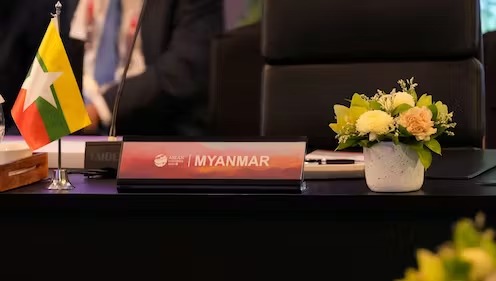
Voters in conflict-ravaged Myanmar queued on Sunday to cast ballots in the second phase of a military-organized election, an exercise widely criticized by the international community as an attempt to legitimize junta rule rather than restore democracy. The polls come amid ongoing civil war and humanitarian crisis following the military coup in 2021 that overthrew the elected civilian government and led to the detention of Nobel Peace Prize laureate Aung San Suu Kyi.
Since the coup, Myanmar has faced escalating violence between the military and resistance groups, leaving large parts of the country unstable. The election has been marred by controversy from the outset, with Suu Kyi’s National League for Democracy (NLD), which won a landslide victory in the 2020 general election, dissolved along with dozens of other opposition parties for failing to register. Rebel groups and key opposition figures have refused to participate, calling the process illegitimate.
The first phase of voting, held on December 28, recorded a turnout of just over 52%, significantly lower than previous elections in 2015 and 2020. Despite the low participation, the military-backed Union Solidarity and Development Party (USDP) secured 90 out of 102 contested lower house seats, placing it firmly on track for a sweeping victory. Analysts argue that the outcome was largely predetermined due to restrictive election laws and the absence of genuine political competition.
The United Nations, Western governments, and human rights organizations have labeled the election a sham, stating it cannot be free or fair without meaningful opposition. According to conflict monitoring groups, more than 16,600 civilians have been killed since the coup, and the UN estimates that 3.6 million people have been displaced, highlighting the scale of Myanmar’s humanitarian emergency.
The junta claims the election will pave the way for political stability and economic recovery, with a final voting round scheduled for January 25 across 265 of Myanmar’s 330 townships. However, experts warn that any military-controlled government formed through this process is unlikely to gain international recognition or bring lasting peace, as fighting continues in areas beyond full junta control.













