


 South Korea Unveils Record $597 Billion 2027 Budget to Boost AI and Chips
  U.S. Disrupts China-Linked Hacking Campaign Targeting Government Agencies
  Nvidia Reportedly Eyes $13 Billion Hugging Face Acquisition
  OpenAI Nears Astra AI Model Launch With Safety Focus
  Meta Agrees to $18 Billion Settlement, Tightens Teen Social Media Rules
  Deutsche Telekom Shares Rise as Elliott Pushes Against T-Mobile Merger
  Nvidia Revenue Soars 106% as AI Demand Hits ‘Inflection Point’
  OpenAI Rejects Apple Trade Secret Theft Claims
  Google Changes EU Spam Policy Amid Antitrust Scrutiny
  Microsoft to Reveal Azure Revenue in Major Reporting Shake-Up
  U.S. Probes Apex Logistics Over Nvidia AI Chip Shipments to China
  HP Stock Drops 9% Despite Q3 Earnings Beat and Raised 2026 Outlook
  Salesforce Shares Surge as AI Demand Powers Q2 Earnings Beat
  US Tech Giants’ AI Bond Boom Raises Euro Zone Borrowing Risks
  SoftBank Eyes $20 Billion Bond Sale to Refinance OpenAI Loan
  Thomson Reuters C-Track Cyberattack Hits Courts Across U.S. and Canada


 Add as a preferred source on Google
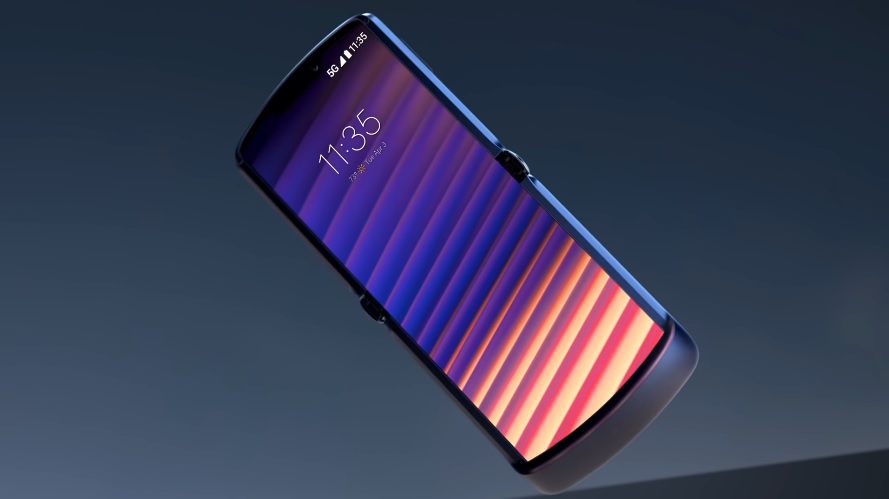
The Motorola Razr 3’s technical specifications reportedly include a top-tier chipset and display, making the upcoming flip smartphone a full-fledged flagship device. It is also expected to launch with some design tweaks, along with high-end cameras.
Just before 2021 ended, Lenovo confirmed its plans to release Motorola Razr 3. The company, which acquired Motorola Mobility in 2014, said it has been “silently preparing” its next-generation foldable phone packed with more powerful performance.
Lenovo has yet to reveal specific details about the phone’s specs and features, but XDA Developers has sources saying the Motorola Razr 3 could be powered by the Snapdragon 8 Gen 1. If the report is accurate, it would be the first time Motorola uses a flagship-level chipset on a Razr phone. Its 2019 iteration was powered by Snapdragon 710, while its successor Razr 5G, used Snapdragon 765G.
The Motorola Razr 3 is also expected to run on Android 12 at launch, which is not surprising considering the operating system version would be a few months old by the time the phone enters the market. Motorola has also previously confirmed its plan to release Android 12 updates this year for 30 existing phone models.
The same report says there would be a Motorola Razr 3 variant with ultra-wideband (UWB) support. More flagship phones from different manufacturers have included the same feature over the past year. It allows smartphones to work with UWB-supported devices like Apple AirTag and Samsung Galaxy SmartTag+ for more precise tracking.
The Motorola Razr 3 could also be available in several memory configurations. The company is rumored to offer variants of the device with 6GB, 8GB, and 12GB RAM and 128GB, 256GB, 512GB storage options — a common array for most flagship smartphones.
As for its screen, the Motorola Razr 3 is rumored to sport a 120Hz AMOLED display. Additional report from display analyst Ross Young indicates it would have a 6.7-inch screen, while TechnikNews says its resolution would be 2400 x 1080. Like the Razr 5G, the upcoming device is expected to have a secondary display, but its specs are still unknown.
XDA is still uncertain if Motorola would opt for a hole-punch cutout or a more traditional notch for the selfie camera on the main display. But if the company decides to go with the latter, the report says the Motorola Razr 3 notch would be smaller than the one on the Razr 5G. There are two rear-facing cameras expected, including an OmniVision OV50A 50MP primary sensor and a 13MP ultra-wide lens.
The release date of the Motorola Razr 3 is still anybody’s guess. But the report noted that the Razr 5G was launched in September 2020, and the company might follow a similar time frame for the upcoming device.







