


 Gold Prices Hold Near Record Levels as Inflation Concerns Offset Middle East Ceasefire Hopes
  Gold Prices Slip as Stronger Dollar and Iran Peace Talk Uncertainty Weigh on Market
  ECB’s Philip Lane Warns Middle East Conflict Could Keep Inflation Elevated
  Oil Prices Fall as Markets Await U.S.-Iran Peace Deal Decision
  New World Screwworm Found Near U.S. Border Raises Threat to Cattle Industry and Beef Prices
  Asian Stocks Rally as AI Boom and Iran Ceasefire Progress Lift Market Sentiment
  U.S. Sanctions Iran’s Strait of Hormuz Authority as Global Oil Markets Face Turmoil
  UK Grocery Inflation Slows to 3.1% as Supermarket Price Pressures Ease in May 2026
  US Launches New Trade Investigation Into Vietnam Over Intellectual Property Concerns
  Nikkei Hits Record High as AI Chip Stocks Power Japan Market Rally
  Canada and Germany Advance Major LNG Supply Partnership
  U.S. Launches New Strikes on Iran as Trump Signals Peace Deal Uncertainty
  US Dollar Slips as Markets Weigh Potential US-Iran Peace Deal and Oil Price Outlook
  Asian Currencies Steady as U.S.-Iran Ceasefire Extension Hopes Weigh on Dollar
  Oil Prices Set for Sharp Weekly Losses as U.S.-Iran Ceasefire Hopes Ease Supply Concerns
  S&P 500, Nasdaq Hit Record Highs as Iran Ceasefire Talks and AI Rally Boost Markets


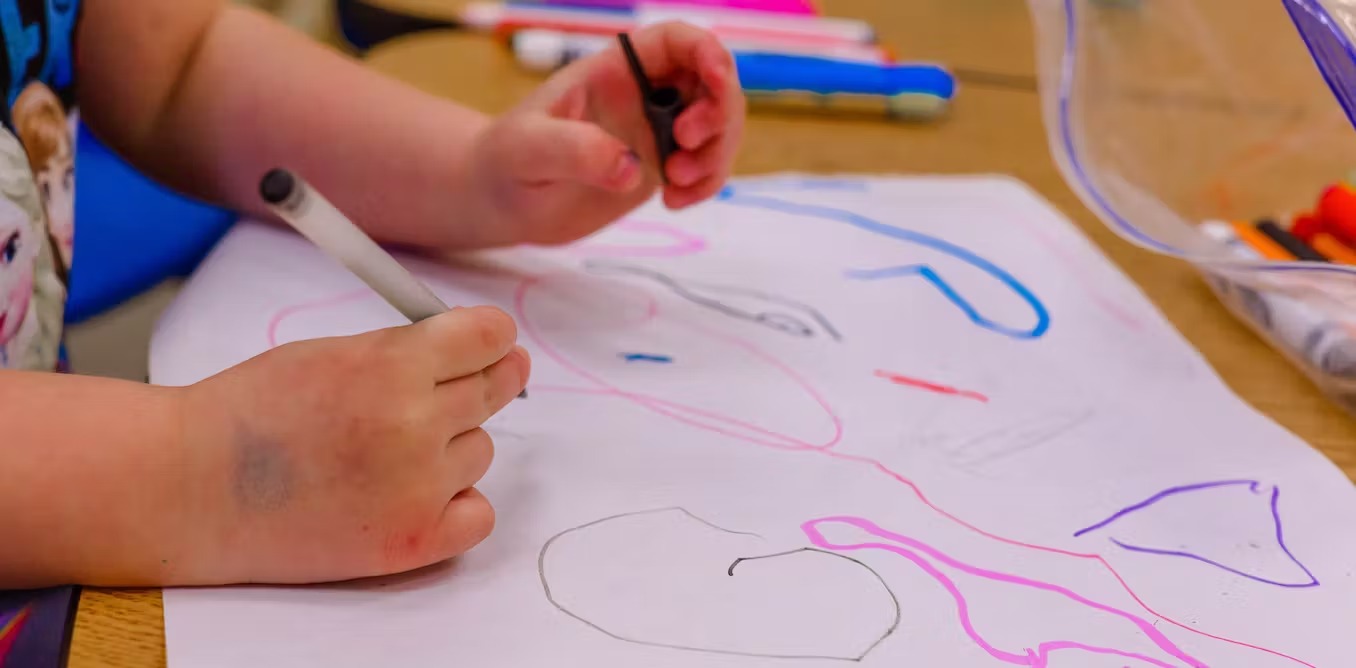
About one-third of the nation’s 4-year-olds are enrolled in state-funded prekindergarten programs.
In Michigan, 32% of 4-year-olds attend the state’s public pre-K program. However, the state has invested an additional US$107 million from its 2023-24 budget to educate 4-year-olds, 20% more money compared to the prior year.
Christina Weiland, associate professor of education at the University of Michigan, and Ajay Chaudry, research scholar at New York University, are co-authors of “Cradle to Kindergarten: A New Plan to Combat Inequality,” a book about how to make affordable, high-quality early care and education available for all U.S. families.
Here, they answer five questions about Michigan’s new investment in preschool education.
How many kids attend public pre-K in Michigan?
Michigan’s Great Start Readiness Program is a voluntary public pre-K program for 4-year-olds operating in all but one of Michigan’s 83 counties. Classrooms are offered in both public schools and in community-based partner organizations.
The majority of children who attend qualify based on their family’s income. Kids whose parents earn up to 300% of the federal poverty line, or $90,000 for a family of 4, are eligible. Children can also gain access to the program if they have a disability, at least one of their parents has not graduated from high school or is illiterate, or English is not the primary language in their home.
In the 2021-22 school year, the program operated in 2,524 classrooms and enrolled 30,872 children across Michigan. By our team’s estimates, enrollment increased to 33,200 in 2022-23.
What are the strengths of the program, and where could it do better?
Michigan is one of only five states to meet all 10 quality benchmarks set by the National Institute for Early Education Research, a research institution based at Rutgers University.
Some of the program’s notable strengths include requiring universal developmental and health screenings for students, offering in-classroom coaching for all Great Start teachers and requiring lead teachers to have a college degree and specialized early education training. Nationally, only about half of state pre-K programs require a college degree for teachers and only about a third require coaching.
Like all state-funded pre-K programs, Great Start also has some room for improvement. In a recent policy brief, our team highlighted several critical areas for further investment. For example, there are large gaps in pay and benefits for Great Start teachers compared with K-12 teachers in the state. These gaps amount to an average of $17,500 less per year for state pre-K teachers in public schools and $25,000 less per year for those in community-based programs.
These pay gaps help explain why 18% of lead teachers and 28% of assistant teachers still needed additional courses to meet the program’s educational requirements in the 2021-22 school year.
Pay parity for Great Start teachers would help Michigan school systems recruit additional qualified teachers. In 2021-22, the vacancy rate was 4% for lead teachers and 6% for assistant teachers.
Also, Michigan ranks near the bottom of states in early childhood inclusion, a model that allows children with special needs to attend preschool alongside their typically developing peers.
And finally, just as in most public pre-K programs nationally, most Great Start classrooms use curricula that have been repeatedly outperformed by other options. Children – especially those from historically marginalized backgrounds – learn more from evidence-based curricula. However, less effective curricula persist in preschool programs around the country due in part to the history of early childhood education but also because of policy decisions.
What is Michigan’s new investment slated to fund?
The $107 million in additional funding for Great Start covers three critical areas.
First, new funding is meant to increase the number of children served and get kids off waitlists.
Second, additional funding is targeted to better meet the needs of working families. Historically, Great Start programs have served children four days per week for 30 weeks per year. With this new investment, some programs will offer children instruction five days per week and 36 weeks per year, bringing Great Start in line with the public school calendar. The expanded schedule stands to boost child learning, better match family work schedules and enable some families who were previously shut out to enroll.
Finally, $35 million is slated for classroom startup grants of $25,000 to help open new classrooms and expand existing programs in public schools and community-based organizations.
What does research say about the benefits of public pre-K?
Decades of rigorous research show that children who attend high-quality pre-K programs are more ready for kindergarten, meaning they have on average stronger language, literacy, math, social emotional and executive function skills than their peers who did not attend preschool. Dual-language learners, children of color, children from families with low incomes and children with disabilities particularly benefit from high-quality pre-K.
Pre-K also supports families by giving parents time to work.
The benefits of preschool can last into adulthood, improving high school graduation rates, college enrollment rates and the long-term health of kids who attend.
Families with higher incomes in the U.S. have historically had more access to high-quality preschool than families with less means. Public pre-K programs help fill that gap.
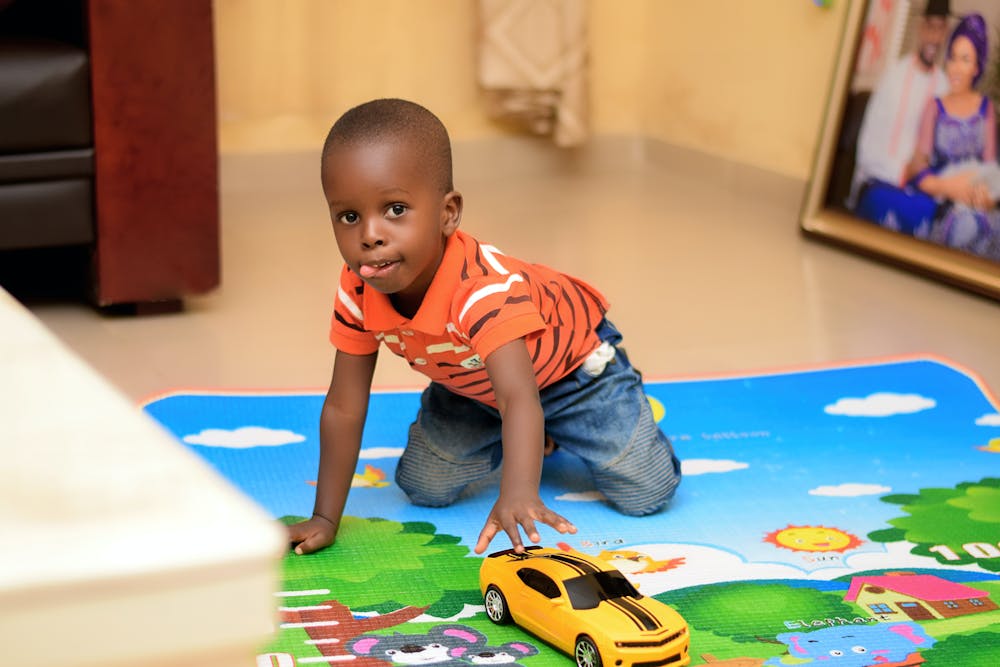
Children who attend high-quality preschools can reap benefits into adulthood. Segun Osunyomi/unsplash, CC BY-ND
What’s next in Michigan?
Gov. Gretchen Whitmer’s administration has announced intentions to continue to expand public pre-K, including a goal of offering universal pre-K to all Michigan 4-year-olds by the end of 2026.
To date, only six states – Florida, Iowa, Oklahoma, Vermont, West Virginia, Wisconsin – plus D.C. have achieved universal preschool for 4-year-olds, according to the National Institute for Early Education Research.







