


 Senate Sets December 8 Vote on Trump’s NASA Nominee Jared Isaacman
  Blue Origin’s New Glenn Achieves Breakthrough Success With First NASA Mission
  SpaceX’s Starship Completes 11th Test Flight, Paving Way for Moon and Mars Missions
  Cogent Biosciences Soars 120% on Breakthrough Phase 3 Results for Bezuclastinib in GIST Treatment
  Is space worth the cost? Accounting experts say its value can’t be found in spreadsheets
  SpaceX Pivots Toward Moon City as Musk Reframes Long-Term Space Vision
  CDC Vaccine Review Sparks Controversy Over Thimerosal Study Citation
  NASA Astronauts Wilmore and Williams Recover After Boeing Starliner Delay
  Neuralink Plans High-Volume Brain Implant Production and Fully Automated Surgery by 2026
  Lost in space: MethaneSat failed just as NZ was to take over mission control – here’s what we need to know now
  FDA Lifts REMS Requirement for CAR-T Cell Cancer Therapies


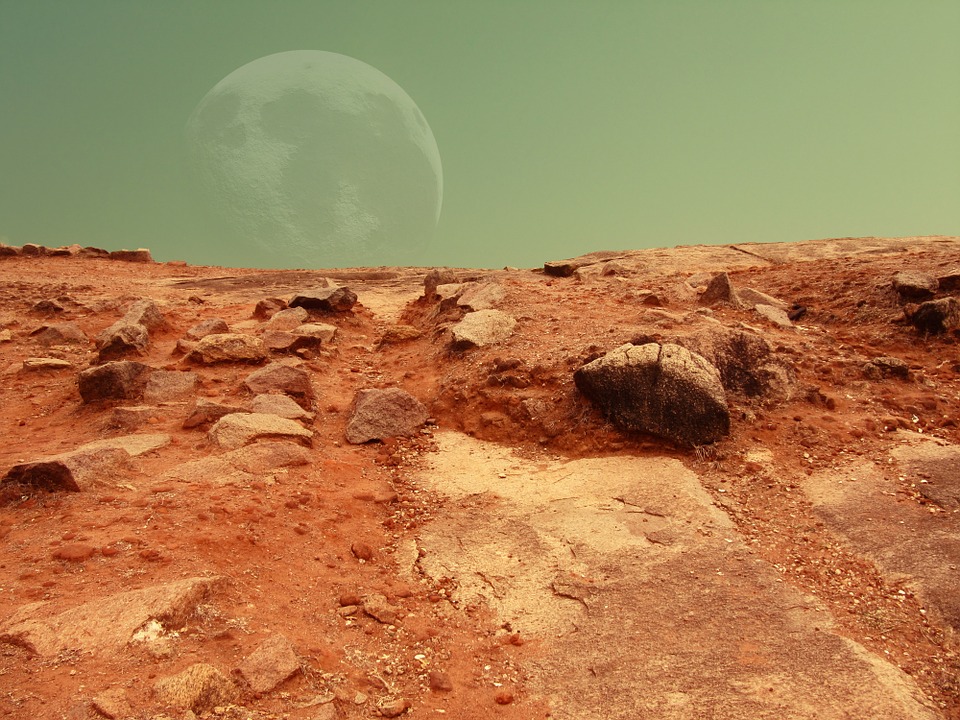
NASA is currently in the midst of preparing for an upcoming Mars mission, following the successful launch of the Perseverance Rover some months back. With the agency’s focus on whether or not life was present on Mars, scientists have recently discovered more proof of the presence of liquid bodies of water under the Red Planet’s surface.
Scientists have previously said in 2018 that the southern polar region of Mars has a body of liquid water under its surface. Roberto Orosei and his team found more proof that there really is a body of water hidden under the surface of Mars. Speaking to Express, Mr. Orosei explained that this finding would suggest these liquid water bodies under the surface of the Red Planet in the south pole, could have life.
This finding also suggests that future studies on the subject could call for another Mars mission for the purpose of scouring the Red Planet under its surface and above. “It would be the reward of a lifetime to see a mission going to Mars to drill into the ice and bring back a sample of subglacial water for analysis, but this is very unlikely to happen at the moment,” said Mr. Orosei. “The technological challenges are enormous, and we need to know much more before risking what would certainly be a very costly mission there.”
However, Mr. Orosei notes that the increasing affirmation from the scientific community could possibly lead to international support for such a mission. For now, he said, they will continue to look into collecting proof of what may be present under the Martian polar caps.
And more into Mars, scientists have revealed that we may get a chance to see Mars up close this week as the orbits of our two planets will pass by one another. Mars is predicted to be its closest to Earth on Tuesday, October 6, and this will be the closest the Red Planet is to our own home. Those who want a chance to see Mars up close have to anticipate this approach as the next time Mars approaches Earth would be by 2035. By this time, it would be easy to spot Mars as the closer it gets, the brighter it will appear in the skies as well.













