


 Serbia President Aleksandar Vucic to Resign, Calls Early Elections After Months of Protests
  Despite its best efforts, Iran won’t be able to toll the Strait of Hormuz. Here’s why
  Russia Intensifies Assault on Kostiantynivka as Ukraine’s Donetsk Defense Faces Mounting Pressure
  Trump Threatens 100% Tariffs on Countries Imposing Digital Services Taxes on U.S. Tech Firms
  Trump Urges Gasoline Retailers to Cut Prices to $2.50 Per Gallon, Warns of Legal Action
  Trump Signs Memorandum Backing Americans’ Right to Repair Their Own Vehicles
  Mexico, U.S. Launch Sterile Fly Facility to Combat New World Screwworm Outbreak
  Ukraine Strikes Russian Titan-Barrikady Plant With Long-Range FP-5 Flamingo Missile
  Russian Attacks on Dnipro, Zaporizhzhia, and Kharkiv Kill 10 as Ukraine Vows Response
  Australia Plans Higher Fines for Social Media Firms Failing to Block Underage Users
  US Strikes Iran Again After Strait of Hormuz Tanker Attack Escalates Ceasefire Tensions
  China Expands Export Controls, Adds 20 Japanese Companies to Restricted List
  Supreme Court Backs Lisa Cook, Defends Federal Reserve Independence Against Trump Firing Attempt
  Sheinbaum Says No One Is Above the Law After Abuse Video of Ex-Pemex Chief Emerges
  Taiwan Coast Guard Officer Finds Strength in Faith as China Increases Pressure in Taiwan Strait
  Trump Suspends Some Morocco Fertilizer Tariffs to Ease U.S. Supply Shortage
  Iran Skips U.S. Technical Talks Over Unmet MoU Conditions and Frozen Funds Dispute


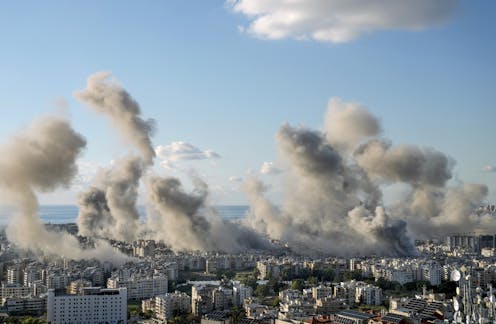
Lebanon has announced a partial ceasefire agreement between Hezbollah and Israel, marking a limited step toward de-escalation in a conflict that has claimed thousands of lives and intensified broader Middle East tensions involving the United States, Israel, and Iran.
According to Lebanon’s embassy in Washington, the arrangement does not represent a full ceasefire. Under the agreement, Israel is expected to halt airstrikes targeting Beirut and Hezbollah-controlled suburbs, while Hezbollah would suspend attacks against Israeli territory. Despite the announcement, military operations continued in southern Lebanon, where Israeli forces remain active following their March invasion.
The Israeli military reported early Tuesday that it intercepted two projectiles launched from Lebanon into northern Israel, with no casualties recorded. U.S. President Donald Trump, who first revealed the agreement, stated that Hezbollah had committed through intermediaries to stop attacks on Israel. Trump also claimed that Israeli Prime Minister Benjamin Netanyahu agreed to withdraw forces preparing for operations near Beirut.
However, Netanyahu later emphasized that Israeli military activities would continue in southern Lebanon, where troops are advancing toward the Zaharani River, marking Israel’s deepest military push into Lebanon in more than two decades.
Hezbollah lawmaker Hassan Fadlallah expressed support for a nationwide ceasefire but reiterated that any lasting agreement should include the withdrawal of Israeli troops from Lebanese territory. Lebanon plans to pursue broader ceasefire discussions with Israel during talks scheduled in Washington.
The partial truce could revive efforts to end the three-month conflict that emerged alongside the wider U.S.-Israel confrontation with Iran. Negotiations have stalled in recent weeks as parties failed to establish a framework for comprehensive peace talks.
Meanwhile, Iran warned that continued Israeli military actions in Lebanon could jeopardize ongoing diplomatic efforts. Iranian Foreign Minister Abbas Araqchi argued that any ceasefire involving Iran and the United States should apply across all regional fronts, including Lebanon.
Adding to concerns, reports from Iranian state media suggested Tehran may suspend indirect negotiations with Washington. Although Iranian officials have not formally confirmed the reports, uncertainty surrounding the talks has heightened geopolitical risks. Iran’s Revolutionary Guards Quds Force commander, Esmaeil Qaani, also threatened to expand maritime restrictions from the Strait of Hormuz to the Bab El Mandeb Strait, raising fears of further disruption to global energy supplies.
The growing instability has already impacted financial markets, with oil prices rising 4% amid concerns over regional security, shipping routes, and the future of Middle East peace negotiations.







