


 Dogecoin Price Rises as Bitwise Plans DOGE ETF Closure
  Solana Whale Moves $51M in SOL to Coinbase Amid Price Drop
  XRP Holds Steady at $1.39 as Crypto Market Faces Heavy Liquidations
  RBI Rate Hike Bets Surge as Inflation Rises
  MSTR Stock Rises as Barclays Raises Price Target to $175
  Chainlink Price Drops 3% Despite New CCIP Vault Launch
  XRP Whale Activity Drops 27% in Eight Days Amid Market Sell-Off
  Yen in Focus as BOJ, Fed Rate Hikes Reshape Currency Markets
  Evernorth Nasdaq Listing Nears as XRP Price Falls
  Cardano Price Drops 14% as ADA Funding Rate Hits Four-Month Low
  ECB May Stop Rate Hikes After December, Capital Economics Says
  Trump Demands Powell Resign Over Fed Renovation Cost Overruns
  Fed’s Hammack Says Bond Yield Surge Is Not Driven by Inflation Fears
  Jameson Lopp Downplays AI Threat to Bitcoin Cryptography


 Add as a preferred source on Google
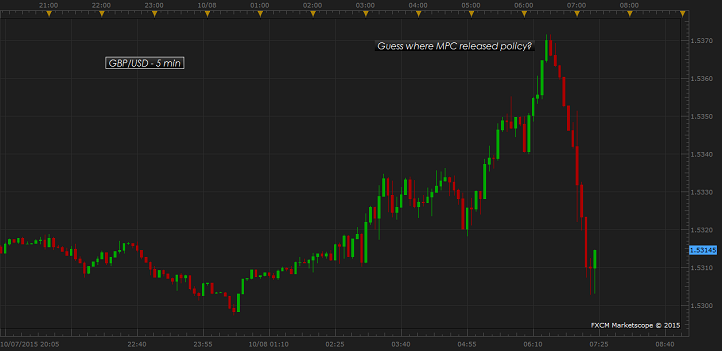
Bank of England's monetary policy committee (MPC) chose to keep monetary policy steady for 6 years and 8 months with interest rates at record low 0.5%.
Last time policy rate was changed dates back in February 2009, when it was cut to record low of 0.5%, by then governor Sir Mervin King.
Key highlights -
- MPC members voted 8/1 in favor of keeping policy steady, in line with broader market expectations. MPC member Ian McCafferty remained the sole dissenter, voting in favor of 0.25% rate hike.
- Subsequent monetary tightening will be modest and rates are likely to remain low by historical standards for years to come.
- Downside risks to world activity has increased, not yet translate into materially weaker outlook for UK domestic economy- according to majority of the members.
- Against its previous expectation that inflation will turn up at turn of the year, it now expects prices to grow only 1% by next spring. Though MPC believes it is effect of weaker global demand and lower oil price.
- According to McCafferty, early rate hike would provide room for more gradual rise. He expects rising wages would at one point, overcome the dampening effect of stronger sterling
- Domestic expansion has somewhat weakened.
- According to BOE members, domestic momentum is being underpinned by robust real income growth, supportive credit conditions, and elevated business and consumer confidence.
- BOE feels current rate of rise won't be sufficient enough to push inflation towards committee's 2% objective.
Pound is down from 1.537 to 1531 against Dollar, as BOE sounded more subdued over outlook than previous.







