


 Best Gold Stocks to Buy Now: AABB, GOLD, GDX
  Nasdaq Hits Record High as Tech Stocks Lift Wall Street
  Euro Hits 17-Month Low as France Debt Fears Boost Dollar
  Gold Prices Slip as Strong Dollar and High Treasury Yields Weigh
  Ukraine Faces $56 Billion Budget Gap as War Costs Soar
  Asian Currencies Steady as Dollar Holds Near 18-Month High
  Asian Stocks Rise as Nasdaq Record Offsets Bond Yield Pressure
  Wall Street Rises as Oil Prices Ease, Nasdaq Hits Record
  Oil Prices Fall as Middle East Exports Recover, G7 Eases Supply Fears


 Add as a preferred source on Google
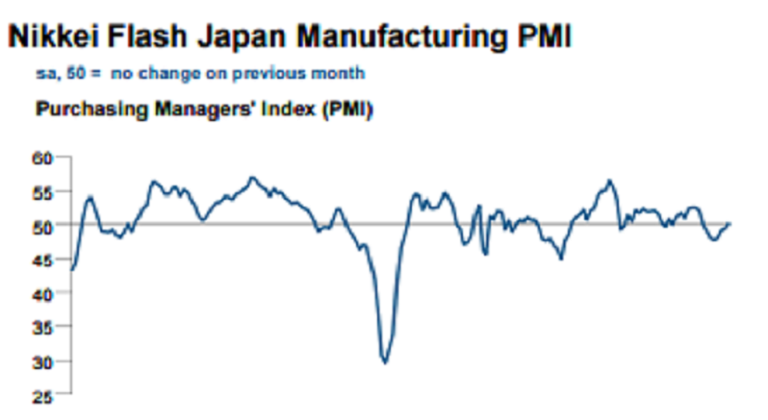
Manufacturing conditions in Japan improved for the first time in seven months, with the Purchasing Managers’ Index (PMI) rising above the 50-point mark that separates expansion from contraction.
Japan’s flash Manufacturing PMI rose to 50.3 in September, compared to 49.5 in August. Manufacturing conditions improved marginally for the first time in seven months. Further, flash Japan Manufacturing Output Index rose slightly to 50.7, from 50.2 in August, data released by Nikkei showed Friday.
Today’s latest release of the PMI data has been published on a monthly basis approximately one week before final PMI data are released, making the PMI the earliest available indicator of the country’s manufacturing operation conditions. The estimate is typically based on approximately 85–90 percent of total PMI survey responses each month and is designed to provide an accurate indication of final PMI data, IHS Markit reported.
According to Amy Brownbill, Economist at HIS Markit, production increased for the second month running, while international demand picked up for the first time since the start of this year. As a result, goods producers remained more optimistic towards taking on additional staff, with job creation accelerating to a four-month high.
Meanwhile, manufacturers also benefitted from lower cost burdens, with input prices declining for the ninth consecutive month. Also, the index for new export orders rose to a preliminary 50.2 from a final 47.2 in the previous month, showing the first expansion in eight months.







