


 Oil Prices Trim Gains After Trump Rules Out Iran Strikes Before Midterms
  Asian Stocks Mixed as OpenAI Revenue Concerns Hit Chipmakers
  Wall Street Falls as Oil Prices Rise and Tech Stocks Slide
  Oil Prices Rise as Hormuz Risks Offset IEA Stock Release
  Crypto Market Selloff Wipes Out $100B as Bitcoin Falls Below $83K
  Deutsche Bank CEO Urges Faster German Economic Reforms
  Trump Secures Russian Diesel Deal as US Fuel Prices Surge
  Asian Currencies Steady as Dollar Eyes Fourth Weekly Gain
  France to Release 10 Million Barrels of Diesel to Ease Fuel Prices
  Bangladesh GDP Growth Accelerates to 4.6% on Industrial Rebound
  US-Led Coalition Targets Global Factory Overcapacity


 Add as a preferred source on Google
The number of job seekers that dropped out of the Japan's labour force increased in March and April, and these job seekers returned to the labour force in May and June. Most of them were absorbed by the increase in employment numbers.
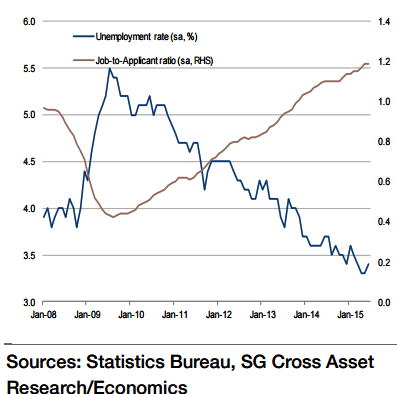
"The Japan unemployment rate is expected to remain unchanged at 3.4% in July. Both the manufacturing and non-manufacturing sectors are feeling the labour shortage and are stepping up hiring. The unemployment rate is expected to continue to remain below 3.5%, corresponding to the NAIRU level. This in turn should underpin sentiment just as aggregate wages start to expand, thus enabling Japan to make a full exit from deflation", says Societe Generale.
However, if this situation fails to materialise, the BoJ's 2% price stability target will be difficult to achieve. The unemployment rate needs to fall below 3% for the target to be met, but this level currently seems very far away.
"The job-to-applicant ratio is likely to rise further to 1.20 in June from 1.19 in June. This is the highest level since 1992 and indicates that companies remain willing to increase their hiring", added Societe Generale.

- News

- Economy

- Central Banks
- Investing
- Research
- Roundups
- Digital Currency
- Insights
- Technical Analysis
- Technology
- Business
- Law
- Health
- Nature
- Fintech
- Science
- Topic
- Opinions
- ©Econometrics LLC . All Rights Reserved.
Japan's July unemployment rate likely to be unchanged at 3.4%
Thursday, August 27, 2015 5:44 AM UTC
Editor's Picks



- Market Data
Most Popular




