


 Russian Drone Strikes Hit Kharkiv and Dnipro, Injuring Over 20 Civilians
  Iran-U.S. Oil Tensions Escalate as Revolutionary Guards Threaten Strait of Hormuz Blockade
  After the Iran war, Persian Gulf nations face tough decisions on the US – a former diplomat explains
  Bipartisan Housing Bill Advances in Senate, Aims to Tackle U.S. Affordability Crisis
  U.S. and Russia Hold Diplomatic Talks in Florida Amid Ongoing Tensions
  U.S. Senate Greenlights AI Chatbots for Official Staff Use
  Iran Mines Strait of Hormuz: Crude Oil Prices Surge Amid Middle East Tensions
  Iran's Government Remains Stable Despite U.S. and Israeli Strikes, Intelligence Shows
  U.S. Patriot Missiles Redeployed From South Korea Amid Middle East Conflict
  Trump Doubts Iran Mining Reports as Strait of Hormuz Tensions Escalate
  Japan's BOJ Independence Under Fire as PM Takaichi's Rate Stance Draws Political Heat
  Taiwan's MQ-9B SkyGuardian Drone Order Stays on Schedule Despite Middle East Conflict
  Trump Administration Spent $5.6 Billion in Munitions in Opening Days of Iran Strikes
  Pentagon Taps Wall Street Talent to Manage $200 Billion Defense Investment Fund
  Boeing Secures $289 Million Smart Bomb Contract With Israel
  U.S. Calls for Reassessment of International Aid to Taliban-Ruled Afghanistan


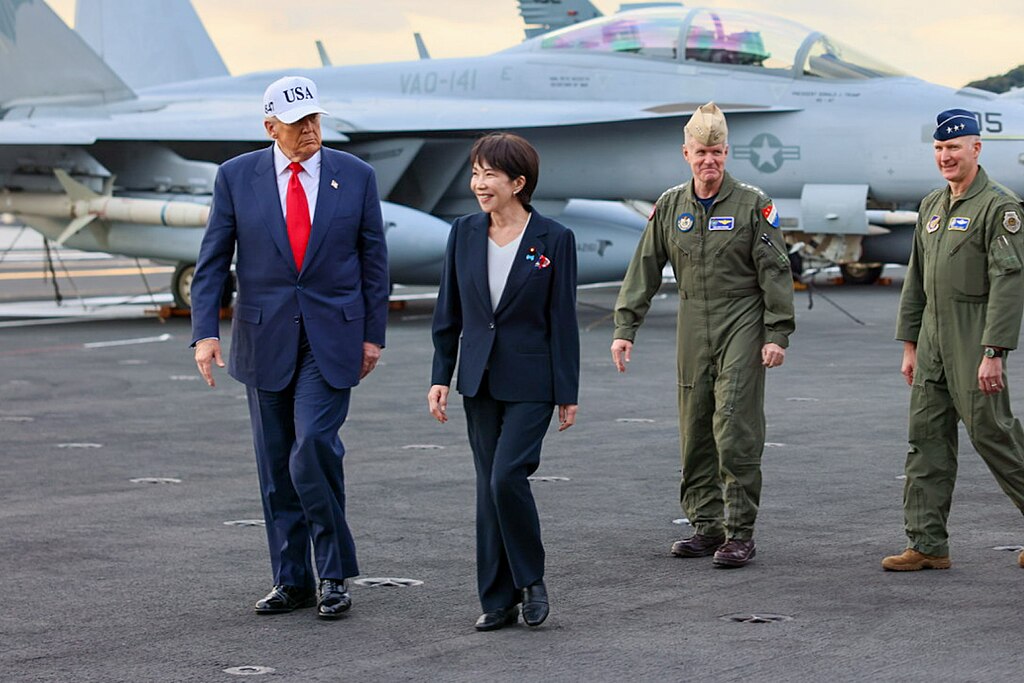
Japan’s Prime Minister Sanae Takaichi has reiterated the importance of the Japan–U.S. strategic alliance amid rising tensions over Taiwan, while carefully distancing herself from earlier remarks that were interpreted as suggesting a direct Japanese military response to a potential conflict involving China. Speaking on a nationally televised program late Monday, Takaichi sought to clarify her position after criticism from opposition leaders and sharp backlash from Beijing.
Takaichi emphasized that Japan’s alliance with the United States would be fundamentally undermined if Tokyo were to abandon Washington during a crisis over Taiwan. However, she underscored that her comments should not be taken as an endorsement of Japan initiating military action if a conflict were to erupt between China and the United States. Instead, she framed Japan’s possible involvement strictly within the boundaries of existing laws and its pacifist constitution.
Relations between Japan and China have deteriorated to their lowest point in years following remarks Takaichi made in November, when she suggested that a hypothetical Chinese attack on Taiwan could trigger a Japanese military response. China, which claims sovereignty over the democratically governed island, reacted strongly with export restrictions, flight cancellations, and repeated demands for a retraction, accompanied by harsh official commentary.
On television, Takaichi clarified that her earlier statements were focused on scenarios such as evacuating Japanese and American citizens from Taiwan in the event of an emergency. She noted that if U.S. forces operating jointly with Japan were attacked and Japan failed to act, the bilateral alliance could collapse. Any response, she said, would be limited, lawful, and based on a comprehensive assessment of the situation on the ground.
While stopping short of retracting her November comments, Takaichi maintained that her stance aligns with Japan’s long-standing security policy, including the right to collective self-defence when Japan’s survival is threatened. With high approval ratings since taking office in October 2025, she has called a snap election for February 8, aiming to leverage her popularity as security and foreign policy dominate public debate.













