


 China Expands Export Controls, Adds 20 Japanese Companies to Restricted List
  Maria Corina Machado’s Return to Venezuela Faces U.S. Hesitation After Deadly Earthquakes
  Iran Skips U.S. Technical Talks Over Unmet MoU Conditions and Frozen Funds Dispute
  Serbia Protests Continue as Thousands Rally Despite Vucic’s Resignation Plan
  Trump Urges Gasoline Retailers to Cut Prices to $2.50 Per Gallon, Warns of Legal Action
  Andy Burnham Sets Out Vision to Decentralize Britain as Labour Leadership Race Begins
  Canada Grants C$7 Million to Greenland Molybdenum Mine to Strengthen Critical Minerals Supply
  Javier Milei Cabinet Chief Manuel Adorni Resigns Amid Spending Scandal Investigation
  US Strikes Iran Again After Strait of Hormuz Tanker Attack Escalates Ceasefire Tensions
  Trump Threatens 100% Tariffs on Countries Imposing Digital Services Taxes on U.S. Tech Firms
  Russia Intensifies Assault on Kostiantynivka as Ukraine’s Donetsk Defense Faces Mounting Pressure
  Trump Suspends Some Morocco Fertilizer Tariffs to Ease U.S. Supply Shortage
  Mexico, U.S. Launch Sterile Fly Facility to Combat New World Screwworm Outbreak
  Supreme Court Backs Lisa Cook, Defends Federal Reserve Independence Against Trump Firing Attempt
  Sheinbaum Says No One Is Above the Law After Abuse Video of Ex-Pemex Chief Emerges
  Trump Signs Memorandum Backing Americans’ Right to Repair Their Own Vehicles


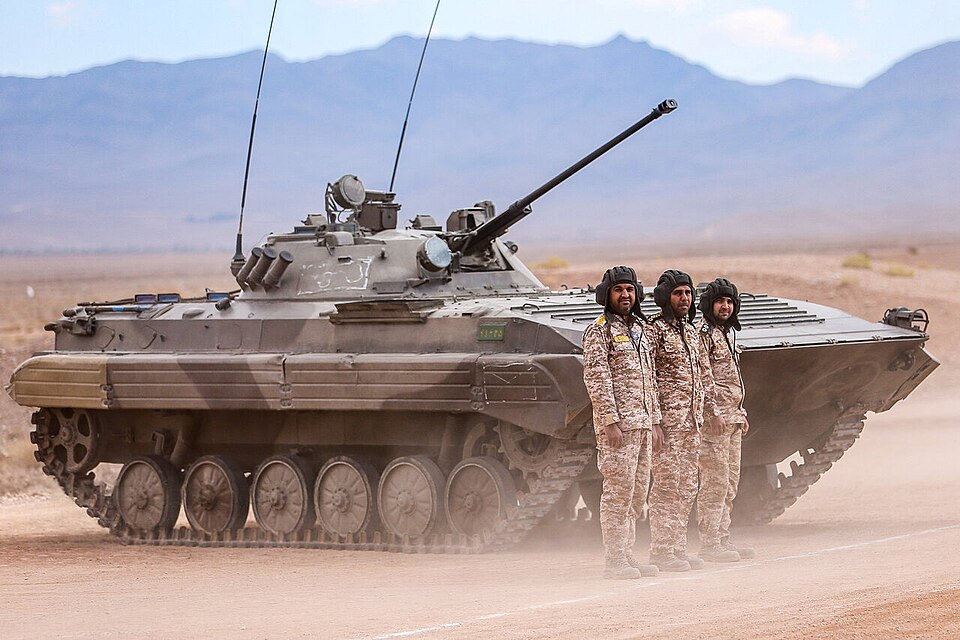
Geopolitical tensions in the Middle East have intensified dramatically as Iran's Islamic Revolutionary Guard Corps (IRGC) issued a stark warning targeting U.S.-affiliated universities across neighboring countries. The IRGC declared these academic institutions legitimate military targets, urging all students, faculty, and staff to maintain at least a one-kilometer distance. Tehran claims the move is a direct response to alleged American and Israeli involvement in a strike on the Tehran University of Science and Technology.
The threat puts prominent American campuses at serious risk, particularly those operating in the UAE and Qatar — including NYU Abu Dhabi and Qatar's Education City, home to Georgetown, Carnegie Mellon, and Northwestern. These institutions represent massive long-term investments, and according to Open Doors data, nearly 4,900 Americans were enrolled across the Middle East and North Africa in the 2023–2024 academic year, with over 1,000 based in the UAE.
On the military front, the situation is rapidly evolving. Specialized U.S. Marine Expeditionary Units have arrived in the region aboard the USS Tripoli, signaling a potential shift from air and sea operations toward ground-based military engagement. The White House frames the deployment as a precautionary measure to protect energy corridors and critical infrastructure, though analysts warn it could signal a prolonged ground conflict.
Amid the volatility, Iran granted Pakistan safe passage for 20 additional vessels through the strategically vital Strait of Hormuz, offering modest relief to regional maritime trade. Pakistani Foreign Minister Ishaq Dar called the agreement a meaningful confidence-building step.
Meanwhile, Yemen's Houthi forces launched fresh drone and missile attacks against Israel, further complicating the regional security outlook. Despite the escalation, diplomatic channels remain active. U.S. envoy Steve Witkoff confirmed that negotiations with Iranian officials are ongoing, centered on a 15-point framework requiring Iran to halt uranium enrichment and surrender approximately 10,000 kilograms of enriched material under international oversight.







