


 Russian Envoy Dmitriev Heads to US for Ukraine Talks
  US, China Extend Trade Truce to Jan. 10 Ahead of Trump-Xi Summit
  European Stocks Slip as Iran Tensions Offset Strong Eurozone Data
  Oil Prices Ease as Iran Tensions Clash With Diplomacy Hopes
  Japan Private-Sector Growth Slows as Domestic Demand Weakens
  RBA Says ASX Still Falls Short on Governance and Risk Controls
  US, Japan and South Korea Back Taiwan Ahead of Trump-Xi Summit
  U.S. Dollar Hits Eight-Week High After Fed Rate Hike
  Gold Prices Rise as Oil Slump Eases Fed Rate Hike Fears
  U.S. 10-Year Treasury Yield Hits 2007 High as Fed Rate Hike Bets Rise
  Asian Currencies Muted as Dollar Firms Ahead of Trump-Xi Summit
  Asian Stocks Mixed Ahead of Trump-Xi Meeting
  Oil Prices Rise as U.S.-Iran Talks Fuel Diplomacy Hopes
  Gold Drops Over 1% as Dollar, Treasury Yields Surge on Fed Rate Hike Bets
  Oil Prices Surge as U.S.-Iran Diplomacy Hopes Fade


 Add as a preferred source on Google
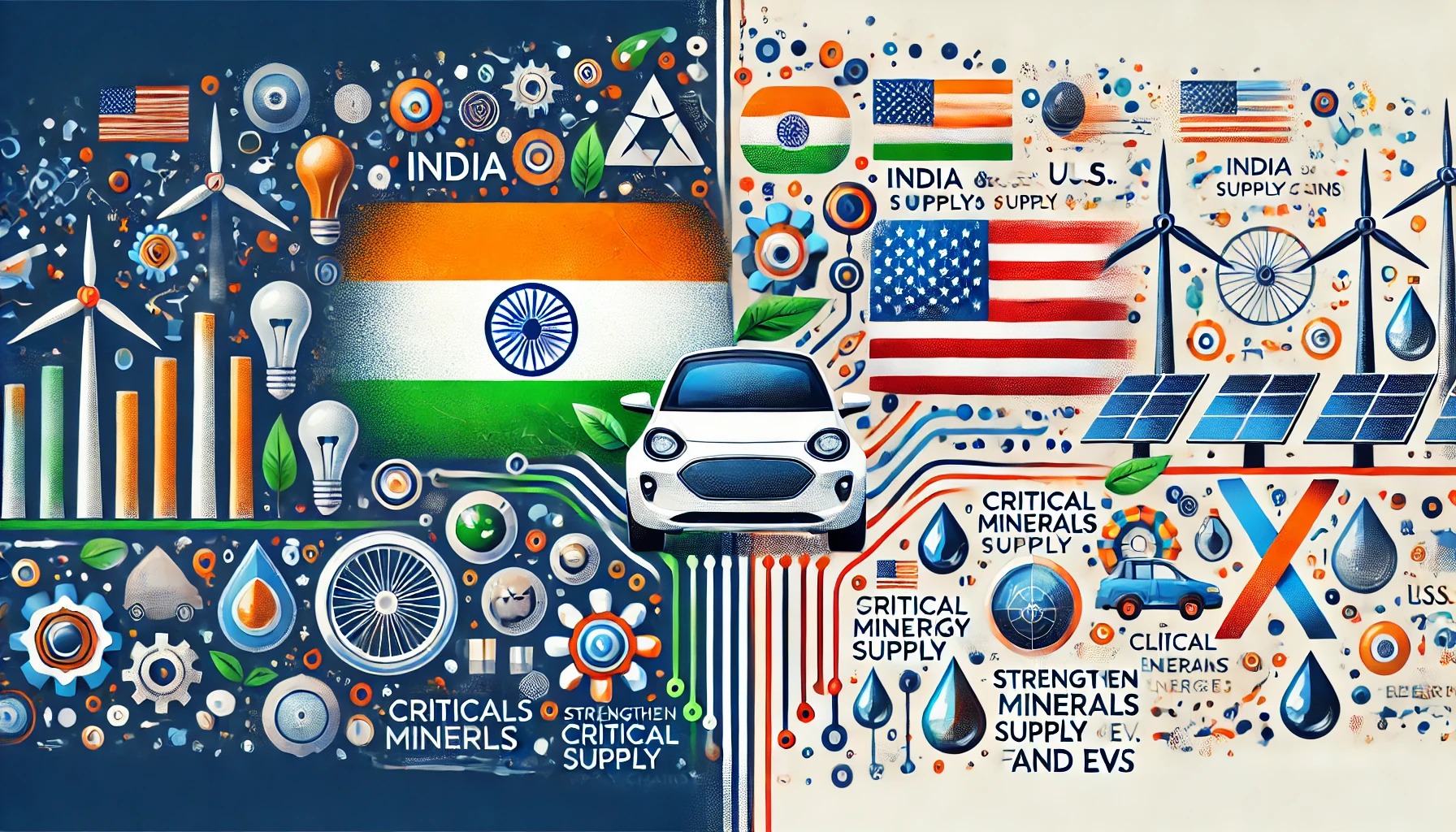
India and U.S. Sign Critical Minerals Supply Chain Agreement for Electric Vehicles
Indian Trade Minister Piyush Goyal and U.S. Commerce Secretary Gina Raimondo have signed an agreement to enhance supply chain cooperation between India and the U.S. for critical minerals such as lithium and cobalt, vital for electric vehicles (EVs) and clean energy applications.
The critical minerals supply chain memorandum of understanding (MOU), signed during Minister Goyal's visit to Washington, is intended to bolster resilience for both countries in the EV sector and clean energy industries.
Focus on Supply Chain Resilience
The U.S. Commerce Department's statement highlighted that the MOU aims to establish strong supply chains for critical minerals. Priority areas include identifying necessary equipment, services, policies, and best practices to support the commercial development of critical minerals exploration, extraction, processing, refining, recycling, and recovery for both the U.S. and India.
Speaking at the Center for Strategic and International Studies in Washington, Goyal described the MOU as a "multi-dimensional partnership." The agreement will involve open supply chains for materials, technological advancements, and investment flows to support the development of green energy.
Inclusion of Third Countries
Minister Goyal emphasized that the cooperation between India and the U.S. on critical minerals will also include engagement with third countries, particularly those rich in minerals in Africa and South America, to further secure the supply chain for EV production.
Scope of the Agreement Compared to Japan-U.S. Trade Deal
Although the MOU marks a significant step in U.S.-India relations, it does not constitute a full critical minerals trade agreement. Such a trade deal would have allowed India to access the U.S. electric vehicle tax credit of $7,500.
In comparison, Japan signed a comprehensive deal with the U.S. Trade Representative’s office last year. This deal enables Japanese automakers to fully benefit from the EV tax credit, aiming to decrease mineral dependence on China and reduce export control restrictions on critical minerals like lithium, nickel, cobalt, graphite, and manganese.







