


 Singapore Budget 2026 Set for Fiscal Prudence as Growth Remains Resilient
  RBI Holds Repo Rate at 5.25% as India’s Growth Outlook Strengthens After U.S. Trade Deal
  Dow Hits 50,000 as U.S. Stocks Stage Strong Rebound Amid AI Volatility
  China Extends Gold Buying Streak as Reserves Surge Despite Volatile Prices
  Japan Economy Poised for Q4 2025 Growth as Investment and Consumption Hold Firm
  Bank of Japan Signals Readiness for Near-Term Rate Hike as Inflation Nears Target
  Japanese Pharmaceutical Stocks Slide as TrumpRx.gov Launch Sparks Market Concerns
  Asian Stocks Slip as Tech Rout Deepens, Japan Steadies Ahead of Election
  Dollar Near Two-Week High as Stock Rout, AI Concerns and Global Events Drive Market Volatility
  Trump Signs Executive Order Threatening 25% Tariffs on Countries Trading With Iran
  Dollar Steadies Ahead of ECB and BoE Decisions as Markets Turn Risk-Off
  Trump Endorses Japan’s Sanae Takaichi Ahead of Crucial Election Amid Market and China Tensions
  Trump’s Inflation Claims Clash With Voters’ Cost-of-Living Reality
  Gold Prices Slide Below $5,000 as Strong Dollar and Central Bank Outlook Weigh on Metals
  Russian Stocks End Mixed as MOEX Index Closes Flat Amid Commodity Strength
  Fed Governor Lisa Cook Warns Inflation Risks Remain as Rates Stay Steady
  Trump Lifts 25% Tariff on Indian Goods in Strategic U.S.–India Trade and Energy Deal


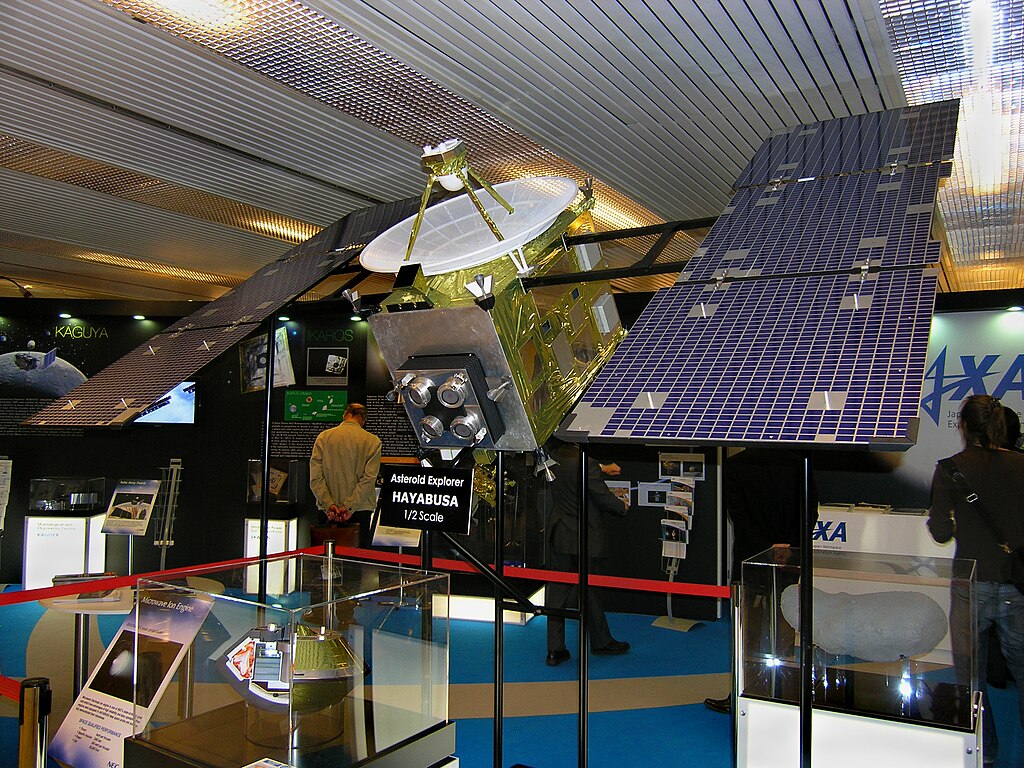
This week, the International Astronautical Congress (IAC) is taking place in Milan, where space agencies and private companies gather amid rising geopolitical rivalries. This conference marks a critical moment in the global space race, especially as private sector players, including Elon Musk's SpaceX, strive to keep pace with emerging space powers.
Since its inception in 1950, the IAC has provided a platform for scientists, engineers, companies, and political leaders from spacefaring nations to discuss cooperation, even during times of geopolitical tensions. This year, the conference brings together key representatives from the United States and China, two of the leading rivals in space exploration. However, Russia's space agency, Roscosmos, does not have an official presence due to its isolation following the 2022 invasion of Ukraine, highlighting current divisions in global space cooperation.
Key Topics at the IAC
Nearly all of the 77 member countries of the International Astronautical Federation (IAF) are participating in discussions that focus heavily on lunar exploration, NASA's growing coalition of nations under the Artemis moon program, and Europe's urgent need for enhanced access to space.
IAF President Clay Mowry emphasized the event's significance, stating that a record 7,197 technical abstracts were submitted, with 37% of presentations coming from students and young professionals. “This is the most exciting time in space since the Apollo era in the 1960s,” he remarked to Reuters.
NASA’s Strategy for Future Space Missions
NASA Administrator Bill Nelson is set to garner support for the agency’s strategy of leveraging private companies to replace the aging International Space Station (ISS) after its planned retirement in 2030. For over two decades, the ISS has symbolized space diplomacy primarily led by the U.S. and Russia, despite their earthly conflicts.
With significant investments in the Artemis moon program, NASA is keen to maintain its presence in low-Earth orbit to compete with China's Tiangong space station, which has been continuously occupied by Chinese astronauts since 2021.
The U.S. and China are both vying to send the first humans to the moon since the final Apollo mission in 1972. These two space powers are aggressively courting partner countries and relying heavily on private firms for their lunar missions, influencing the objectives of smaller space agencies worldwide.
European Space Priorities
The IAC coincides with Italy's parliament beginning the approval of the country’s first legislative framework for the space industry, which establishes guidelines for private sector investments. Italy’s Industry Minister Adolfo Urso stated, “These rules provide the national ecosystem guidance on how to achieve our objectives and ensure the sustainable use of space.”
As one of the leading contributors to the European Space Agency (ESA), Italy has pledged €7.3 billion ($7.98 billion) by 2026 for both national and European space projects.
The emergence of disruptive space technologies, spurred largely by SpaceX, coupled with geopolitical tensions, has compelled Europe to redefine its priorities in satellite and launcher development. SpaceX’s Falcon 9 rocket has become essential for many Western nations seeking access to space, prompting the U.S. to encourage new space startups that can provide affordable launch options. Additionally, SpaceX's expanding Starlink internet network positions it as the world’s largest satellite operator.
Challenges and Collaborations in European Space Operations
After a year-long hiatus, Europe resumed uncrewed access to orbit with the test flight of its Ariane 6 launcher in July 2023. However, capacity remains limited due to the cessation of ties with Russia, which had previously provided significant support through its Soyuz rockets.
The European satellite manufacturing sector is under increasing pressure as the demand for traditional, large geostationary satellites diminishes in the face of competition from low Earth orbit constellations, such as SpaceX’s Starlink.
Leonardo, one of the event's hosts, has called for a new strategy that encompasses collaboration with its French partner Thales, and their main rival Airbus. Reports indicate that these companies are in preliminary talks to consolidate their satellite operations, though much will depend on the direction of the new European Commission, which previously blocked attempts to create a unified entity.
European strategists argue that the space market is global, and limiting competition within Europe could hinder their competitiveness on the world stage. NASA’s initiative to develop privately built replacements for the ISS is already fostering transatlantic partnerships, such as the joint venture formed this year between Airbus and Voyager, a U.S. space operations firm, to address European demand for low-Earth orbit research and operations.













