


 China Inflation Cools in July as CPI Misses Forecast, PPI Deflation Eases
  South Korean Won Leads Asian FX Losses as Dollar Rises
  Japan Services Producer Prices Rise 3.2% in June, Supporting BOJ Rate Hike Expectations
  US Yen Intervention Unlikely to Deliver Lasting Recovery, Yardeni Says
  Philippine GDP Growth Slows to 2.3% in Q2
  US Dollar Falls as Weak July Jobs Report Dents Fed Rate Hike Bets
  Japan Economy Minister Downplays Inflation Risks Despite BOJ Warning
  Gold Prices Fall Amid Rate Jitters; Copper Steady as China Stimulus Eyed
  Oil Prices Rise as Hormuz Reopening Remains Uncertain
  Eurozone Bond Yields Fall as Oil Slump Eases Inflation Fears Ahead of Central Bank Meetings


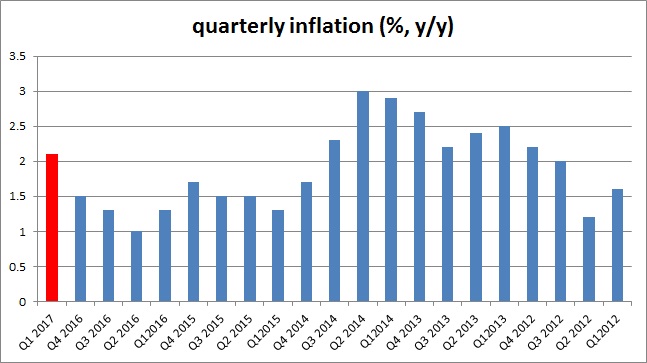
The Reserve Bank of Australia’s (RBA) monetary policy has a duty to maintain price stability, full employment, economic prosperity and the welfare of the Australian people and to achieve these targets RBA maintain an inflation target of 2-3 percent.
Data released earlier shows that for the first time since 2014, the inflation has reached the RBA’s target range. In the first quarter of 2017, CPI inflation in Australia increased by 2.1 percent from a year ago. Inflation grew by 0.5 percent on a quarterly basis. RBA’s own measure of trimmed mean CPI, which is more of core inflation, grew by 1.9 percent in the first quarter from a year ago. The increase in commodity prices through 2016 and in initial months of 2017 is a contributor to the increase.
However, we don’t expect the RBA to change its policy stance in the first half of the year. The recent slide in commodity prices has already pushed back rising inflation in other key economies like in Germany. Australia may suffer the same fate. In addition to that, the policymakers at the RBA would prefer for the inflation to settle in the middle of the range at least for two to three quarters before they start to change their current wait and watch policy. Currently, RBA is maintaining interest rates at 1.5 percent.
The Australian dollar is currently trading at 0.752, down -0.16 percent so far today.







