


 Trump Signs Executive Order Threatening 25% Tariffs on Countries Trading With Iran
  China Extends Gold Buying Streak as Reserves Surge Despite Volatile Prices
  India–U.S. Interim Trade Pact Cuts Auto Tariffs but Leaves Tesla Out
  Bank of Japan Signals Readiness for Near-Term Rate Hike as Inflation Nears Target
  U.S.-India Trade Framework Signals Major Shift in Tariffs, Energy, and Supply Chains
  Oil Prices Slip as U.S.-Iran Talks Ease Middle East Tensions
  UK Starting Salaries See Strongest Growth in 18 Months as Hiring Sentiment Improves
  Yen Slides as Japan Election Boosts Fiscal Stimulus Expectations
  Vietnam’s Trade Surplus With US Jumps as Exports Surge and China Imports Hit Record
  Nikkei 225 Hits Record High Above 56,000 After Japan Election Boosts Market Confidence
  Gold and Silver Prices Slide as Dollar Strength and Easing Tensions Weigh on Metals
  Trump Lifts 25% Tariff on Indian Goods in Strategic U.S.–India Trade and Energy Deal
  Asian Markets Surge as Japan Election, Fed Rate Cut Bets, and Tech Rally Lift Global Sentiment
  Global Markets Slide as AI, Crypto, and Precious Metals Face Heightened Volatility
  South Africa Eyes ECB Repo Lines as Inflation Eases and Rate Cuts Loom
  Trump’s Inflation Claims Clash With Voters’ Cost-of-Living Reality


Most notably, China has been the major trade partner of Aussies and Kiwis in the recent past which is why we would like to shed some light on Aussie trade exposure with China ahead of RBA’s monetary policy.
Australia is in the global top 20 of countries ranked by their export exposure to China. In terms of the growth in exports, China’s role was even more critical: increases in sales to China alone accounted for almost 80 per cent of all Australian export growth in value terms in 2013-14.
China accounted for roughly AU$155 billion ($117 billion, based on June 2017 exchange rates) in import-export trade with Australia in 2016, including AU$93 ($70.3) billion in Australian exports.
China has been Australia’s most important export market since 2009 and in recent years has been central to our overall export performance. For an instance, it sold China goods and services worth A$107.5 billion in 2013-14, which accounted for almost one in every three export dollars earned over the year.
The China-Australia Free Trade Agreement (ChAFTA), which took effect in December 2015, is a significant addition to the global landscape for international trade. Besides directly affecting companies engaged in import-export trade between Australia and China, ChAFTA also has potential implications for U.S. companies, since China is the largest goods trading partner for the U.S.
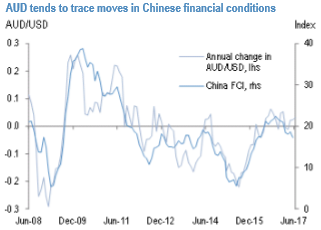
These Chinese data have been volatile in recent months, but AUDUSD looks broadly fair given the twists and turns in Chinese financial conditions of late.
AUD has traced China’s on-again off-again policy shifts on financial conditions and liquidity reasonably well over the past 9 years (refer above chart).
These mini-turns in financial conditions have not been easy to predict ahead of time, the cycle length is shortening, and the transmission to commodities looks more speculative than fundamental.
These cycles have been influential for AUD, and suggest that any further developments by Chinese authorities on this front will bear watching in coming months.
We advocate staying shorts in AUDUSD futures contracts of far-month tenors with a view to arrest downside risks. Courtesy: JPM













