


 China's Refining Industry Faces Major Shakeup Amid Challenges
  Mexico's Undervalued Equity Market Offers Long-Term Investment Potential
  Geopolitical Shocks That Could Reshape Financial Markets in 2025
  Global Markets React to Strong U.S. Jobs Data and Rising Yields
  Stock Futures Dip as Investors Await Key Payrolls Data
  UBS Projects Mixed Market Outlook for 2025 Amid Trump Policy Uncertainty
  Japan Services Producer Prices Rise 3.2% in June, Supporting BOJ Rate Hike Expectations
  BOJ Expected to Hold Rates Steady While Signaling More Hikes Ahead
  Singapore Central Bank’s Exchange Rate Policy Explained: Why MAS Uses the S$NEER Instead of Interest Rates
  Fed Holds Interest Rates Steady as Kevin Warsh Says Rising Treasury Yields Tighten Financial Conditions
  Fed Minutes Signal Rate Hikes Remain Possible as Inflation Risks Persist
  2025 Market Outlook: Key January Events to Watch
  Urban studies: Doing research when every city is different


 Add as a preferred source on Google
Positive factors less likely to drive CAD than draggers:
Trump’s protectionist declarations, notably labelling NAFTA as the “worst trade deal in the history of the country”, make the Canadian dollar especially vulnerable in the weeks ahead. Clinton has been ahead in the polls most of the time, but Trump is again catching up.
Clinton’s lead is less than two points, suggesting that the election outcome is likely to be very uncertain until the vote. The threat weighing on Canada’s status as a privileged trade partner should be increasingly discounted by FX markets.
In addition to that BoC’s dovish shift biases near-term CAD weaker: The BoC September policy meeting was dovish, as the bank significantly shifted the risk profile to inflation from “roughly balanced” to now “tilted somewhat to the downside”.
The commodity-related Canadian dollar was also hit by tumbling crude price on Friday due to reports that Iran's August crude oil exports jumped 15% to a five-year high of more than 2 million barrels per day, sparking fresh concerns over a global supply glut. Supply adjustment or an OPEC deal causes crude to pierce $60/bbl earlier than expected.
USDCAD has been trading sideways in a range for months but is currently testing an important resistance area. A decisive break of the 1.32 region would open the door for fast gains.
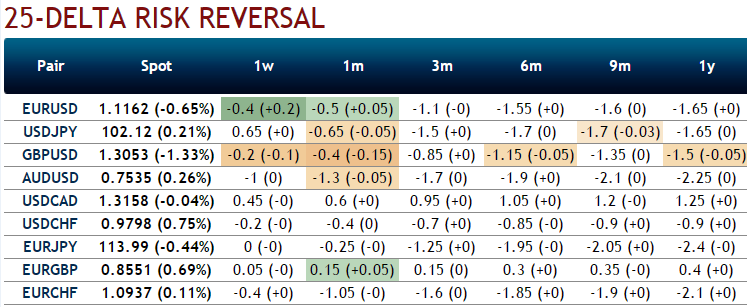
From the nutshell showing delta risk reversals of USDCAD, you can probably make out that the pair has been one of the most expensive pairs to be hedged for upside risks as it indicates calls have been relatively costlier over puts which indicate upside risks of spot FX is anticipated and hedging for such risks is relatively more expensive.







