


 BOJ Set for Rate Hike as Inflation and Yen Pressure Mount
  China Boosts Gold Reserves by 650,000 Ounces as Prices Rally
  Yen in Focus as BOJ, Fed Rate Hikes Reshape Currency Markets
  JPMorgan Sees ECB Raising Rates to 2.75% in December
  RBI Uses $10 Billion Currency Swaps to Drain Excess Rupee Liquidity
  Fed Rate Hike Threatens Housing as U.S. Growth Leans on AI, Citi Says
  Fed’s Hammack Says Bond Yield Surge Is Not Driven by Inflation Fears
  ECB Rate Hike in Focus as Oil Tops $100
  Japanese Yen Retreats as Dollar Rises Ahead of Fed, BOJ Rate Decisions
  Fed Unveils Stablecoin Rules Under GENIUS Act


 Add as a preferred source on Google
The domestic macro pressures are increasing pressure on the CNB to exit the EURCZK floor. In our view, upside inflation surprises and stronger growth momentum warrant a shift towards tighter monetary policy, which should drive CZK appreciation following the exit from the floor.
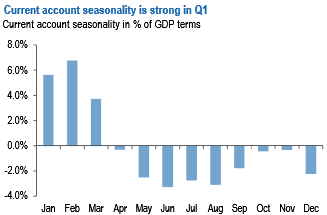
The headline inflation is projected to rise in 2017, and twin current account and fiscal surpluses provide currency support. We note that current account seasonality pressure is strongest in Q1 (refer above diagram), which is a further supportive factor for CZK strength.
Headline CPI inflation data for December is released next week (10th January), and further upside surprises are likely to increase pressure on the CNB to exit the floor sooner rather than later and may spur a further near-term fall in EURCZK forward points. However, we note that the central bank has recently downplayed upside inflation surprises.
The CNB maintains that mid-2017 remains the most likely exit from the EURCZK floor. Interestingly, the market is currently pricing negative policy rates at the time of the exit to smooth the transition, but we view this as a low probability event.
The minutes from the CNB December meeting state that negative rates would be inconsistent with exiting the EURCZK floor, as this would occur at a time of “expected gradual tightening of the monetary conditions”.
Hence, we maintain to hold short 27-Nov-17 EURCZK forwards, and think current levels for 1y EURCZK forwards still offer attractive entry points for a bullish CZK expression.







