


 Bank of America Sees EUR/USD at 1.15 by Year-End
  AI Agents Could Disrupt Financial Services, Bernstein Says
  Middle East Oil Exports Recover as Tanker Costs Surge
  Gold Prices Fall Amid Rate Jitters; Copper Steady as China Stimulus Eyed
  Wall Street Edges Higher as Treasury Yields Retreat
  India Manufacturing Growth Hits Seven-Month High in September
  Australia Trade Surplus Shrinks Sharply as Imports Surge
  FxWirePro: Daily Commodity Tracker - 21st March, 2022
  IMF Says Global Bond Markets Remain Orderly Despite Yield Surge
  Fed’s Logan Signals 50 Basis Points More in Rate Hikes
  Gold Prices Steady as Markets Await U.S. Jobs Data


 Add as a preferred source on Google
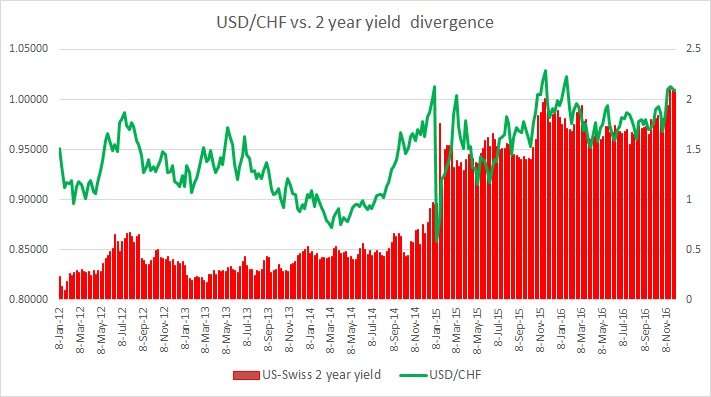
In recent days, Swiss franc’s correlation with the 2-year yield spread (US-Swiss 2 year) has risen to 78 percent and time on time again it shows relatively high positive correlation, as high as 90 percent at times. Just before and after the Brexit referendum in the UK, the 20-day rolling correlation was averaging above 60. Hence, it is vital to keep a watch on the Swiss yields.
Just after the Swiss floor shock in January 2015 when the Swiss National Bank (SNB) removed a floor in EUR/CHF at 1.20 this relation went to negative and stayed there till October with occasional bounces to positive territory. It hasn’t gone much to the negative since.
Unlike the euro or the pound, Swiss franc is considered a safe haven currency; hence the yield relation sometimes gets overlooked.
However, Swiss yields are a must watch as they are the lowest for any government bonds in the world and any shift in that will mark a major turnaround in trend. The above chart explains how the relation between the spread and exchange rate has unfolded since 2012. The recent weakness in the franc can also be attributed to the sudden sharp rise in the yield difference after Republican candidate Donald Trump won the US Presidency. As of now, the yield spread is at 2.01 percent and the franc is currently trading at 1.009 per dollar.







