


 Baltic Drone Incidents Raise NATO Security Concerns
  Mega IPOs Like SpaceX and OpenAI Could Reshape S&P 500 and Nasdaq 100 Portfolios in 2026
  NHS shakeup: if it sounds like we’ve been here before, it’s because we have
  Cuba needs a long-term solution to its energy crisis
  Trump Nears Decision on Iran Ceasefire Extension as Key Disputes Remain
  U.S.-China Taiwan Conflict Could Trigger Nuclear Escalation, IISS Warns
  Poland Considers Revoking Zelensky’s Top Honor Over Controversial UPA Army Unit Recognition
  Iran-U.S. Nuclear Talks Remain Unresolved as Strait of Hormuz Risks Keep Markets on Edge
  China Expands Nuclear Defense Network in Remote Desert
  US Condemns Russia’s Oreshnik Missile Strike, Warns Against New Attacks on Kyiv
  DOJ Opens Criminal Investigation Into E. Jean Carroll Over Alleged Perjury
  Goldman Sachs Sees Stronger U.S. Dollar as Global Economic Gaps Widen


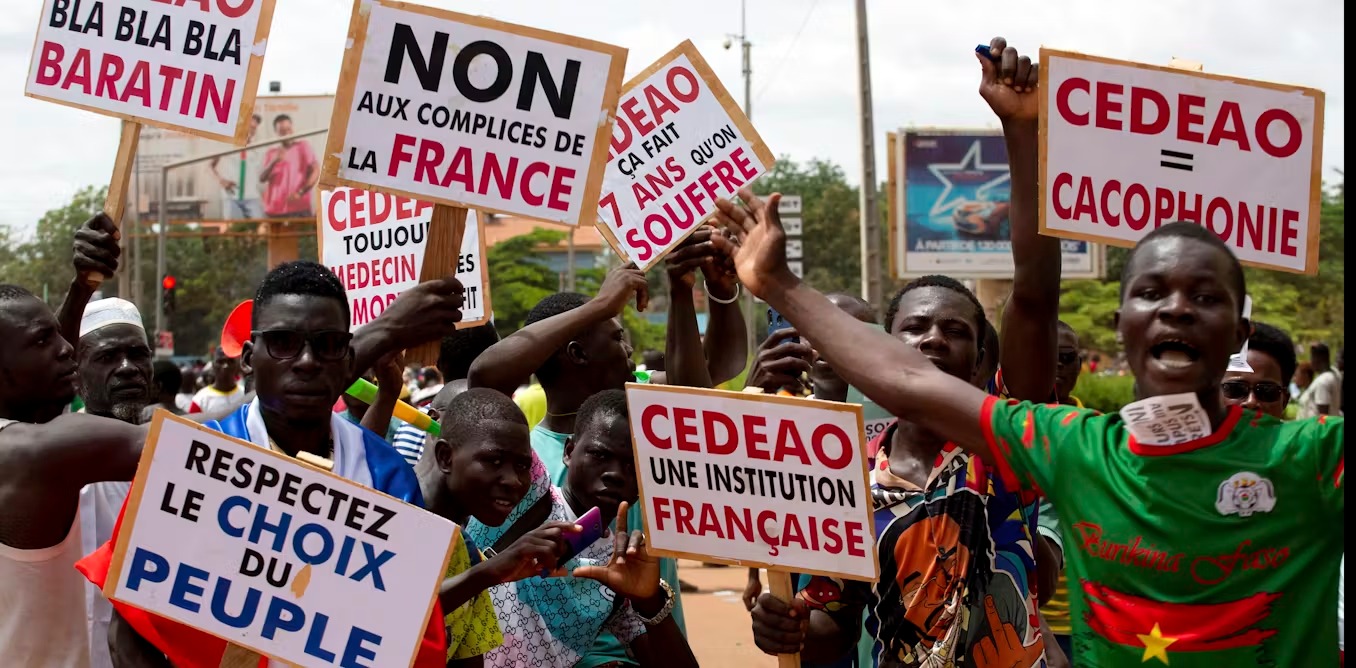

In early January, Côte d’Ivoire announced that French troops would be withdrawing from the country and the military base of Port-Bouët would be handed over to Côte d’Ivoire’s army. The announcement is part of a seismic shift in France’s decades-long presence across francophone Africa.
It is the latest echo of a larger trend that’s seen French troops withdraw or be expelled from its former sphere of influence, losing diplomatic and military weight in countries France had formerly colonized. Since 2022, Burkina Faso, Chad, Mali, Niger, Senegal, and now Côte d’Ivoire, have terminated defence agreements with France.
This may present an opportunity for a long overdue assertion of sovereignty by the region’s countries. However, an ongoing threat from terror groups and the eagerness of other entities to step in could instead lead to more instability and a reinforcement of authoritarianism or regime fragmentation.
France’s withdrawal
Following the wave of independence in the 1960s, France entered in an array of agreements with its former colonies. These helped ensure France’s continued influence in Western Africa and its international standing.
In addition to close political and economic ties, which included currency control by France and support to friendly leaders, this also involved the largest permanent military presence by a former colonial power, with troops stationed at various times in Cameroon, Gabon, Senegal, Burkina Faso, the Central African Republic, Djibouti, Chad, Niger, Mali and Côte d’Ivoire, as well as military assistance to others.
This large military presence has long been controversial. Historically, France was involved in a number of covert or overt military operations with dubious ends, including deadly interventions in Cameroon in the 1960s and support for the Rwandan government during the 1994 genocide.
More recently, it was criticized for backing of authoritarian regimes and leaders and an inadequate approach to anti-terrorism, including through the Serval and Barkhane missions in Mali and the broader Sahel region — the vast semi-arid region of Africa separating the Sahara Desert to the north and tropical savannahs to the south — between 2012 and 2022.
Criticism has also been leveraged at the neocolonial intent of France’s policy, especially in the wake of comments such as President Emmanuel Macron’s remark that African countries were not sufficiently grateful for France’s interventions, which many decried as insensitive to the historical context and implications of France’s role.
Change was therefore long overdue, and over the past three years, a number of developments have seemed to show that France’s star was waning.
A surge of anti-French sentiment spread across the Sahel and beyond. A series of coups in Mali, Niger and Burkina Faso put in power military leaders who were eager to shake off French presence, leading to the departure of French forces from bases there.
Leaving Côte d’Ivoire’s Port-Bouët was done in a more orderly fashion, and France presented it as part of a voluntary reorganization of its presence.
Still, it is hard not to read this withdrawal as part of a wider reckoning with the failure of past policies and a rising desire of African leaders to reclaim sovereignty. This was indeed voiced out loud in the cases of Burkina Faso, Chad and Senegal, where a symbolic repudiation of French heritage is also taking place through the changing of street names.
Risks of foreign influence
This moment could provide an opportunity for West African states to shake off the remnants of the power imbalance that characterized France’s presence, and reshuffle the cards of military and diplomatic co-operation. This could lead to an era of more equal partnerships and responsiveness to popular aspirations.
There are signs that such moves are taking place in the economic area, with Mali, for instance, asserting its sovereignty on resource extraction.
However, the security situation in the Sahel has continued to deteriorate since the French withdrawal. New partners of Burkina Faso, Chad, Mali and Niger — such as the new iterations of the Wagner group, a Russian mercenary corps used as a proxy by the Russian government to widen its influence — have failed to protect civilians or undermine insurgencies.
In some cases, they have even been accused of taking part in the violence. The military juntas in power have delayed promised democratic transitions, and sometimes turned to the scapegoating of minorities as a litmus test of their anti-western credentials instead.
This situation is therefore more likely to lead to further instability, especially as Russia is consolidating its involvement in the Sahel, China seeks to make further inroads in the region to strengthen its stance as the alternative to western support, and new nations such as Turkey and even Ukraine are seeking to widen their influence and reach.
Governments in countries like Chad seem to be turning to multiple new partners for support in maintaining security. This could help them conclude fairer agreements, but it also heightens the risk of regime fragmentation and internal violence if competing forces vie for influence.
Sudan’s civil war, fuelled by the support of external countries =like Egypt and the United Arab Emirates, offers a cautionary tale of what is at risk when multiple new entities seek access or export their rivalries to the continent.
Asserting sovereignity
The political landscape across West Africa is rapidly changing. France seeks new partners outside of its traditional area but sees its influence diminishing across the board. The potential for a more isolationist United States under President Donald Trump is likely to leave a power vacuum in many parts of the world, further opening the door to new forces drawn to Africa’s natural resources and geostrategic importance.
These trends provide African countries with an opportunity to change longstanding patterns. However, they also come with heightened risks, especially in an emerging multipolar world order where mid-level powers, rising major powers and reconstituting great powers seek opportunities to assert their influence.
The only potential counterbalance to these dangers is strong regional co-ordination between West African states.
Mali, Niger and Burkina Faso have left the historical regional grouping ECOWAS, whose effectiveness had been hampered by its historical dependence on western funding. They have, however, formed their own alliance and there are now talks of expanding co-operation with neighbours, including Togo and Ghana.
Whether this can at last provide truly African solutions to the continent’s challenges and offset the centrifugal forces already at play remains to be seen.







