


 Snowflake Stock Soars 30% After Q1 Earnings Beat and Major AWS AI Partnership
  EU Antitrust Probe Could Lead to Massive Google Fine Under DMA Rules
  Samsung Union Dispute Escalates Over Semiconductor Bonus Vote
  JPMorgan Sees Biotech Sector at Turning Point, Upgrades Top Pharma Stocks
  Samsung Workers Approve Wage Deal, Avoiding Major Strike and Boosting Chip Supply Confidence
  Synopsys Q2 FY2026 Earnings Beat Driven by AI and Semiconductor Demand
  Samsung to Invest $1.5 Billion in Vietnam Semiconductor Testing Plant by 2027
  PDG Explores $1 Billion Sale of China Data Center Assets
  HP Q2 2026 Earnings Beat Expectations Despite Memory Chip Pressure
  Morgan Stanley Names Top AI Security and Data Center Stocks for 2026
  Mega IPOs Like SpaceX and OpenAI Could Reshape S&P 500 and Nasdaq 100 Portfolios in 2026
  Salesforce Q1 FY2027 Earnings Beat Expectations Despite Soft Q2 Revenue Outlook


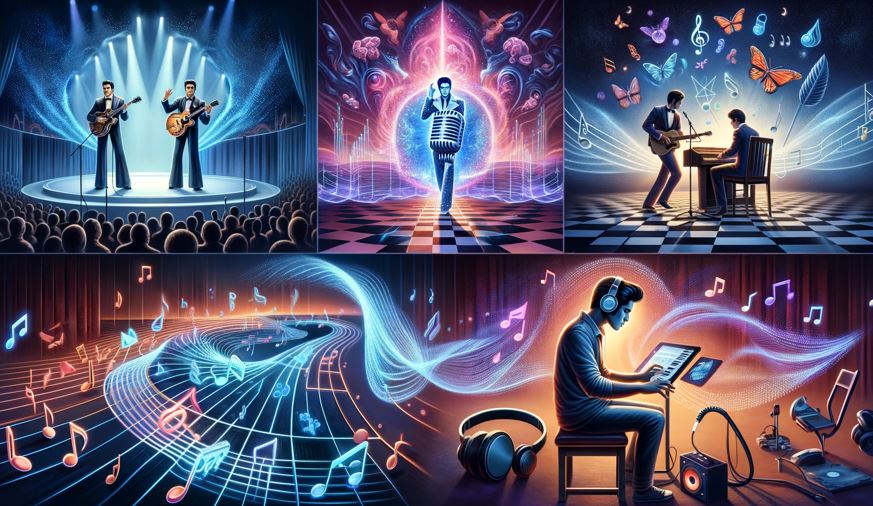

In the heart of London, a new kind of show is unfolding. Elvis Presley, the king of rock ‘n’ roll, is to take to the stage once more – not in flesh and blood of course, but as a hologram. This spectacle, titled Elvis Evolution, is more than just a concert and offers a distinct experience from the likes of Abba’s digital avatars: it’s a testament to how artificial intelligence (AI) is reshaping our experience of music and performance.
Unlike the Abba Voyage hologram show, which primarily focuses on delivering a high-tech concert experience, Elvis Evolution aims to provide an immersive journey into Elvis’s life. It will feature interactive sets and multi-sensory elements to transport the audience back in time.
While Abba Voyage uses motion-capture technology for highly detailed avatars, Elvis Evolution will employ AI-generated animation for a more flexible and dynamic performance, potentially featuring different eras of Presley’s career.
Crucially, this AI-powered Elvis offers the possibility of real-time interaction with the audience, unlike the prerecorded nature of Abba Voyage. This means that while both shows are remarkable in their own right, Elvis Evolution will offer a broader exploration of an artist’s life and career – a unique, multi-sensory holographic experience.
The application of AI in holographic projection is not an entirely recent development – indeed, this technology has been utilised for some years now. A notable example is the DJ Eric Prydz, who has been incorporating AI-driven holographic projections into his electronic dance music performances for more than 15 years.
But the Elvis hologram show serves as an impressive demonstration of AI’s capability to resurrect iconic artists more and more realistically. Utilising AI in conjunction with holographic projection, technicians and artists are able to forge an almost tangible representation of revered entertainers who are now long gone.
This method involves a detailed analysis of thousands of photographs and videos, enabling a recreation that captures the true spirit of the artist. This isn’t just a trip down memory lane – it’s a leap into a new era where technology bridges the gap between past and present, allowing fans to relive concerts that were once just a fleeting moment in time.
But how else will the rapidly accelerating technology of AI affect music and performance?
1. AI in music production
Transitioning from the stage to the studio, AI’s role in music production is equally ground-breaking. As an AI music producer, I have experienced firsthand how these algorithms can compose, create unique sounds and even foresee music trends.
AI tools analyse vast amounts of music data to learn patterns and styles, enabling them to generate compositions in any genre. This technology is not just a tool, it’s a collaborator, opening doors to new soundscapes and musical possibilities.
2. The future of live performance
Beyond holograms, AI is poised to transform live performances in ways we’ve only begun to imagine. Picture a concert where the music adapts in real-time to the mood of the audience, or where immersive soundscapes change based on real-time interactions.
These AI-driven experiences promise to make live shows more dynamic and responsive, offering a level of personalisation that goes beyond a one-size-fits-all performance.
3. Ethical and creative implications
The use of AI to resurrect artists for posthumous performances sparks a profound ethical debate. This dilemma centres on the question: is it ethical to “resurrect” artists for performances they never consented to?
On the one hand, these technological marvels allow fans to relive the magic of legendary performers, creating new experiences with historical figures. On the other, it raises concerns about consent, authenticity and the moral rights of those who are no longer here to voice their opinions.
Addressing these ethical dilemmas involves a multifaceted approach. First, the consent of the artist’s estate is critical. This includes respecting the wishes of the family and the legal entities that manage the artist’s legacy. However, legal consent is just one aspect. There’s also a moral responsibility to stay true to the artist’s style, ethos and message. This means not just recreating an artist’s likeness but capturing the essence of their artistry in a way that honours their legacy.
Another layer to this debate is the authenticity of the experience. While AI and holographic technology can create visually and sonically accurate representations, they cannot encapsulate the spontaneous, human nuances that defined many great performers. Preserving the integrity of the original performances becomes essential. It’s about striking a balance between innovation and respect, ensuring these recreations do not distort or oversimplify the artist’s contributions to their art.
So crucially, there’s a creative responsibility that comes with using AI in this context. It should be about more than just replicating past performances. These concerts should also explore how these artists might have evolved or collaborated with contemporary talents.
This approach not only pays homage to the artists’ past works but also imagines their potential future contributions, blending historical influence with modern creativity.
4. Audience engagement
Finally, AI is revolutionising how audiences engage with music. From virtual reality concerts offering a 360-degree sensory experience to AI-curated playlists that understand our preferences better than we do, the future of music is not just about listening, it’s about experiencing. We are moving towards a world where music is not just heard but felt and lived in ways that transcend traditional boundaries.
As we stand at the crossroads of technology and creativity, the possibilities are as limitless as our imagination. The Elvis hologram show is just the beginning of the future of AI-led concerts. In this new landscape, AI is not just a tool – it’s a canvas, a stage and a new voice in the chorus of musical innovation.







