


 China Shuts 670 Banks as Bitcoin Eyes Financial Risks
  European Stocks Diverge as French Fiscal Crisis Hits CAC 40
  RBI Rate Hike Bets Surge as Inflation Rises
  Gold Prices Rise as Dollar Weakens, Treasury Yields Ease
  Samsung, SK Hynix Shares Fall Ahead of Q3 Earnings
  Europe EV Sales Hit Record as Affordable Models Boost Demand
  Japan Real Wages Rise 1.5%, Supporting BOJ Rate Hikes
  Trump Plans Diesel Tax Relief as Fuel Prices Hit Record Highs
  World Bank Raises South Asia Growth Forecast to 6.9%
  Asian Stocks Rise as Nasdaq Record Offsets Bond Yield Pressure


 Add as a preferred source on Google
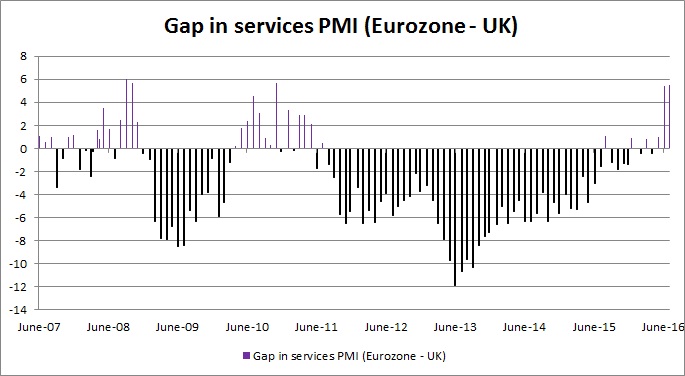
Latest data from the Markit economics show that after the UK referendum on the membership of the European Union, services across the Eurozone gained ground while services activity slowed down markedly in the United Kingdom. The gap between the PMI’s (Eurozone vs. UK) has reached multi-year high. So far, not much hard evidence has been out that shows that the UK referendum is leading to a marked slowdown except for the sentiment data and the PMIs which are showing marked deterioration.
If this trend of weakness in the UK and stability in the Eurozone persists, it will add pressure on the UK government who has vowed to exit from the Union. While British Prime Minister Theresa May’s new government has moved fast to attain the political uncertainties, it hasn’t moved fast enough to dissuade economic fear. Both the UK treasury and the Bank of England (BoE) has been waiting so far for hard evidence before taking any actions.
The chart attached not just focus on the current divergence, it sheds light on a trend, which has been quite prominent for years now. After reaching the peak in the summer of 2013, the gap between the UK services activity and that of Eurozone’s has been reducing since. Eurozone’s recovery, despite being slow seems to be continuing steadily.
If the economic divergence continues, it would threaten the pound against the euro. The euro is currently trading at 0.837 against the pound.







