


 California Court Rejects xAI Bid to Block AI Data Transparency Law
  SoftBank Seeks Up to $40 Billion Loan to Fund Major Investment in OpenAI
  U.S. Senate Greenlights AI Chatbots for Official Staff Use
  UK Regulators Demand Social Media Platforms Strengthen Children's Age Verification
  Oracle Stock Surges as AI Data Center Boom Drives Revenue Beat and Bullish 2027 Outlook
  Costco Faces Class Action Lawsuit Over Tariff Refunds as Supreme Court Strikes Down Trump's IEEPA Tariffs
  Morgan Stanley Limits Withdrawals at Private Credit Fund Amid Market Turmoil
  Nvidia CEO Jensen Huang Says $100B OpenAI Investment Unlikely as AI Demand Surges
  Yann LeCun's AI Startup AMI Raises $1 Billion at $3.5 Billion Valuation
  Heinz Wattie's to Close Three New Zealand Plants, Cutting 350 Jobs
  ANZ and Westpac Forecast Two RBA Rate Hikes in March and May 2026
  Joby Aviation Reaches Major Milestone in FAA Certification for Electric Air Taxi
  Big Tech Signs White House Pledge to Fund Power for AI Data Centers
  Robinhood Banking Surpasses $1 Billion in Deposits Following Successful Relaunch
  Nintendo Stock Surges 10% as Pokémon Pokopia Breaks Sales Records
  Amazon Invests $535 Million in Brisbane Robotics Fulfillment Center
  Alphabet's GFiber Merges with Astound Broadband to Build Major U.S. Internet Provider


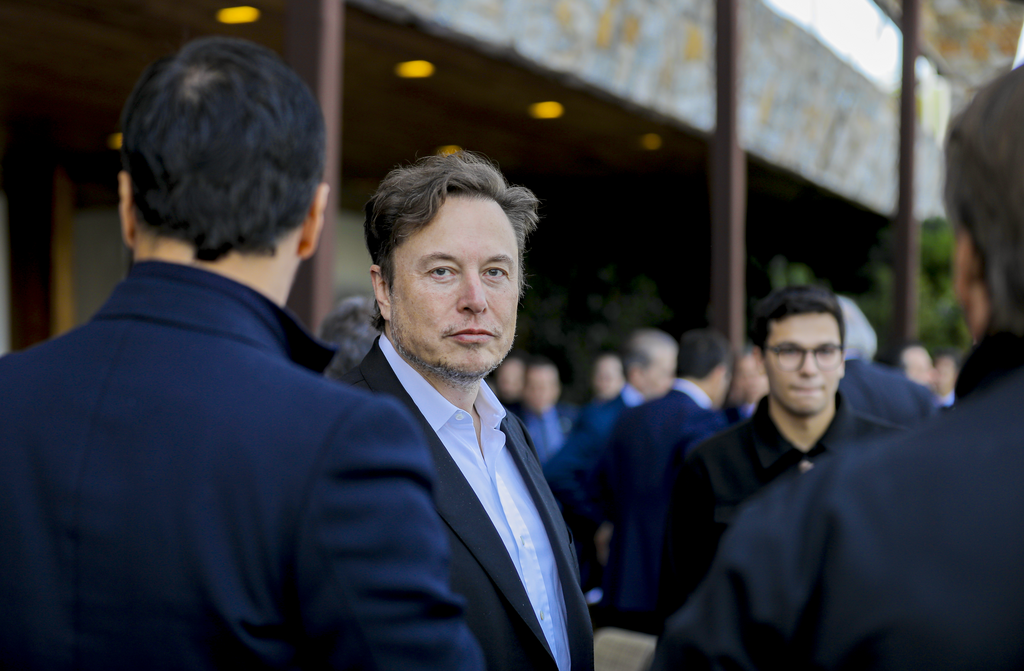
Elon Musk announced on Tuesday that his artificial intelligence startup, xAI, has acquired a third building to further expand its computing infrastructure, signaling a major step in the company’s effort to compete with leading AI developers such as OpenAI and Anthropic. The move is aimed at dramatically increasing xAI’s training capacity to nearly 2 gigawatts of compute power, a scale that places it among the most ambitious AI infrastructure projects in the world.
According to Musk, the newly purchased building is named “MACROHARDRR,” a name widely interpreted as a playful reference to Microsoft. While Musk did not disclose the exact location, a report by The Information cited property records and sources familiar with the project, stating that the new supersized data center is planned outside Memphis, Tennessee. This expansion builds on xAI’s existing supercomputer cluster in Memphis, known as Colossus, which the company has promoted as the largest AI supercomputer in operation.
xAI is reportedly planning to expand Colossus to eventually house at least one million graphics processing units (GPUs), a critical resource for training advanced artificial intelligence models. The newly acquired warehouse is expected to begin its conversion into a fully operational data center in 2026. In addition, The Information noted that both the new data center and a planned Colossus 2 facility are located near a natural gas power plant that xAI is constructing, along with access to other energy sources to support its massive power needs.
The rapid expansion highlights xAI’s determination to accelerate the development of next-generation AI systems capable of rivaling ChatGPT and Claude. However, the growing footprint of AI data centers has also sparked criticism from environmental activists, who warn about the significant energy consumption and environmental impact associated with large-scale computing infrastructure.
xAI did not immediately respond to a request for comment from Reuters, but the latest developments underscore the intensifying competition in the AI sector as companies race to secure computing power and scale their operations globally.













