


 Eli Lilly’s Inluriyo Gains FDA Approval for Advanced Breast Cancer Treatment
  FDA Adds Fatal Risk Warning to J&J and Legend Biotech’s Carvykti Cancer Therapy
  NASA Cuts Boeing Starliner Missions as SpaceX Pulls Ahead
  Blue Origin’s New Glenn Achieves Breakthrough Success With First NASA Mission
  Blue Origin New Glenn Explosion Could Delay Launch Operations Until 2028
  SpaceX Pivots Toward Moon City as Musk Reframes Long-Term Space Vision
  Tabletop particle accelerator could transform medicine and materials science
  Trump and Merck KGaA Partner to Slash IVF Drug Costs and Expand Fertility Coverage
  Neuralink Plans High-Volume Brain Implant Production and Fully Automated Surgery by 2026
  SpaceX Delays Starship V3 Launch Ahead of Potential Record IPO
  Cogent Biosciences Soars 120% on Breakthrough Phase 3 Results for Bezuclastinib in GIST Treatment
  NASA Artemis II: First Crewed Moon Mission Since Apollo Takes Four Astronauts on 10-Day Lunar Journey
  Is space worth the cost? Accounting experts say its value can’t be found in spreadsheets


 Add as a preferred source on Google
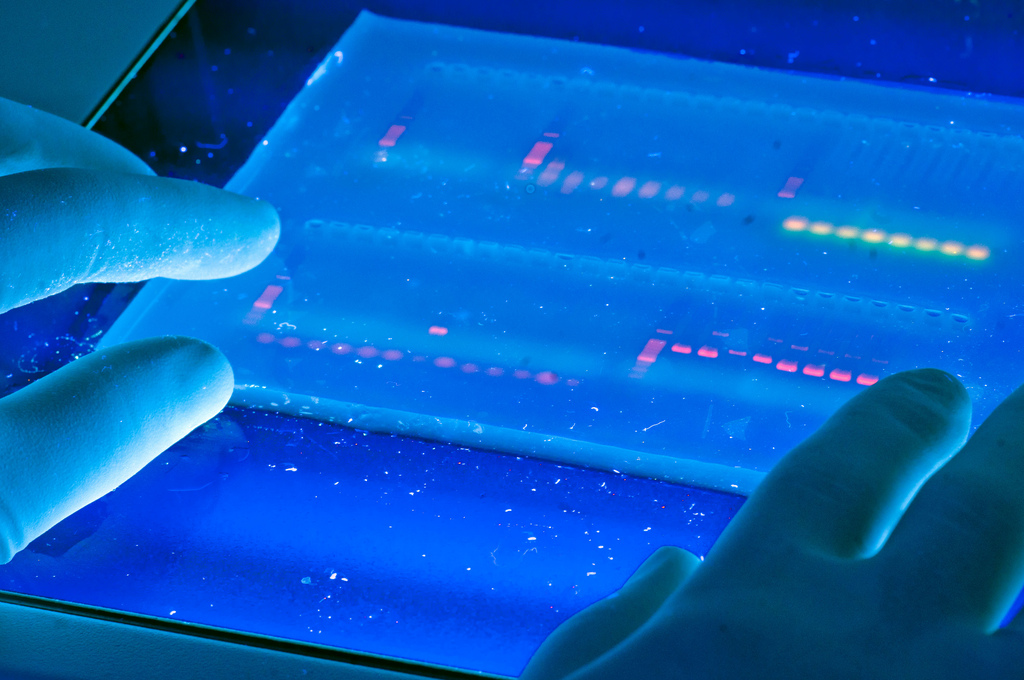
One of the biggest problems that the engineers and programmers are facing right now is the prospect of having way too much information and not enough space to store it. Even with tech companies coming up with ways to make storage devices smaller and more compact while increasing the amount of space available, technology is about to hit a wall. Thanks to scientists who successfully stored files and a short clip in DNA, however, this wall might just get pushed back.
The study was done by two researchers from the Columbia University and the New York Genome Center, Phys.org reports. They published their findings in the journal Science, which talked about how the pair managed to store data into the nucleotides of DNA.
This has substantial implications for multiple fields and disciplines due to how it expands the number of choices that scientists have when it comes to storing information and how DNA can survive for hundreds of thousands of years. As far as preserving data goes, it doesn’t get any better than that at the moment.
Yaniv Erlich is one of the authors of the study and according to him, DNA is the perfect storage option because it won’t degrade as fast as discs or wires. It’s also safe from becoming obsolete, largely because humans will likely never be able to exist without DNA.
The Scientist actually spoke to Erlich recently to ask him a few questions on their discovery. When asked why they chose to work on DNA for potential information storage, he answered with information that practically all computer engineers know.
“First, we’re starting to reach the physical limits of hard drives,” Erlich said. “DNA is much more compact than magnetic media—about 1 million times more compact. Second, it can last for a much longer time. Think about your CDs from the 90s, they’re probably scratched by now. [Today] we can read DNA from a skeleton [that is] 4,000 years old. Third, one of the nice features about DNA is that it is not subject to digital obsoleteness.”







