


 US Tech Giants’ AI Bond Boom Raises Euro Zone Borrowing Risks
  U.S. Probes Apex Logistics Over Nvidia AI Chip Shipments to China
  Salesforce Shares Surge as AI Demand Powers Q2 Earnings Beat
  Nvidia Pauses AI Cloud Financing Deals Amid Antitrust Concerns
  Meta Agrees to $18 Billion Settlement, Tightens Teen Social Media Rules
  OpenAI Nears Astra AI Model Launch With Safety Focus
  OpenAI Rejects Apple Trade Secret Theft Claims
  PayPal Shares Sink as $50 Billion Takeover Bid Collapses
  Microsoft to Reveal Azure Revenue in Major Reporting Shake-Up
  U.S. Disrupts China-Linked Hacking Campaign Targeting Government Agencies
  Texas Republicans Turn Against AI Data Centers as Election Backlash Grows
  BofA Names ASML Top Semiconductor Equipment Pick on Growth, Valuation
  MediaTek Shares Jump 10% on Nvidia’s $3.5 Billion Investment
  Google Changes EU Spam Policy Amid Antitrust Scrutiny
  SpaceX Mobile Network Could Cost Up to $130 Billion, Bernstein Says
  Faraday Future Delivers First Robots in Middle East, Plans September Launches


 Add as a preferred source on Google
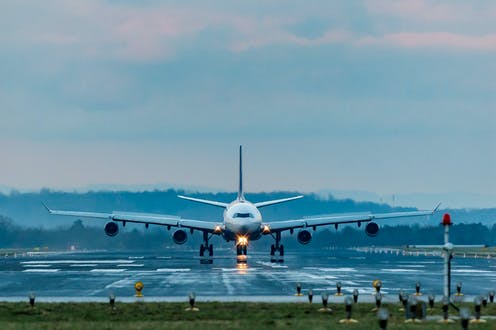

Several international airlines recently cancelled flights into certain US airports over concerns the rollout of 5G mobile communication technology could interfere with some planes’ equipment.
After warnings about the potential problem from aviation bosses and the Federal Aviation Administration, telecommunications companies AT&T and Verizon delayed activating some 5G masts around US airports.
Breaking News: Verizon and AT&T will limit the Wednesday debut of 5G service near some airports amid concerns that it could interfere with plane equipment. https://t.co/sHXNyq7NBo
— The New York Times (@nytimes) January 18, 2022
But how could 5G interfere with planes? And can the problem be fixed? Let’s take a look.
Currently being deployed in several countries around the world, 5G is the fifth generation of mobile phone technology. It could offer network speeds up to 100 times faster than what we’ve experienced with 4G.
To ensure high speeds with the widest possible coverage, AT&T and Verizon had planned to generate 5G internet using something called C-band frequencies, a type of radio frequencies (or radio waves) between 3.7 and 3.98 gigahertz (GHz).
These frequencies are adjacent to those used by modern aircraft to measure altitude. An important piece of an aircraft’s equipment, called a radio altimeter, operates on C-band frequencies between 4.2-4.4GHz. Pilots rely on radio altimeters to land the plane safely, particularly when visibility is poor, for example, when the airport is surrounded by high mountains or when conditions are foggy.
The concern is that, due to the narrow gap between the frequencies of the 5G and the radio altimeters, the radio waves from 5G towers near airports could cause interference. That is, people using 5G on their phones could inadvertently distort or damage the radio altimeter’s signal.
If this happens, even for a few seconds, it could mean the pilot doesn’t receive the correct information during landing. It is for this reason that the US Federal Aviation Administration raised concerns.

Countries around the world have started to roll out 5G technology. Maria Savenko/Shutterstock
So what can be done?
Other countries rolling out 5G are using C-band frequencies that overlap with or are close to those of radio altimeters, without any reported problems. For example, in the UK, 5G goes up to 4GHz. Having no or few mountains around airports reduces the risk.
Some other countries operate their 5G on a frequency slightly further away from that of the aircraft equipment. In the European Union, for example, 5G goes up to 3.8GHz. This could be a good option for US airports.
The best option, in the long run, would be to use a much higher band for 5G, such as 24GHz to 47GHz. At these frequencies, data speeds are significantly higher, although the coverage area of each cell will be much less (so you would need more towers).
There’s also an option to reduce the signal strength from the towers around airports, which has reportedly been done in France and Canada. This is not about changing the frequency –signal strength is measured in decibels, not GHz – but limiting the signal power can reduce the likelihood of interference with neighbouring bands.
Another potential solution would be to adjust the frequency range of radio altimeters. But this would take a long time and probably be resource intensive for the aviation industry.
While the risk of an in-flight complication due to 5G interference may be very low, as we’re talking about human safety, we need to take any possible risks very seriously. The move to delay rolling out 5G masts near US airports is a good option while the relevant authorities determine the safest way forward.







