


 New Zealand Labour Backs Social Media Ban for Under-16s
  Salesforce Shares Surge as AI Demand Powers Q2 Earnings Beat
  PayPal Shares Sink as $50 Billion Takeover Bid Collapses
  Countries Tighten Social Media Bans for Children
  Nvidia Options Price in $280 Billion Earnings Swing
  Meta, U.S. States Discuss Settlement in Teen Addiction Trial
  BofA Names ASML Top Semiconductor Equipment Pick on Growth, Valuation
  Apple’s Phil Schiller Steps Back as Leadership Shake-Up Accelerates
  Nvidia Reportedly Eyes $13 Billion Hugging Face Acquisition
  U.S. Disrupts China-Linked Hacking Campaign Targeting Government Agencies
  SpaceX Mobile Network Could Cost Up to $130 Billion, Bernstein Says
  New Zealand Moves to Ban Social Media for Children Under 16
  SoftBank Eyes $20 Billion Bond Sale to Refinance OpenAI Loan
  Luxshare Shares Rise as First-Half Profit Jumps 18%
  Google Changes EU Spam Policy Amid Antitrust Scrutiny
  Xiaomi Unveils Xring O3 Chip for Flagship Foldable Phone


 Add as a preferred source on Google
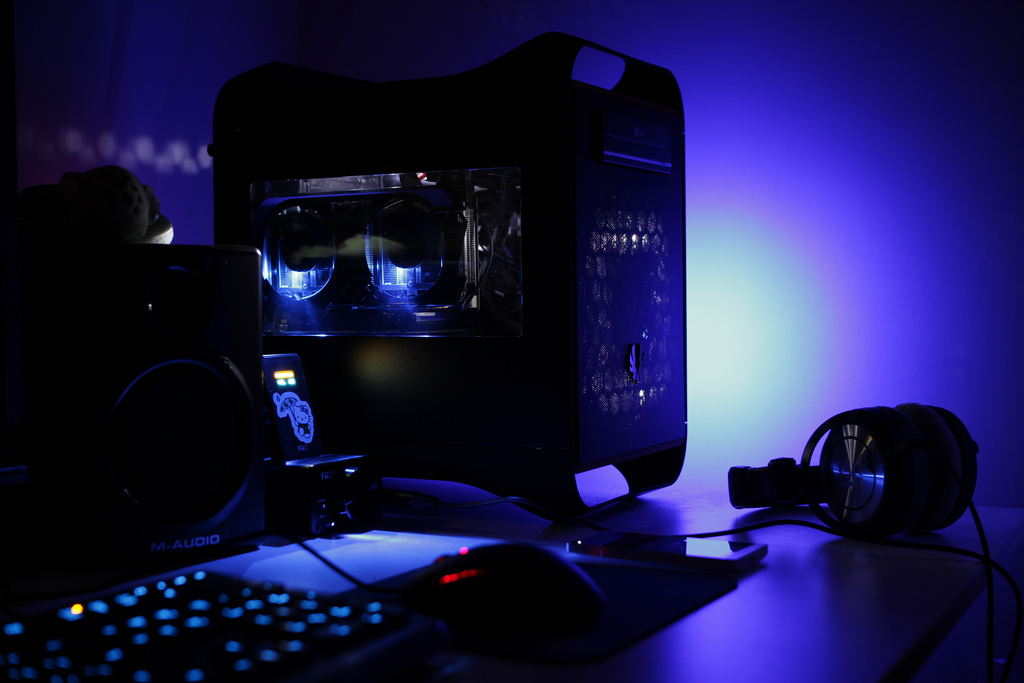
Games as a service (GaaS) is a business trend in the video game industry that is quickly catching on, with publishers basically cranking out fewer games and milking players for as long as possible. However, one company seems intent on taking this a whole new level with a PC gaming rental service where the rig is off-site and the game is basically streamed to the customer’s device.
The company is Blade Shadow and its Shadow subscription service has actually achieved quite the following in France, with about 5,000 subscribers, CNET reports. During CES 2018, the company announced that it will be bringing this service to California on February 15th.
As to how it would even work, the company will basically have a high-end Windows 10 PC that will be kept in a remote site. For a monthly fee, users can access this rig to play games via streaming through Wi-Fi. It’s best to think of it as a powerful computer tucked away somewhere, which can then be accessed by any device, including phones, tablets, and even Smart TVs.
The most obvious advantage to a setup like this is the fact that it won’t require direct maintenance by the users. Blade will handle all of the updates, hardware and firmware maintenance, and security. All the customer would have to do is pay the fees.
Speaking of which, being a Shadow subscriber will cost users up to $420 a year, with an initial one-year commitment. Now, while that amount might translate to $35 a month, subscribing for less than a year could lead to higher costs. For example, a three-month subscription could amount to $120 or $40 a month, while subscribing for just one month each time comes with a $50 monthly fee.
As Polygon points out, each subscriber will not be sharing rigs. Rather, each customer will have their own dedicated gaming PC and they are assured access to the latest games with the best graphics for as long as they are subscribed to the service.
Of course, there are some downsides to this kind of setup. For one thing, gamers are paying for a rig that they will never own. There’s also the matter of slow internet connections or interruptions that can interfere with immersion. Latency could also be a problem, especially for games with online, multiplayer components.







