


 Fed Unveils Stablecoin Rules Under GENIUS Act
  Best Gold Stocks to Buy Now: AABB, GOLD, GDX
  South Korea, US Discuss Warship Building Cooperation
  Oil Prices Jump 3% as Houthi Attack Revives Supply Fears
  Russian Envoy Dmitriev Heads to US for Ukraine Talks
  Dollar Holds Near Two-Month High as Yen Approaches 160
  China’s ‘Lipstick King’ Says AI Won’t Replace Livestream Hosts
  European Stocks Fall as Bond Yields and Geopolitical Risks Weigh
  Japanese Bank Stocks Surge as Bond Yields Fuel Rate Hike Bets
  U.S. Dollar Hits Two-Month High as Oil, Treasury Yields Surge


 Add as a preferred source on Google
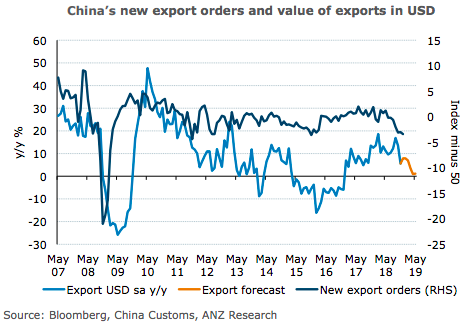
China’s export outlook does not look favourable through this year; however, a higher trade surplus may help China skirt a current account deficit in Q4 2018, according to the latest report from ANZ Research.
The falling sales orders reported in earlier months are beginning to show up in China’s monthly exports data. A period of contraction in Chinese exports seems similar to 2015-2016.
The global electronics cycle remains the key driver of Chinese exports. A potential downturn in the sector poses the real risk to China’s external outlook even if China and the US reach a resolution on their trade dispute.
Statistically, China’s new export orders sub-index in the manufacturing PMI leads monthly exports with the strongest correlation of six months (sample 2005-2018: 0.7). The decline in China’s export orders data over the second half of 2018 therefore signals a downtrend in exports over the first half of 2019.
"The anecdotal reports of Chinese exporters front-loading their cargoes ahead of tariff hikes in 2019 may explain the strong exports seen in late 2018. However, in the months ahead, we are likely to see some payback of the earlier strength in exports," the report commented.







