


 Middle East War Rattles Global Markets as Oil Tops $100 and Dollar Surges
  Trump Tariffs Show Minimal Economic Impact but Boost Federal Revenue, Study Finds
  Japan's Private Sector Growth Slows in March Amid Rising Costs and Middle East Uncertainty
  Suspicious Oil Market Trades Precede Trump's Iran Peace Post by 15 Minutes
  Federal Reserve Balance Sheet Reduction: Brookings Research Outlines Possible Path Forward
  U.S. Dollar Weakens as Trump Signals Iran Deal Possibility
  Iran-Israel Missile Strikes Continue Amid Mixed Signals on U.S.-Iran Diplomacy
  U.S. Stock Futures Steady as Iran Reviews U.S. Ceasefire Proposal
  Gold Prices Fall for Tenth Straight Session Amid Iran Uncertainty and Rate Concerns
  Currency Markets Show Caution Amid U.S.-Iran Negotiations
  Oil Prices Rebound as Iran Denies U.S. Talks, Middle East Tensions Persist
  Oil Prices Climb as Iran Reviews U.S. Peace Proposal Amid Middle East Tensions
  UK Consumer Confidence Weakens Amid Middle East Conflict and Rising Living Costs
  U.S. Oil Prices Slide as Middle East Ceasefire Talks Spark Market Optimism
  Goldman Sachs Raises ECB Rate Hike Forecast Amid Persistent Energy-Driven Inflation
  U.S. Futures Slide as Iran Denies Nuclear Talks with Washington


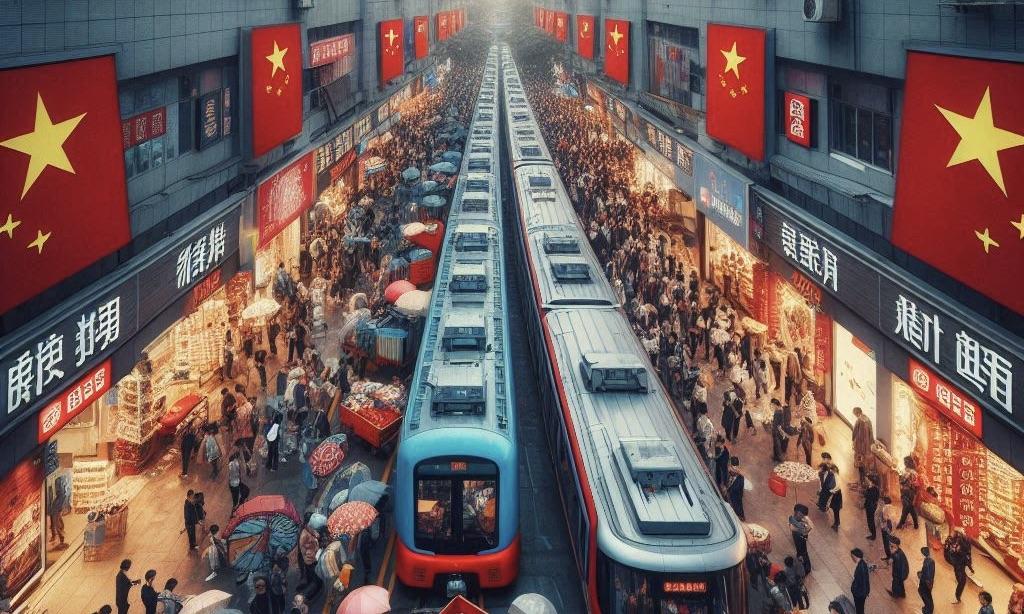
China's economy expanded at an annual rate of 4.7% in the last quarter, falling short of expectations due to weak consumer demand. Despite the slowdown, there were signs of improvement in factory output, income, and investment, according to the National Bureau of Statistics.
China's Economy Slows to 4.7% Growth, Highlighting Challenges and Improvements in Key Sectors
The government reported on July 15 that China's economy expanded at a slower-than-expected annual rate of 4.7% in the last quarter. However, it also highlighted indicators of improvement in factory output, income, and investment.
The expansion was significantly lower than the 5.3% annual growth rate observed in the year's first quarter.
According to ABC News, The National Bureau of Statistics stated that this year's progress has been "hard-won" following a significant slowdown in growth during the COVID-19 pandemic.
“Since the beginning of this year, global economic growth momentum has been weak, inflation is sticky, geopolitical conflicts, international trade frictions, and other problems have occurred frequently, domestic demand is insufficient, enterprises are under great operating pressure, and there are many risks and hidden dangers in key areas,” it said in a statement.
“There are many difficulties and challenges in promoting the stable operation of the economy,” it said
Economists say the world's second-largest economy is experiencing growth hindered by weak consumer demand and reduced government expenditure.
According to the statistics bureau, the economy expanded at a rate of 5% during the first half of the year, consistent with the government's objective of approximately 5% development.
The economy expanded by 0.7% quarterly, a method widely used by many countries to report their growth.
The update was issued during a once-a-decade conclave of the ruling Communist Party's leaders, which was intended to establish economic policy. The policy was anticipated to emphasize self-sufficient strategies for development in a time of trade and technology tensions.
This is the third plenary session of the Communist Party's 205-member Central Committee's five-year tenure, which commenced in 2022. The meeting will last for four days. The meeting scheduled for this year was postponed from the previous year.
The policies that emerge from the closed-door meetings are anticipated to be implemented several days following their conclusion.
Party plenums typically concentrate on long-term issues; however, business owners and investors are monitoring for any immediate measures to address the persistent malaise and protracted downturn in the property market that have impeded China's post-COVID-19 recovery.
China's Trade Surplus and Factory Output Rise Amid Plateauing Growth and Challenging Consumer Demand
The recent emergence of bright areas indicates that growth has reached a plateau. On July 12, the government announced higher-than-anticipated June exports, further bolstering China's trade surplus.
Exports increased 8.6% from the previous year's equivalent period, while imports decreased 2.3%. The trade surplus increased from $82.6 billion in May to $99 billion.
Factory output increased by 5.3% in June, according to the statistics bureau's announcement on July 15. It stated that nominal disposable income, which is not adjusted for inflation, increased by 5.4% from January to May, while retail sales, which measure consumer demand, increased by 5.1%.
Expanding consumer demand is considered essential for maintaining robust development. However, this has been challenging because many Chinese families have tightened their budgets due to the job losses during and after the pandemic.













