


 Iran-Israel Missile Strikes Continue Amid Mixed Signals on U.S.-Iran Diplomacy
  Oil Prices Rebound as Iran Denies U.S. Talks Amid Gulf War Supply Fears
  Bank of Japan Officials Signal Continued Interest Rate Hikes Amid Inflation Concerns
  Gold Prices Fall for Tenth Straight Session Amid Iran Uncertainty and Rate Concerns
  Suspicious Oil Market Trades Precede Trump's Iran Peace Post by 15 Minutes
  South Korean Stocks Tumble as Hawkish BOK Governor Appointment Rattles Markets
  Japan Eyes Reduction in Inflation-Linked Bond Buybacks Amid Surging Investor Demand
  U.S. Oil Prices Slide as Middle East Ceasefire Talks Spark Market Optimism
  Australia's Inflation Eases in February but Core Pressures Persist
  Asian Currencies Slide as U.S.-Iran Tensions and Rising Oil Prices Rattle Markets
  U.S. Dollar Weakens as Trump Signals Iran Deal Possibility
  Global Markets Tumble as US-Iran Tensions Escalate, Oil Surges
  Bank of Japan Eyes April Rate Hike Despite Inflation Dip, ING Says
  Oil Prices Rebound as Iran Denies U.S. Talks, Middle East Tensions Persist
  Japan's Private Sector Growth Slows in March Amid Rising Costs and Middle East Uncertainty


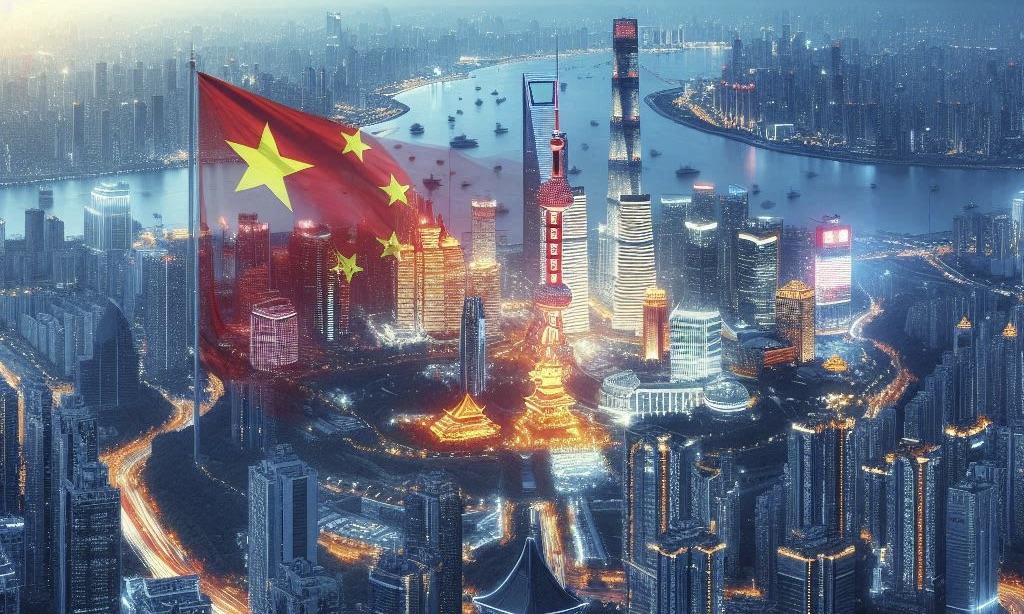
The Communist Party of China concluded a significant conclave, pledging to boost economic development through comprehensive reforms while maintaining national security. The Central Committee's communique outlined objectives to be achieved by 2029, emphasizing high-quality development and technological innovation.
China's Communist Party Pledges Comprehensive Reforms and National Security Measures to Boost Economy
The Communist Party of China, currently in power, concluded a highly anticipated party conclave on July 18. The party pledged to promote economic development through comprehensive reform while emphasizing the significance of maintaining national security, per VOA.
After the four-day, closed-door Third Plenum, the Central Committee issued a communique that delineated the reform objectives to be concluded by 2029, the 80th anniversary of the People's Republic of China.
The party's top decision-making body also committed to completing the "construction of a socialist market economy of the highest standard in all respects" by 2035.
"All of this will lay a solid foundation for building China into a great modern socialist country in all respects by the middle of this century," the communique said.
The communique stated that to accomplish these objectives, China must enhance its utilization of market mechanisms and intensify its efforts to foster "high-quality development." This includes prioritizing investment in sophisticated technologies and promoting growth through technological and scientific innovation.
"We must deepen supply-side structural reform, improve incentive and constraint mechanisms for promoting high-quality development, and strive to create new growth drivers and strengths," the communique said.
The crucial political conference is scheduled to occur after China's economic growth slowed to 4.7% in the second quarter of this year. This has led to banks like Goldman Sachs reducing their 2024 gross domestic product growth forecast for China from 5.0% to 4.9%.
The property crisis in China persists, as investment in the sector experienced a 10.1% decline in the first six months of this year compared to last year, and consumer confidence remains low.
Beijing committed to addressing these challenges by implementing measures to mitigate risks in the property sector and enhance the health care system, social security, job market, and income distribution.
"Ensuring and enhancing the people's well-being in the course of development is one of the majo tasks of Chinese modernization," the communique said.
The communiqué underscored the necessity of implementing fiscal and tax reforms and enhancing the integration between cities and rural as local governments in China grapple with the increasing debt resulting from the real estate crisis.
"The Party must promote equal exchanges and two-way flows of production factors between the cities and the countryside, so as to narrow the disparities between the two and promote their common prosperity and development," the statement said.
Foreign investors are closely monitoring the signals emanating from the plenum. The party has pledged to continue its commitment to the state policy of "opening to the outside world" and to "expand cooperation with other countries."
"We still steadily expand institutional opening up, deepen the foreign trade structural reform, further reform the management systems for inward and outward investment," the communique said.
According to confident analysts, the communique indicates that Beijing prioritizes sectors essential to the nation's prosperity, such as sophisticated manufacturing and technology.
"This isn't Western-style market liberalization; it's about reinforcing China's existing strategy," Lizzi Lee, a fellow on the Chinese economy at the Asia Society Policy Institute's Center for China Analysis, said in a response to VOA.
"The document cements Xi's governance approach and his brand of reform, which focuses on consolidating power rather than adopting new liberal economic paradigms, endures," she wrote.
China's Communist Party Emphasizes Balance Between Security and Development in New Reform Agenda
The communique outlined the extensive list of reform objectives and underscored the party's need to strike a balance between security and development.
"We will strengthen the network for preventing and controlling public security risks so as to safeguard social stability [and] improve public opinion guidance and effectively deal with risks in the ideological domain," it said.
The document also reaffirmed that the party's top leadership, particularly Xi Jinping, remains the "fundamental guarantee" for deepening reforms.
"We must uphold Comrade Xi Jinping's core position on the Party Central Committee and in the Party as a whole and uphold the Central Committee's authority and its centralized, unified leadership," the communique said.
According to specific experts (via Reuters), the communique's emphasis on maintaining public security and adhering to the direction of the party leadership indicates that Beijing is attempting to increase its oversight of the reform of China's troubled economy.
"Tightening control is at the heart of [Beijing's] dilemma because in order for the reforms to work, they need to loosen control," Dexter Roberts, a nonresident senior fellow at Atlantic Council's Global China Hub, told VOA by phone.
Lee anticipates that consumer spending in China will continue to be subdued and that the property sector's recovery will be gradual in the short term, even though other specific reforms are anticipated to be implemented in other plenum documents in the coming days.
"The prolonged transition period poses significant risks. It could lead to reduced investments and slower economic growth," she told VOA, adding that the Chinese government will likely use targeted interventions to boost critical sectors.
Nevertheless, some analysts believe Beijing's state-led economic growth model is unlikely to achieve the government's expected outcomes
"China's state-led investment, which concentrates resources on areas such as semiconductors and artificial intelligence, is going to take years to pay dividends, and meanwhile, the economy will continue to fail to deliver growth and jobs," Andrew Collier, managing director of Orient Capital Research in Hong Kong, told VOA in a video interview.
He stated that the country's economic decline could worsen unless the government takes concrete measures to reduce its involvement in financial reforms.













