


 AWS Bahrain Region Disrupted by Drone Activity Amid Middle East Conflict
  Federal Judge Orders Refund of Trump’s Emergency Tariffs, Potentially Returning Up to $182 Billion
  Bolsonaro Hospitalized in ICU with Bronchopneumonia Amid Calls for House Arrest
  SK Hynix Eyes Up to $14 Billion U.S. IPO to Fund AI Chip Expansion
  Reflection AI Eyes $25 Billion Valuation in Massive $2.5 Billion Funding Round
  Lynas Rare Earths Signs Vietnam Deal with LS Eco Energy to Boost Magnet Metal Production
  DOJ Backs Jeanine Pirro-Led Investigation Into Federal Reserve Chair Jerome Powell
  Meta Ties Executive Pay to Aggressive Stock Price Targets in Major Retention Push
  Supreme Court Blocks California Transgender Student Privacy Laws in 6-3 Decision
  Moderna to Pay Up to $2.25B to Settle LNP Patent Dispute Over COVID-19 Vaccine Technology
  Nintendo Switch 2 Production Cut as Holiday Sales Miss Targets
  9 Tips for Avoiding Tax Season Cyber Scams
  Stellantis Shareholder Fraud Lawsuit Dismissed by U.S. Judge
  Cyberattack on Stryker Triggers U.S. Government Warning Over Microsoft Intune Security
  OpenAI's Desktop Superapp: Unifying ChatGPT, Codex, and Browser Tools for Enterprise AI
  Valero Port Arthur Refinery Explosion Prompts $1M Lawsuit Over Worker Safety Negligence
  xAI Faces Federal Lawsuit Over Grok AI-Generated Child Sexual Abuse Material


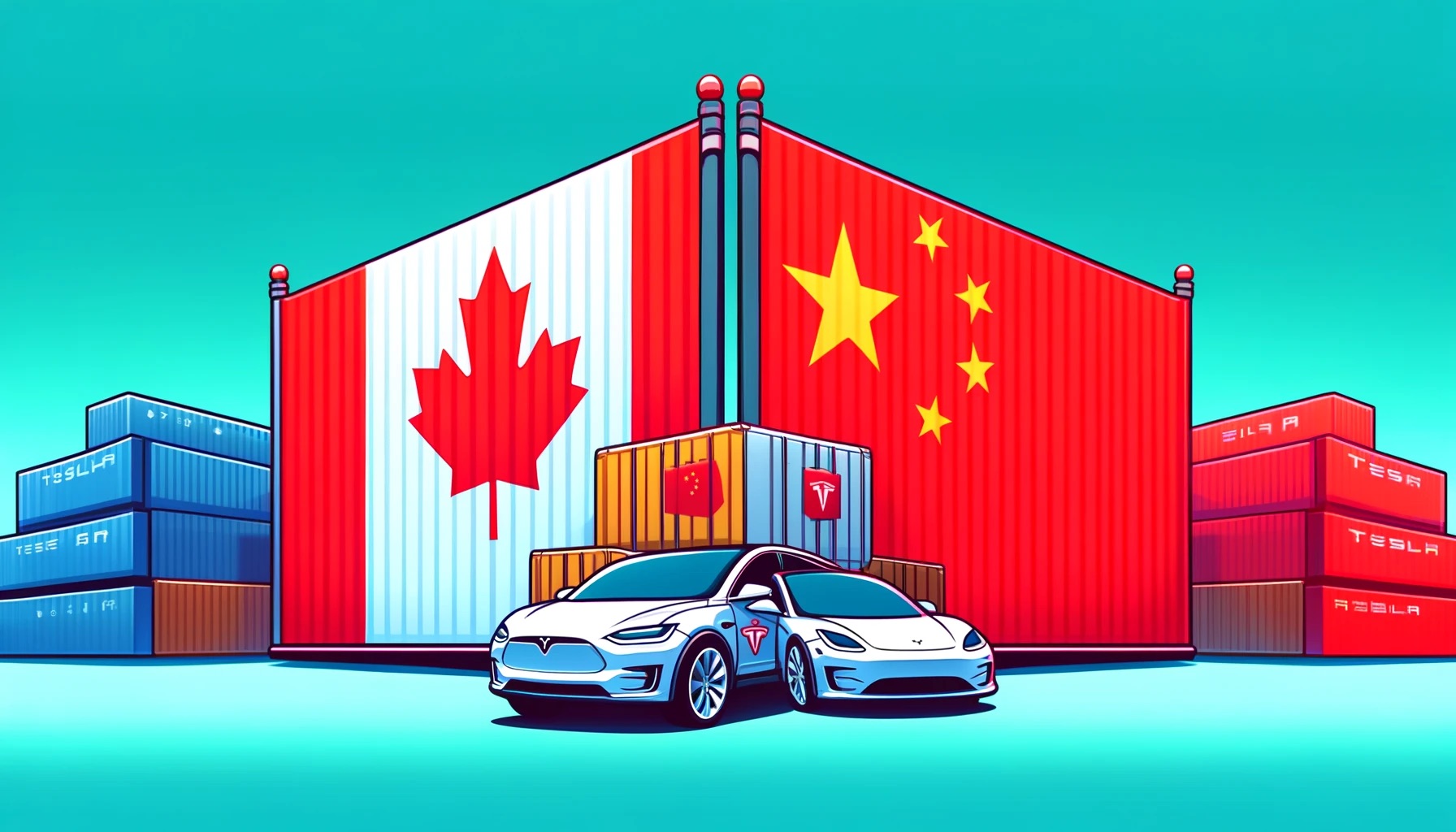
In a move mirroring U.S. policies, Canada announced a 100% tariff on electric vehicles imported from China, including Tesla models. The decision is a response to what Western countries view as unfair Chinese subsidies.
Canada Slaps 100% Tariff on Chinese-Made EVs
In response to what Western countries see as unfair Chinese subsidies, Canada on Monday announced it will slap a tariff of 100% on electric vehicles imported from China. This move is in line with tariffs imposed by the United States.
The Associated Press reports that U.S. national security advisor Jake Sullivan met with Canadian Prime Minister Justin Trudeau and Cabinet officials on Sunday, and he encouraged them to make the statement. On Tuesday, Sullivan will travel to Beijing for the first time.
According to Trudeau, Canadian steel and aluminum will also be subject to a 25% tariff. "Actors like China have chosen to give themselves an unfair advantage in the global marketplace," he continued.
Tesla's Canadian Market Faces New Challenges
Even though Tesla, a U.S. firm, could sidestep the tariff by resupplying Canada from its facilities in the United States or Germany, one of the Chinese-made EVs shipped into Canada comes from the company's Shanghai plant.
In Canada, Chinese brands are still in their early stages. But, last spring, the Chinese EV behemoth BYD formed a Canadian corporate structure and has already hinted that it plans to attempt to join the Canadian market as soon as next year.
Biden’s Tariffs Influence Canada’s Trade Policies
As Beijing works to restore its economy following the COVID-19 outbreak, Chinese officials will certainly bring up worries about American tariffs with Sullivan. Electric vehicles, sophisticated batteries, solar cells, steel, aluminum, and medical equipment from China were all subject to new, hefty tariffs imposed in May by U.S. President Joe Biden.
"The U.S. does believe that a united front, a coordinated approach on these issues benefits all of us," Sullivan stated to reporters on Sunday.
According to Biden, Chinese companies have an unfair trade advantage since the government subsidizes their electric vehicles and other consumer goods, so they don't have to make a profit.
Electric vehicles made in China can be sold for $12,000 or less. China's steel and aluminum mills and solar cell factories can provide most of the world's demand. Officials in China claim their output helps keep prices down and would facilitate a shift to a green economy.
"We’re doing it in alignment, in parallel, with other economies around the world that recognize that this is a challenge that we are all facing," Trudeau stated regarding the new tariffs. "Unless we all want to get to a race to the bottom, we have to stand up."
Canada will begin a 30-day consultation over potential duties on Chinese batteries, battery components, semiconductors, essential minerals, metals, and solar panels, according to Deputy Prime Minister Chrystia Freeland.
"China has an intentional state-directed policy of overcapacity and oversupply designed to cripple our own industry," Freeland stated. "We simply will not allow that to happen to our EV sector, which has shown such promise."
China Warns of Economic Repercussions
According to the Chinese embassy, Ottawa ignored Beijing's repeated concerns and is now taking a step that will harm trade and economic relations.
"This move is typical trade protectionism and politically-motivated decision, which violates the World Trade Organization(WTO) rules and goes against Canada’s traditional image as a global champion for free trade and climate change mitigation," according to an emailed statement from the embassy. "China will take all necessary measures to safeguard the legitimate rights and interests of Chinese enterprises."
Canada Aligns Trade Strategy with the US
Canada "had to go with the U.S. position, when you think about the economic integration that we have with the U.S. More than 75% of our exports go to the U.S.," said Guy Saint-Jacques, a former Canadian ambassador to China.
Since China can import barley and pig from other nations, Saint-Jacques warned that Canada would face retribution from China in other sectors.
After all, "China will want to send a message," he commented.













