


 Trump Suspends Some Morocco Fertilizer Tariffs to Ease U.S. Supply Shortage
  Serbia Protests Continue as Thousands Rally Despite Vucic’s Resignation Plan
  Despite its best efforts, Iran won’t be able to toll the Strait of Hormuz. Here’s why
  NTSB Investigates Boston Logan Airport Near-Miss Between Delta and American Airlines Jets
  Bolivia Declares State of Emergency as Roadblock Crisis Deepens
  Israeli Airstrike Kills Three in Central Gaza Despite Ceasefire
  Australia Plans Higher Fines for Social Media Firms Failing to Block Underage Users
  Trump Threatens 100% Tariffs on Countries Imposing Digital Services Taxes on U.S. Tech Firms
  RFK Jr. Orders Extended Hantavirus Quarantine for Cruise Passenger
  Trump Signs Memorandum Backing Americans’ Right to Repair Their Own Vehicles
  Ukraine Strikes Russian Titan-Barrikady Plant With Long-Range FP-5 Flamingo Missile
  Super Micro Shares Slide After Taiwan Raids Over Alleged Nvidia AI Chip Smuggling Probe
  Australia Sues Amazon Over Prime Video Ads and Subscription Terms
  Sheinbaum Says No One Is Above the Law After Abuse Video of Ex-Pemex Chief Emerges
  US-Iran De-Escalation Shifts Washington’s Focus to AI Regulation and Crypto Legislation
  China Expands Export Controls, Adds 20 Japanese Companies to Restricted List
  Johns Hopkins University Lays Off 110 Employees as Federal Research Funding Declines


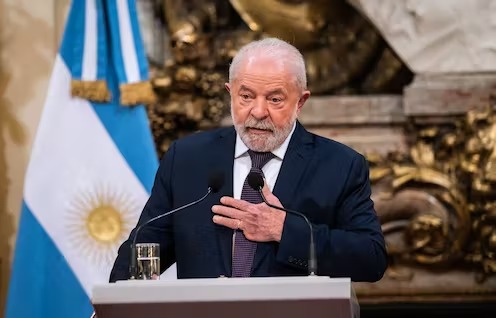
Brazil continues to face major challenges in its fight against illegal gold mining in the Amazon rainforest, despite increased enforcement efforts under President Luiz Inacio Lula da Silva. A new study by environmental watchdog Greenpeace reveals that billions of dollars worth of gold are still being extracted and sold through fraudulent schemes, highlighting ongoing weaknesses in the country's mining oversight system.
After taking office in 2023, Lula promised to eliminate illegal gold mining on Indigenous territories and protected environmental areas. His administration intensified enforcement operations, leading Brazil’s Federal Police to seize a record 447 kilograms of illegally mined gold in 2025. However, soaring global gold prices, driven by geopolitical uncertainty and strong investor demand, have continued to fuel illegal mining activities across the Amazon.
According to Greenpeace, illegal miners have increasingly relied on so-called “ghost permits” to disguise the origin of unlawfully extracted gold. Researchers examined 187 forest areas with mining permits issued by Brazil’s National Mining Agency (ANM) near Indigenous lands and conservation zones. The investigation found that 98 of those permitted sites showed no evidence of actual mining operations.
Despite the lack of activity, permits linked to these inactive locations were reportedly used to legitimize the sale of approximately 26.8 metric tons of gold between 2018 and March 2026. Greenpeace estimates the value of this gold at around $3.88 billion. The organization argues that these permits are being exploited to launder gold sourced from illegal mining operations in protected regions of the Amazon.
Reuters journalists conducted aerial inspections of two permitted sites included in the study and found no visible mining activity, despite records indicating significant gold production. Nearby, however, an active illegal mining operation was observed within a protected area.
Indigenous leaders continue to express concern over the environmental and social impacts of illegal mining. Kayapo chief Megaron Txucarramae warned that mining activities contaminate rivers, damage ecosystems, and expose Indigenous communities to mercury pollution through contaminated fish.
The ANM stated that it is reviewing the permits highlighted in the Greenpeace report but acknowledged that monitoring thousands of mining licenses across the vast Amazon region presents significant logistical challenges. Environmental advocates argue that unless loopholes allowing gold laundering through mining permits are closed, illegal gold mining in the Brazilian Amazon will remain a growing threat.







